Toothpaste Third-Party Manufacturer: Industry Guide
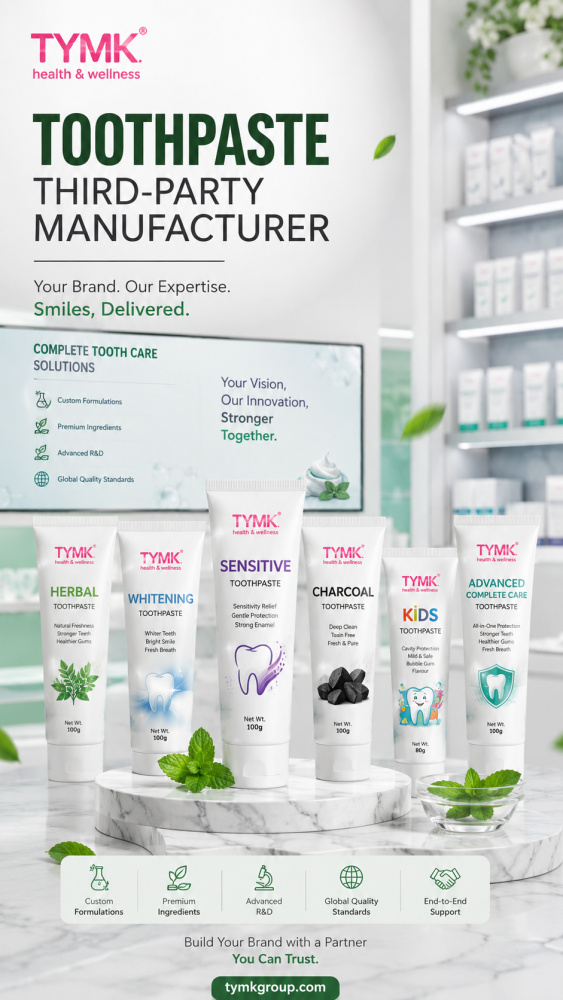
Toothpaste third-party manufacturing enables brands to launch oral care products without owning factories. It covers formulation, production, packaging, and compliance, making FMCG entry faster, cost-effective, and scalable.
Toothpaste Third-Party Manufacturer: Industry Guide
Introduction
Most toothpaste brands you see in the market are not produced by the companies whose names are on the tube.
That detail changes how the entire FMCG system works.
A large number of oral care brands depend on a Toothpaste Third Party Manufacturer—a setup where production happens outside the brand’s own infrastructure. The brand focuses on positioning, packaging decisions, and sales channels. Manufacturing is handled elsewhere.
This structure is not new, but its scale has increased sharply as more small and mid-sized brands enter the market without factories.
In practice, it removes one of the biggest entry barriers in FMCG: production.
What this model actually means
A third-party toothpaste manufacturer is essentially a production partner. They don’t sell under their own brand; instead, they produce for others.
The responsibilities typically include:
- developing or adapting formulations
- managing raw materials
- running production batches
- filling, sealing, and packaging
- maintaining quality and compliance standards
Sometimes the formula already exists. Sometimes it is built from scratch based on brand requirements.
The brand, in this case, behaves more like a business identity than a production unit.
Why companies are shifting toward this model
The shift is not driven by trend—it’s driven by economics and speed.
Setting up a toothpaste manufacturing facility requires equipment, approvals, lab testing, and skilled formulation teams. That alone blocks most new entrants.
Third-party manufacturing removes that initial weight.
What happens then is simple:
brands can test ideas faster than competitors, who are still setting up infrastructure.
In many cases, this speed matters more than the product itself in the early stage.
How the process usually unfolds
The workflow is not complicated, but it is structured.
A typical sequence looks like this:
- A brand decides what kind of toothpaste they want to launch
- The manufacturer suggests available formulations or modifies one
- Small samples are created for testing
- Adjustments are made based on feedback
- Packaging design is finalized
- Bulk production begins
- Products are packed and dispatched
Nothing here is theoretical. This is how most new oral care brands actually enter the market.
When this approach makes sense
This model is usually chosen when a company wants to avoid long setup cycles.
It is commonly used in situations like:
- launching a new FMCG brand
- expanding into herbal or Ayurvedic oral care
- testing multiple product variations quickly
- building MLM or direct-selling product lines
- entering e-commerce without inventory risk
It is less about manufacturing preference and more about reducing uncertainty in early-stage business decisions.
Who typically uses it
The range is wider than expected.
- small startups testing consumer demand
- Ayurvedic brands focusing on herbal formulations
- online-first D2C companies
- export-focused FMCG businesses
- MLM distribution networks
Each group uses the same system differently, but the underlying logic is identical: avoid high fixed costs at the start.
Manufacturing models (simple comparison)
| Approach | Setup Cost | Speed | Flexibility | Practical Use |
|---|---|---|---|---|
| Third-Party Manufacturing | Low | Fast | High | Market entry |
| OEM Model | Medium | Fast | High | Brand-specific production |
| White Label | Very low | Very fast | Limited | Quick launches |
| Own Factory | Very high | Slow | Full control | Large-scale companies |
The choice depends less on theory and more on how quickly a brand needs to move.
A realistic example
A small wellness brand wanted to enter the oral care segment but had no manufacturing capability.
Instead of building a plant, they started with a third-party manufacturer. The initial launch included two toothpaste variants—one herbal, one whitening-focused.
They tested both in limited online markets first.
One variant performed better, so production was scaled gradually. Retail expansion came later, after demand was already validated.
The key shift wasn’t product quality—it was the ability to launch without infrastructure delay.
TYMK WORLD
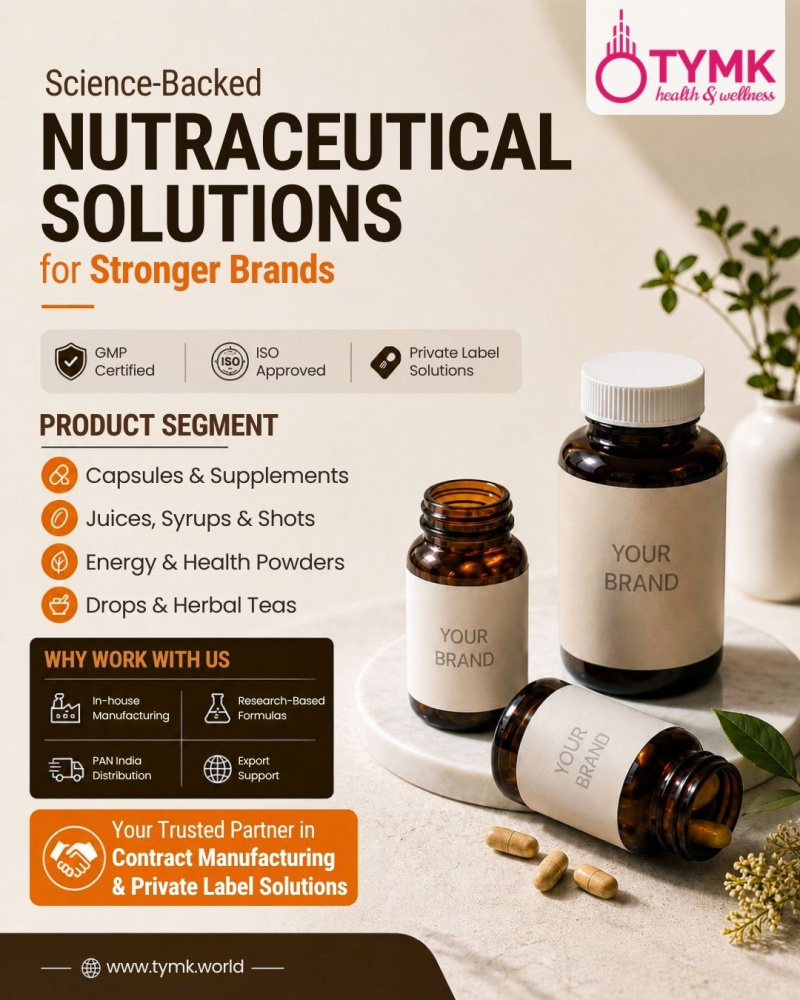
TYMK World operates within the manufacturing ecosystem, supporting private label and FMCG product development.
Their role generally includes enabling brands to:
- access ready manufacturing systems
- develop private label products
- scale production without setting up factories
In this model, manufacturers act less like vendors and more like operational partners.
A toothpaste third party manufacture tymk.world produces toothpaste for brands using OEM or private label systems. It handles formulation, production, packaging, and compliance, allowing companies to launch oral care products without owning manufacturing facilities.
FAQs
What is a toothpaste third-party manufacturer?
It is a company that produces toothpaste for other brands under contract or OEM arrangements.
Why do brands use third-party manufacturing?
Mainly to reduce cost, save time, and avoid setting up production facilities.
Can herbal toothpaste be produced this way?
Yes, many manufacturers specialize in herbal and Ayurvedic formulations.
Is OEM the same as third-party manufacturing?
OEM is a form of third-party manufacturing where products are made to brand specifications.
Is this model suitable for startups?
Yes, it is commonly used by new FMCG brands entering the market.
Closing note
The toothpaste industry is no longer limited to companies with factories. Production has become modular—something that can be outsourced, adjusted, and scaled as needed.
That is why the Toothpaste Third Party Manufacturer model continues to dominate new brand launches in oral care.