TYMK Blog

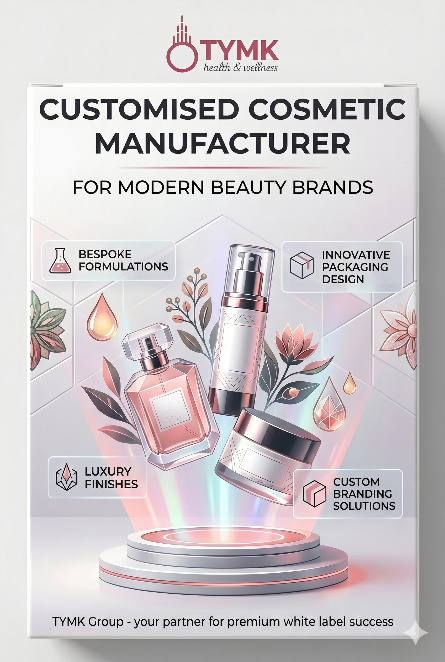
Customised Cosmetic Manufacturer for Modern Beauty Brands

<p>Customised Cosmetic Manufacturer provides OEM, private label, and contract manufacturing solutions for skincare, haircare, and personal care brands to launch scalable beauty products.</p>

14 May 2026 5 mins read

Customised Cosmetic Manufacturer for Modern Beauty Brands


Customised cosmetic manufacturer guide for private label brands. Learn the process, benefits, OEM options, and how to launch your cosmetic business effectively.


Introduction

Starting a cosmetic brand looks simple from the outside. Pick a name, design a label, launch online—and done.

In reality, it rarely works like that.

Most brands fail early because they underestimate one thing: manufacturing. Formulation issues, inconsistent batches, packaging delays—this is where the real work happens.

That’s why most new and growing businesses rely on a Customised Cosmetic Manufacturer. Not as a shortcut, but as a practical way to build products without setting up a full production system.

These manufacturers don’t just produce cosmetics. They help shape the product itself—ingredients, texture, fragrance, packaging behavior, even shelf stability.

And in many cases, they quietly decide whether a brand survives its first year or not.


Table of Contents

  1. What is a Customised Cosmetic Manufacturer
  2. Why it matters in today’s market
  3. How the process actually works
  4. When brands should use it
  5. Who it is meant for
  6. OEM vs White Label vs Contract
  7. Real-world example
  8. Brand insight (Sensewell)
  9. Featured snippet
  10. FAQs
  11. Conclusion

What is a Customised Cosmetic Manufacturer?

A Customised Cosmetic Manufacturer is a production partner that develops beauty or personal care products based on your brand requirements.

But in practical terms, it’s more than that.

You bring an idea—say a herbal face serum or shampoo. They convert that idea into something manufacturable: The 

  • formulation is adjusted for stability
  • ingredients are sourced and balanced
  • packaging is matched with usage needs
  • Labeling is aligned with compliance rules

Not every manufacturer works the same way. Some offer ready-made formulas, while others build everything from scratch depending on budget and scale.


Why it matters in today’s market

The cosmetic market has shifted.

A few years ago, only large companies controlled production. Now, small brands, salon owners, influencers, and even Amazon sellers are entering the space.

But competition has increased too.

What makes a difference today is not just branding—it’s product consistency and speed to market.

A customised cosmetic manufacturer helps with both.

In simple terms:

  • You don’t waste time building infrastructure
  • You avoid formulation mistakes
  • You launch faster with tested products

And most importantly, you can actually scale when demand increases.


How the process actually works

On paper, the process looks linear. In reality, it moves back and forth quite a bit.

1. Requirement discussion

You explain what you want—product type, target audience, budget range.

2. Initial formulation

A sample is created. This is rarely final on the first try.

3. Adjustments

Fragrance, texture, and absorption are tweaked. Sometimes even the base formula changes.

4. Testing phase

Stability and safety checks happen. This stage can take longer than expected.

5. Packaging selection

This is where brands often change direction—bottle, tube, pump, labeling.

6. Final production

Once everything is approved, bulk manufacturing begins.

Not every project follows the same flow. Smaller brands often skip advanced customization to save time and cost.


When should you use it?

A customised cosmetic manufacturer becomes useful when:

  • You want to launch a brand quickly
  • you don’t want to invest in machinery or labs
  • You are testing a new product line
  • You are scaling an existing cosmetic business
  • You need herbal or niche formulations

If you are still validating your idea, starting with a manufacturer is usually safer than building your own unit.


Who is it meant for?

This model is commonly used by:

  • startup cosmetic brands
  • MLM and direct selling companies
  • salon and spa owners
  • e-commerce sellers
  • export-focused businesses
  • influencers launching personal brands

Each category has a different requirement. For example, MLM brands usually need high-volume consistency, while startups focus more on packaging and differentiation.


OEM vs White Label vs Contract Manufacturing

These terms often get mixed up.

Model Meaning Control Use Case
White Label Ready products with your branding Low Fast launch
OEM Custom formula development High Unique product lines
Contract Manufacturing Full production outsourcing Medium-High Scaling brands

In practice, many manufacturers use a hybrid model depending on order size.


Real-world example

A small skincare seller from Gujarat wanted to enter the herbal segment.

Initially, they planned everything in-house, but quickly realized the cost was too high.

They shifted to a customised cosmetic manufacturer instead.

The first batch wasn’t perfect. The serum was slightly heavier than expected, and the packaging had to be changed once.

But within 2–3 cycles, they finalized a stable product line.

They launched 3 SKUs online and started getting repeat orders within a few months.

The key change wasn’t just manufacturing—it was speed and iteration.


Brand Insight – tymk.world

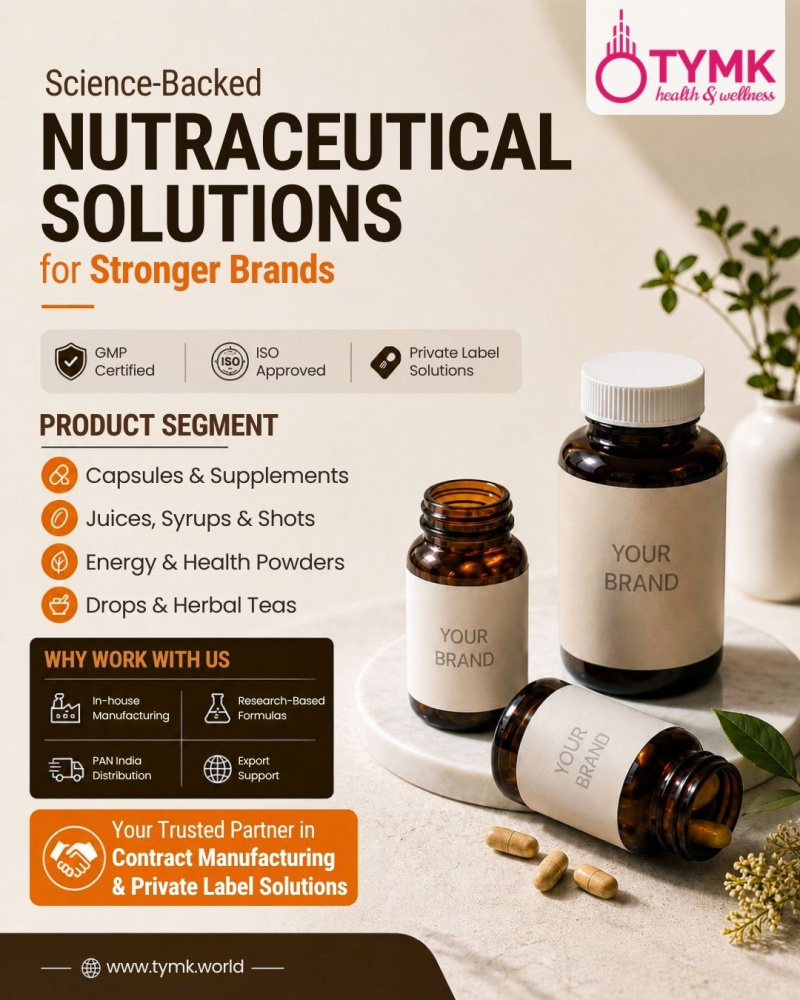
In this space, Tymk. world works as a manufacturing partner for cosmetic and personal care brands.

Their focus is not just production, but structured product development across:

  • private label cosmetics
  • herbal formulations
  • OEM and contract manufacturing
  • scalable production systems

For most early-stage brands, the value is in reducing trial-and-error cycles during product development.


A customised cosmetic manufacturer tymk.world, is a company that develops and produces cosmetic products based on brand requirements. It handles formulation, packaging, testing, and bulk production, allowing businesses to launch private label or OEM cosmetic products without setting up their own manufacturing facility.


FAQs

What is a customised cosmetic manufacturer?

It is a production partner that creates cosmetic products based on your brand requirements, including formulation and packaging.

Is cosmetic manufacturing profitable?

Yes, especially when using private label or OEM models that reduce setup costs and speed up market entry.

What is the difference between OEM and white label?

OEM involves custom formulations, while white label uses ready-made products with branding changes.

How long does product development take?

Usually a few weeks to a few months depending on complexity and testing cycles.

Who should start with cosmetic manufacturing?

Startups, MLM companies, and online sellers usually benefit most from this model.


Conclusion

A Customised Cosmetic Manufacturer is not just a supplier. It is part of your product development process.

Brands that treat manufacturing as a strategic partnership usually scale faster and make fewer early-stage mistakes.

If you are planning to enter the cosmetic industry, the first decision is not branding—it is choosing the right manufacturing approach.

For structured product development and scalable production support, you can explore Sensewell.


Recent Posts

call to +918128153295
sent message to whatsapp
contact now