TYMK Blog

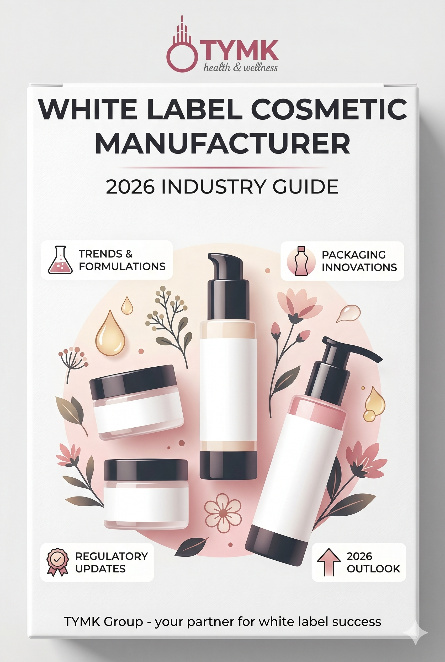
White Label Cosmetic Manufacturer (2026 Industry Guide)

<p>White-label cosmetic manufacturing allows brands to launch skincare, herbal, hair care, and personal care products quickly by using ready-made formulations that can be rebranded and sold under their own name.</p><p><br></p>

14 May 2026 4 mins read
 

White Label Cosmetic Manufacturer (2026 Industry Guide)

Complete guide to white-label cosmetic manufacturer process, benefits, use cases, and industry insights for fast-growing beauty brands.


Introduction

Most people entering the cosmetic industry assume product innovation is the hardest part.

In practice, that’s rarely the bottleneck anymore.

Production, compliance, formulation access, and time-to-market are what actually slow brands down. Many ideas never reach shelves simply because the operational side is too heavy to manage alone.

This is where the white-label cosmetic manufacturer model has become central to modern beauty businesses.

Instead of building everything from raw formulation to factory setup, brands now plug into existing manufacturing systems and focus on branding, marketing, and distribution.

It’s less about invention at the start — and more about execution speed.


What is a White Label Cosmetic Manufacturer?

A white-label cosmetic manufacturer produces ready-made cosmetic or personal care products that can be rebranded by different companies.

The product already exists in a tested, stable form.

A brand typically only:

  • selects a product category
  • applies branding and packaging
  • launches it under its own name

No formulation development is required at the starting stage.

In real terms, it reduces the entry barrier for cosmetic entrepreneurship significantly.


Why This Model Matters Today

The cosmetic industry has shifted toward speed-driven competition.

A delay of even a few months can mean losing market relevance.

White label manufacturing solves this by removing the slowest parts of product development:

  • R&D cycles
  • formulation trials
  • factory setup delays
  • compliance groundwork from scratch

It allows brands to enter categories like skincare, herbal products, perfumes, shampoos, and personal care without long development timelines.

For many small and mid-size brands, this is not just convenient — it is the only scalable entry path.


How White Label Manufacturing Works

The process is usually more practical than people expect.

A simplified flow looks like this:

  1. A brand chooses a product category (for example, herbal face serum or shampoo)
  2. The manufacturer provides existing formulations
  3. Packaging and branding direction are finalized
  4. Regulatory checks and labeling compliance are completed
  5. Bulk production begins
  6. Products are dispatched for market launch

There is minimal experimentation at this stage because the formulations are already tested.

The focus shifts from development to execution.


When Should You Use White Label Manufacturing?

This model makes sense when:

  • You want to launch quickly without infrastructure investment
  • You are testing a new product category
  • You are building an e-commerce or D2C brand
  • You are scaling MLM or direct selling operations
  • You want multiple products under one brand portfolio

It is less suitable if you need deep formulation control or highly customized chemistry.


Who Uses This Model?

White-label cosmetic manufacturing is not limited to startups.

It is used by:

  • new D2C beauty brands
  • MLM and network marketing companies
  • export-focused cosmetic businesses
  • wellness and herbal startups
  • retailers expanding into private label lines

It has quietly become a standard backend system for the beauty industry.


Product Category Overview

Category Example Applications
Skincare creams, serums, moisturizers
Herbal Products Ayurvedic oils, herbal cleansers
Hair Care shampoos, conditioners, hair oils
Perfumes private label fragrances
Baby Care lotions, soaps, powders
Nutraceuticals supplements, wellness capsules
Oral Care toothpaste, mouthwash
Personal Care soaps, body wash, deodorants

White Label vs Private Label vs OEM

Model Nature Control Level Best Use
White Label Ready-made products Low customization Fast market entry
Private Label Semi-custom products Medium control Brand differentiation
OEM Fully custom formulation High control Large-scale brands

Real-World Example

A small skincare reseller from India started with imported products but faced inventory and cost issues.

Instead of continuing imports, she shifted to a white-label cosmetic manufacturing model.

She began with only two products:

  • herbal face serum
  • basic skincare cream

Within a year, her brand expanded into a full skincare line.

The key difference was not marketing creativity — it was access to production infrastructure.


Brand Integration – TYMK

TYMK operates in the cosmetic and personal care manufacturing ecosystem, supporting brands that want to scale without building internal production systems.

Its role aligns with modern manufacturing trends where brands rely on external production partners for:

  • white label cosmetic production
  • herbal and skincare formulations
  • personal care product manufacturing
  • scalable OEM and contract manufacturing solutions

This model enables faster product launches while maintaining production consistency.


A white label cosmetic manufacturer produces ready-made cosmetic and personal care products that businesses can rebrand and sell under their own name. It eliminates the need for formulation development and manufacturing setup, enabling faster launch of skincare, herbal, and beauty products.


FAQs

What is a white label cosmetic manufacturer?

A manufacturer that provides ready-made cosmetic products that can be rebranded and sold by different companies.

How does white label manufacturing work?

Brands select ready formulations, apply branding, and launch products under their own label.

Is white label manufacturing profitable?

Yes, it reduces upfront investment and speeds up time-to-market.

What is the difference between OEM and white label?

OEM is fully customized production; white label uses pre-developed formulations.

Who should use white label manufacturing?

Startups, D2C brands, MLM companies, and businesses expanding product lines.


Conclusion

The white label cosmetic manufacturer model has become a practical foundation for modern beauty and personal care businesses.

It removes infrastructure barriers, reduces development time, and allows brands to focus on what actually drives growth — market execution.

For most new entrants, it is less of an option and more of a default strategy for scaling in today’s competitive cosmetic industry.


Recent Posts

call to +918128153295
sent message to whatsapp
contact now