TYMK Blog

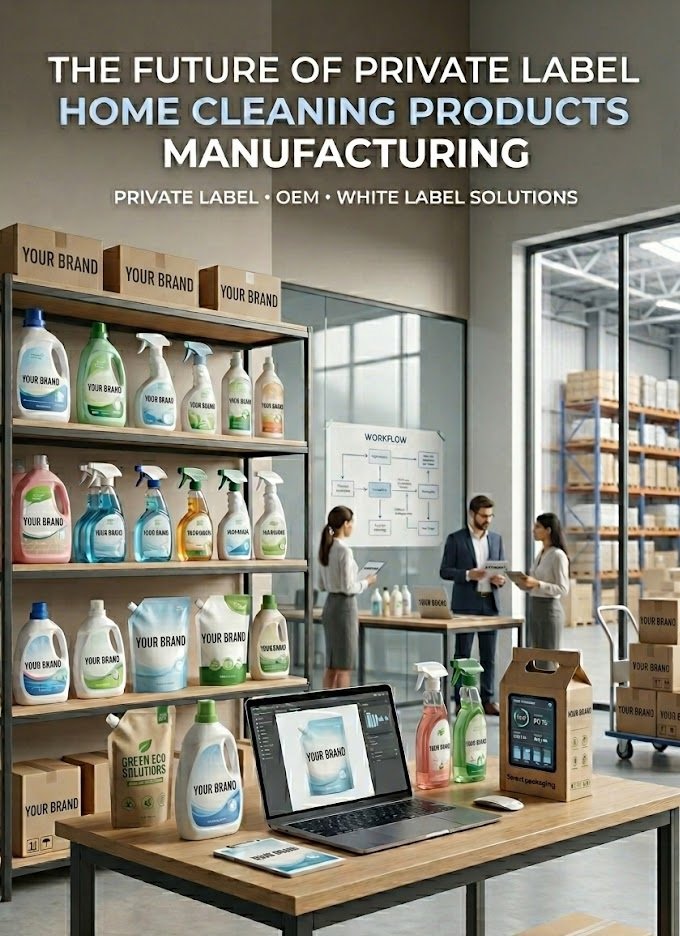
The Future of Private Label Home Cleaning Products Manufacturing

<p>Private label manufacturing is changing the way home cleaning brands grow in India and global markets. From ecommerce startups to large distributors, businesses are increasingly choosing flexible manufacturing models to launch high-quality cleaning products without owning production facilities.</p><h1><br></h1><p><br></p>

26 May 2026 6 mins read

The Future of Private Label Home Cleaning Products Manufacturing

Introduction

The home cleaning industry is entering a completely different phase of growth. Earlier, most cleaning products in the market looked almost identical. Packaging was basic, formulations were generic, and consumers rarely cared about ingredients or branding. Today, the situation has changed dramatically.

Consumers now compare products based on fragrance quality, herbal ingredients, antibacterial claims, packaging aesthetics, refill convenience, and even sustainability positioning. This shift is pushing businesses to innovate faster than ever before.

At the same time, launching a manufacturing facility independently has become increasingly expensive. Machinery costs, raw material sourcing, regulatory compliance, skilled labor, and quality testing require substantial investment before a brand even reaches the market.

That is one major reason businesses are rapidly moving toward the Private Label Home Cleaning Products Manufacturer model.

Instead of spending years building factories, brands now focus on:

  • branding
  • ecommerce growth
  • digital marketing
  • product positioning
  • distribution expansion

while manufacturing partners manage production, formulation, testing, and packaging operations.

This manufacturing approach is now expanding beyond cleaning products into industries such as:

because modern brands increasingly operate as marketing-first businesses supported by specialized manufacturing ecosystems.


Table of Contents

No. Topic
1 The Evolution of Private Label Manufacturing
2 Why Home Cleaning Products Are Growing Rapidly
3 The Shift From Traditional Manufacturing Models
4 How Modern Private Label Manufacturing Works
5 Key Trends Shaping the Industry
6 Real-World Market Expansion Example
7 White Label vs OEM vs Contract Manufacturing
8 How TYMK Supports Modern Product Brands
9 Featured Snippet
10 FAQs
11 Conclusion

The Evolution of Private Label Manufacturing

Private label manufacturing was once viewed mainly as a low-cost production model. Businesses simply selected ready-made products, placed their logo on the packaging, and entered the market quickly.

That model still exists, but the industry has evolved far beyond simple rebranding.

Today’s manufacturers offer:

  • customized formulations
  • fragrance development
  • packaging innovation
  • product testing
  • herbal ingredient integration
  • premium product positioning
  • scalable production systems

In real-world terms, manufacturers are no longer only suppliers. Many have become full-scale product development partners.

This change is especially visible in sectors connected to:

  • Herbal Products White Label Manufacturer
  • Bath Soap White Label Manufacturer
  • Face Care Products White Label Manufacturer
  • Hair Care Products Manufacturer
  • Baby Care Products Manufacturer

because consumer demand now favors specialized branded products rather than generic mass-market options.


Why Home Cleaning Products Are Growing Rapidly

The cleaning products market has expanded beyond hygiene requirements. It is now heavily influenced by lifestyle trends and health-conscious purchasing behavior.

Consumers increasingly search for:

Consumer Preference Market Demand
Herbal cleaners High
Child-safe products Growing
Pet-safe formulations Growing
Luxury fragrance cleaners High
Eco-friendly packaging Growing
Chemical-free products Strong

This shift has opened opportunities for new brands targeting niche customer segments.

For example:

  • Urban premium consumers prefer luxury packaging
  • families prioritize safety-focused formulations
  • ecommerce buyers prefer compact refill packs
  • Environmentally conscious consumers prefer herbal products

Most people don’t realize this, but product positioning now influences purchasing decisions almost as much as cleaning performance itself.

That is why branding and manufacturing quality must work together.


The Shift From Traditional Manufacturing Models

Traditional manufacturing required companies to control everything internally:

  • factory setup
  • machinery purchase
  • warehouse management
  • staff hiring
  • production planning
  • quality testing
  • packaging procurement

This model worked for large legacy FMCG businesses, but it created huge barriers for emerging brands.

Private label manufacturing changed that structure completely.

Instead of building infrastructure first, businesses can now launch products rapidly through manufacturing partners.

This allows brands to focus on:

  • customer acquisition
  • retail placement
  • ecommerce scaling
  • social media growth
  • distributor networks
  • export opportunities

The same operational shift is visible across industries such as:

because speed-to-market has become a major competitive advantage.


How Modern Private Label Manufacturing Works

Modern manufacturing systems are much more strategic than many beginners assume.

The process generally starts with identifying the product category.

A business may choose products such as:

  • floor cleaners
  • kitchen cleaners
  • toilet cleaners
  • dishwash liquids
  • surface sanitizers
  • fabric care products

The manufacturer then helps define:

Manufacturing Stage Purpose
Formula selection Product performance
Fragrance customization Brand differentiation
Packaging design Shelf appeal
Label development Brand identity
Batch production Scalable manufacturing
Quality testing Product consistency

Businesses can choose between:

  • white label manufacturing
  • private label manufacturing
  • OEM manufacturing
  • contract manufacturing

This flexibility allows both startups and large distributors to scale according to business goals.


Key Trends Shaping the Industry

1. Herbal Product Demand

Herbal and natural cleaning products are growing rapidly, especially in urban markets.

This directly supports industries like:

  • Herbal Products Contract Manufacturer
  • OEM Herbal Products
  • Ayurvedic Products White Label Manufacturer

2. Ecommerce-First Product Development

Many modern brands launch online before entering retail stores.

This changes packaging strategy, logistics planning, and even product sizing.


3. Multi-Category Expansion

Brands no longer stay limited to one category.

A cleaning products company may later expand into:

  • personal care
  • baby care
  • wellness
  • nutraceuticals
  • pet care

This is why manufacturers support categories like:

are becoming increasingly valuable.


4. Premium Packaging Demand

Consumers now judge products heavily through visual presentation.

Premium packaging improves:

  • shelf visibility
  • ecommerce conversion
  • perceived quality
  • repeat purchase behavior

Real-World Market Expansion Example

A regional seller initially launched only two herbal home cleaning products through a private label manufacturing partner.

Instead of investing in production machinery, the company focused on:

  • Amazon optimization
  • Instagram marketing
  • reseller onboarding
  • packaging aesthetics
  • influencer collaborations

Within two years, the business expanded into:

  • personal care
  • room fresheners
  • liquid detergents
  • herbal handwash
  • kitchen cleaning products

The growth happened because the company allocated resources toward brand development rather than factory ownership.

That business model is becoming increasingly common across India’s FMCG sector.


White Label vs OEM vs Contract Manufacturing

| Manufacturing Type | Best For | Customization Level |
|---|---|
| White Label | Faster market launch | Low |
| Private Label | Brand-focused businesses | Medium |
| OEM Manufacturing | Unique product creation | High |
| Contract Manufacturing | Large-scale production | Flexible |

Businesses involved in:

  • Perfume Private Label Manufacturer
  • OEM Skincare Products
  • OEM Hair Care Products
  • OEM Nutritional supplements Products

Often move from white-label systems toward OEM manufacturing as brand identity strengthens.


How TYMK Supports Modern Product Brands

TYMK World works across multiple manufacturing categories including cosmetics, personal care, herbal products, wellness products, and home care manufacturing.

The company supports businesses looking for:

  • scalable manufacturing
  • customized formulations
  • private label solutions
  • OEM development
  • packaging support
  • multi-category expansion

This becomes useful for brands planning long-term product diversification across industries like:

  • Colour Cosmetics Products White Label Manufacturer
  • Face Care Products Contract Manufacturer
  • Healthcare Products White Label Manufacturer
  • Food supplements Products White Label Manufacturer
  • PET Care Products White Label Manufacturer

Instead of managing separate vendors for every category, brands increasingly prefer centralized manufacturing ecosystems for operational consistency.


Featured Snippet

What is a Private Label Home Cleaning Products Manufacturer?

A Private Label Home Cleaning Products Manufacturer creates cleaning products that businesses can sell under their own brand name. Companies like TYMK manage formulation, production, packaging, and quality testing, allowing brands to launch products without setting up their own manufacturing facility.


FAQs

What is private label home cleaning products manufacturing?

Private label manufacturing allows businesses to sell cleaning products under their own brand while a third-party manufacturer handles production and packaging.


Why are businesses moving toward private label manufacturing?

Private label manufacturing reduces operational costs, speeds up product launches, and eliminates the need for factory investment.


What products can be launched through private label manufacturing?

Businesses can launch floor cleaners, dishwashing liquids, toilet cleaners, laundry liquids, herbal cleaners, sanitizers, and many other home care products.


What is the difference between OEM and white-label manufacturing?

White-label products use ready-made formulations, while OEM manufacturing involves customized product development based on business requirements.


Can startups build successful cleaning brands without factories?

Yes. Many startups now work with manufacturers like TYMK to launch and scale products without owning manufacturing infrastructure.


Conclusion

The future of the home cleaning industry is no longer driven only by manufacturing ownership. The market is increasingly shifting toward scalable, flexible, and branding-focused business models powered by specialized manufacturing partnerships.

Companies that understand formulation quality, consumer positioning, packaging innovation, and distribution strategy are growing significantly faster than businesses relying on outdated manufacturing structures.

A strong Private Label Home Cleaning Products Manufacturer helps businesses reduce operational risk, improve scalability, accelerate product launches, and adapt quickly to changing consumer demand.

For brands planning long-term expansion across cleaning, personal care, herbal, wellness, and FMCG sectors, manufacturing partnerships through companies like TYMK World provide a more efficient and future-ready growth model.

Recent Posts

call to +918128153295
sent message to whatsapp
contact now