Baby Care Products Third-Party Manufacturer Guide
A complete guide to baby care, third-party manufacturing covering OEM, private label, and white label models.
Learn how products like baby shampoo and lotion are developed, tested, and scaled safely.
Understand the process, benefits, and how brands grow in FMCG manufacturing.
Baby Care Products Third-Party Manufacturer Guide
Understand baby care third-party manufacturing, OEM models, benefits, process flow, and how brands scale safely with expert production partners.
Table of Contents
- Introduction
- What is Baby Care Third-Party Manufacturing
- Why This Model Matters Today
- How Manufacturing Actually Happens
- Types of Manufacturing Models
- When Brands Should Use It
- Who This Model Fits Best
- Comparison of Models
- Real Challenges (Not Often Talked About)
- Market Reality in India
- Brand Integration (TYMK World)
- A Simple Real Case Example
- Featured Snippet Answer
- FAQs
- Final Thoughts
Introduction
If you look closely at any baby care product on a retail shelf, there is a high chance the brand name on the front is not the company actually making it.
That surprises many first-time entrepreneurs.
The reality is simple: manufacturing is a completely different world compared to branding and selling. And when it comes to baby care products, the complexity increases because safety standards are extremely strict.
This is exactly where Baby Care Products' third-party manufacturer setups become important.
Instead of building factories, hiring chemists, and handling compliance headaches, brands rely on companies that already operate at scale.
It sounds technical, but in practice, it’s just a smart division of work.
What is Baby Care Third-Party Manufacturing
At its core, third-party manufacturing means outsourcing product production to a specialized facility.
In baby care, this includes items like shampoos, lotions, oils, soaps, powders, and wipes.
The manufacturer is responsible for creating the product from raw ingredients, testing it, and preparing it for market use. The brand focuses on identity, packaging design, and selling.
What makes this model widely adopted is not just cost—it’s speed and reliability.
Most new FMCG brands don’t start with factories. They start with partnerships.
Why This Model Matters Today
The baby care market has changed a lot in the last decade. Parents today read labels. They search for ingredients. They compare products before buying.
That means brands cannot afford mistakes in formulation or safety.
Now here’s the important part—building a compliant manufacturing unit is not only expensive but also time-consuming.
So instead of spending years setting up infrastructure, companies prefer to collaborate with established manufacturers.
This reduces risk significantly and allows faster entry into the market.
In real terms, it is often the difference between launching in 3 months vs 2 years.
How Manufacturing Actually Happens
The process looks simple from the outside, but inside a facility, it is structured and controlled.
It usually starts with a conversation between the brand and manufacturer. The brand explains what kind of product they want—gentle baby shampoo, herbal lotion, or maybe something sulfate-free.
Then the formulation begins. Chemists test combinations, adjust viscosity, check fragrance stability, and ensure safety for sensitive skin.
Once a sample is ready, it goes back to the brand. This stage is often repeated a few times until final approval.
After that, production moves into bulk manufacturing. Machines take over. Ingredients are mixed in controlled batches. Quality checks happen continuously.
Packaging is another separate layer. Labels must comply with regulations, especially for baby products.
Finally, everything is tested again before dispatch.
It is not a random process. It is controlled, repeated, and documented.
Types of Manufacturing Models
There are three common models used in this industry, and each serves a different purpose.
OEM (Original Equipment Manufacturing)
This is the most flexible model. The brand usually defines the formula or product concept. The manufacturer builds it exactly as required.
It is more technical but offers full control.
Private Label Manufacturing
Here, things are faster. The manufacturer already has formulations ready. Brands simply choose, brand it, and sell it.
Many startups prefer this because it reduces development time.
White Label Manufacturing
This is the simplest form. Products are pre-made and can be sold by multiple brands with minimal changes.
Speed is high, but uniqueness is low.
Simple Comparison
| Model | Speed | Control | Cost | Customization |
|---|---|---|---|---|
| OEM | Medium | High | Medium | High |
| Private Label | Fast | Medium | Low | Medium |
| White Label | Very Fast | Low | Low | Low |
When Brands Should Use It
Not every stage requires manufacturing ownership.
This model makes sense when:
- A brand wants to launch quickly
- Capital investment is limited
- Market testing is required
- Product expansion is planned
Some founders even start with just one product and scale gradually, using third-party manufacturing.
That approach reduces pressure in the early stages.
Who This Model Fits Best
In practice, this model is used across multiple industries:
- FMCG startups
- E-commerce sellers
- Direct selling companies
- Export-oriented brands
- Retail distributors
What connects all of them is the need to scale without building infrastructure.
Comparison of Models (Reality View)
On paper, OEM looks best. But in reality, the choice depends on the stage.
Early-stage brands usually prioritize speed over control.
Established brands often move toward OEM because they want product uniqueness.
White label works mostly for quick market testing or seasonal products.
There is no perfect model. Only suitable ones.
Real Challenges (Often Ignored)
Most content online talks about benefits. But manufacturing has real challenges too.
One of the biggest issues is consistency. A product batch today may feel slightly different from another batch months later if not properly controlled.
Another issue is dependency. Once a brand relies heavily on a manufacturer, switching becomes difficult.
Regulatory delays also slow down product launches more than people expect.
And sometimes, ingredient sourcing fluctuations can impact timelines without warning.
So while the model is efficient, it still requires careful partner selection.
Market Reality in India
India’s baby care segment is expanding steadily. Urban parents are increasingly shifting toward safe, chemical-free, and dermatologist-tested products.
E-commerce has accelerated this growth further.
Interestingly, most new brands entering this space do not come from manufacturing backgrounds. They come from marketing, retail, or digital business experience.
That is why third-party manufacturing is not just a trend—it is becoming the default structure.
Brand Integration (TYMK World)
In this ecosystem, choosing the right manufacturing partner is critical.
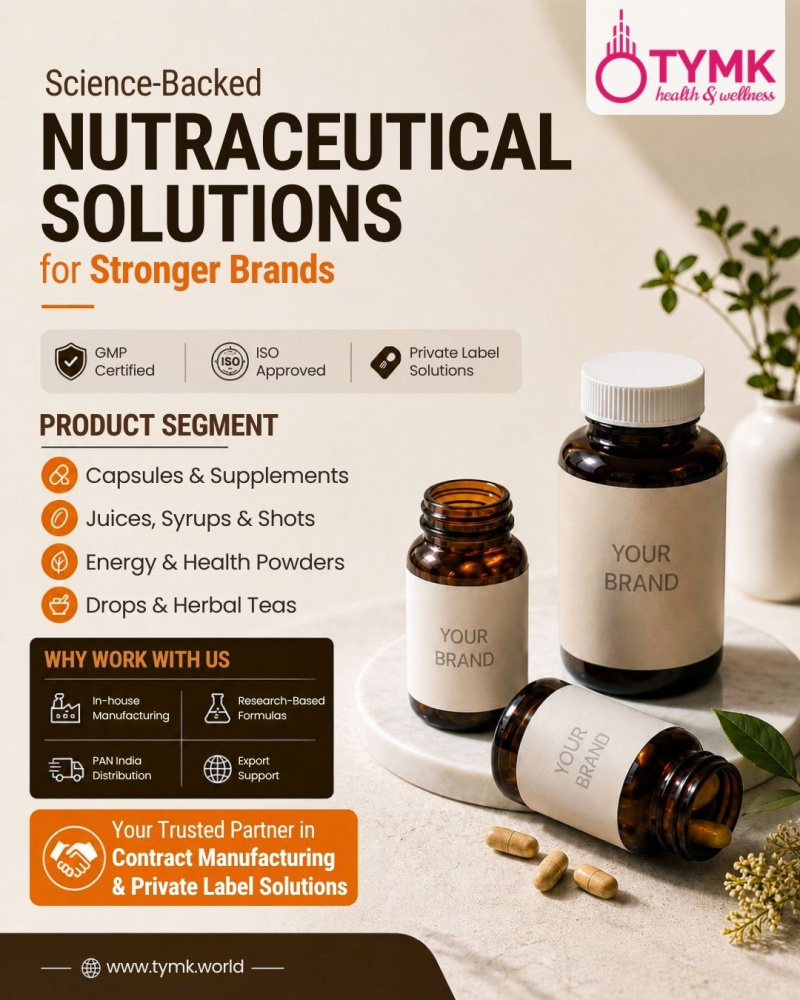
TYMK works with brands in the baby care and personal care segments by providing structured manufacturing support.
Their approach focuses on:
- OEM development support
- Private label product systems
- Scalable FMCG production
- Quality-controlled batches
What matters here is not just production, but consistency over time. That is what helps brands survive beyond the launch phase.
Simple Real Case Example
A small entrepreneur wanted to enter the baby care market but had no manufacturing experience.
Instead of investing heavily, they partnered with a third-party manufacturer and started with just two products—baby shampoo and lotion.
The first batch took around 45–60 days to develop and launch.
Within a few months, they expanded distribution to local retail stores and later added more SKUs.
The key factor was not the budget. It was the speed of execution.
Featured Snippet (Direct Answer)
Baby care third-party manufacturing is a system where brands outsource the production of baby care products like shampoo, lotion, and oil to specialized manufacturers. It allows faster market entry, lower investment, and ensures safety compliance using OEM, private label, or white label models.
FAQs
What is baby care third party manufacturing?
It is outsourcing the production of baby care products to an external manufacturing company.
Is it safe for baby products?
Yes, when proper testing and regulatory standards are followed.
What is OEM in baby care manufacturing?
It is a model where brands define the formula, and manufacturers produce it.
Which is faster—OEM or private label?
Private label is faster due to ready formulations.
Who should use this model?
Startups, FMCG companies, and online brands are looking to scale quickly.
Final Thoughts
Baby care third party manufacturing is not just a cost-saving model. It is a structural shift in how FMCG brands operate.
Instead of controlling production, brands now focus on building demand, positioning, and distribution.
Manufacturing becomes a backend system rather than the core burden.
And in today’s market, that separation is what allows faster, more flexible growth.