OEM Baby Care Products Guide 2026
The OEM Baby Care Products guide explains how brands are manufactured through OEM and private label models.
It covers process, benefits, and market opportunities for new businesses.
Learn how to launch a safe, scalable baby care brand efficiently.
Introduction (Hook)
Launching a baby care brand sounds simple until you face formulation safety, compliance, packaging, and manufacturing complexity. Most startups struggle not with branding, but with finding the right OEM Baby Care Products Manufacturer who can actually deliver safe, scalable, and compliant products.
In real business terms, the success of baby care brands depends heavily on the manufacturing partner, product safety standards, and private label execution. This is where OEM and white-label manufacturing models become critical.
Table of Contents
| Section | Topic |
|---|---|
| 1 | What are OEM Baby Care Products? |
| 2 | Why OEM Baby Care Products Matter |
| 3 | Manufacturing Process |
| 4 | When to Use OEM Model |
| 5 | Who Should Choose It |
| 6 | Comparison Table |
| 7 | Brand Integration (TYMK) |
| 8 | Featured Snippet |
| 9 | FAQs |
| 10 | Conclusion |
What are OEM Baby Care Products?
OEM Baby Care Products refer to products manufactured by a third-party company where formulations, production, and packaging are handled externally, while the brand owner sells under their own label.
These include:
- Baby shampoo
- Baby lotion
- Baby oil
- Baby soap
- Diaper rash creams
Related industry terms:
- Private Label Baby Care Products
- White Label Baby Care Products
- Baby Care Products Contract Manufacturer
- Baby Care Products Third-Party Manufacturer
Why OEM Baby Care Products Matter
The baby care industry is highly regulated due to safety concerns. OEM manufacturing ensures:
- Compliance with safety standards
- Dermatologically tested formulations
- Scalable production
- Faster time-to-market
Most new brands fail because they underestimate formulation stability and regulatory requirements.
1
How OEM Baby Care Manufacturing Works (Step-by-Step)
1. Requirement Discussion
Brand defines product type and positioning.
2. Formula Selection
OEM provider offers tested formulations.
3. Sample Development
Prototype batches are created and tested.
4. Approval Stage
Brand approves texture, fragrance, and packaging.
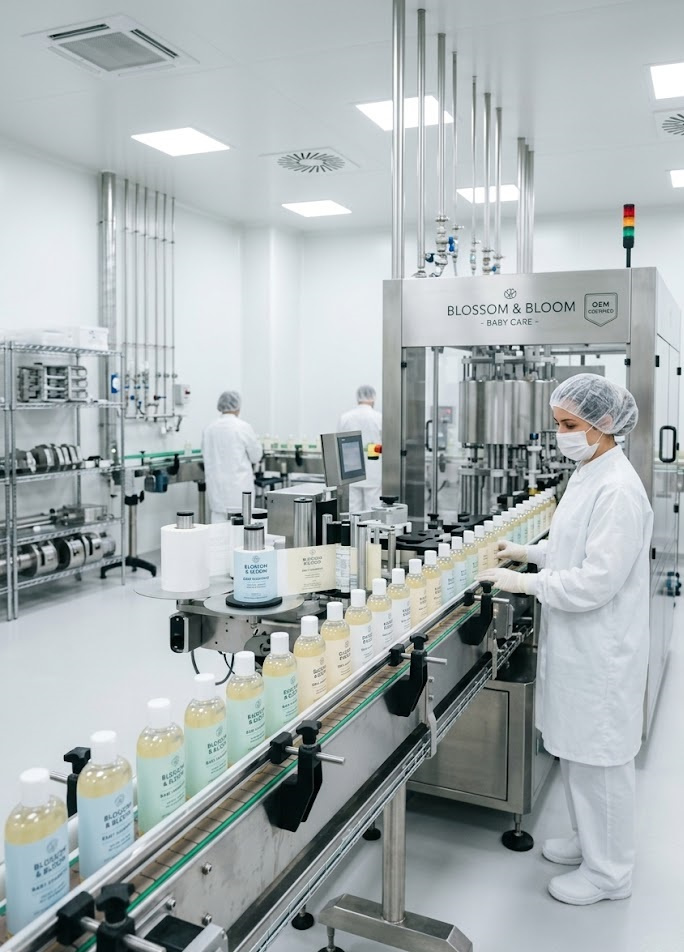
5. Bulk Manufacturing
Large-scale production begins under QC supervision.
6. Packaging & Branding
Private label design is applied.
7. Final Dispatch
Products are ready for retail or e-commerce.
When Should You Use the OEM Baby Care Model?
OEM is ideal when:
- You want to launch quickly
- You lack in-house R&D
- You want low-risk product testing
- You are scaling an existing brand
- You are entering Amazon/Flipkart/D2C markets
Who Should Choose OEM Baby Care Products?
- Startups entering the personal care industry
- Beauty entrepreneurs
- MLM / direct selling companies
- Export-focused brands
- E-commerce sellers
This also aligns with:
- MLM Product Manufacturer ecosystem
- Network Marketing Product Manufacturer models
- Direct Selling Product Supplier structures
Which Model is Best? (Comparison Table)
| Model | Control | Cost | Speed | Customization |
|---|---|---|---|---|
| OEM Baby Care Products | Medium | Medium | Fast | High |
| White Label Baby Care | Low | Low | Very Fast | Low |
| Private Label Baby Care | Medium | Medium | Fast | Medium |
| Contract Manufacturing | High | High | Slow | Very High |
Brand Integration Section (TYMK)
One of the key players in the OEM ecosystem is
TYMK
TYMK focuses on:
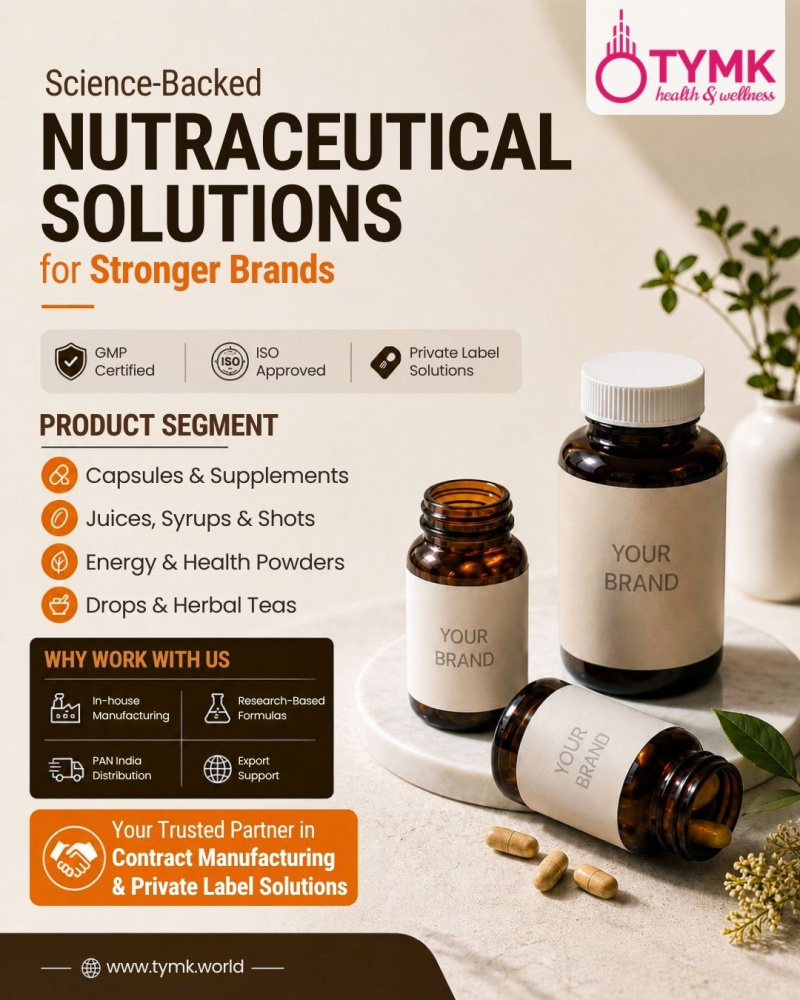
- OEM & private label manufacturing
- Skincare, baby care, and personal care solutions
- Scalable production systems for startups and established brands
- Quality-driven formulation and compliance support
What differentiates TYMK in this segment is structured manufacturing support combined with export-ready product standards. This reduces the operational burden for new brands entering competitive markets.
Featured Snippet (40–60 words)
OEM Baby Care Products are manufactured by third-party companies where formulation, production, and packaging are handled externally. Brands sell these products under their own label. This model helps startups launch baby care products faster with lower investment while ensuring safety, compliance, and scalable production.
Real-World Case Example
A D2C startup in India wanted to launch baby shampoo and lotion, but lacked formulation expertise. Instead of building a factory, they used an OEM Baby Care Products Manufacturer.
Within 60 days:
- The product line was developed
- Packaging was finalized
- Online launch was completed
Result: They reached ₹10 lakh monthly revenue within 6 months.
FAQ (People Also Ask)
1. What are OEM Baby Care Products?
OEM Baby Care Products are manufactured by third-party companies and sold under a brand’s private label. They include shampoo, lotion, oils, and soaps.
2. How does OEM Baby Care manufacturing work?
It involves formulation selection, sample approval, bulk production, packaging, and final dispatch under brand labeling.
3. Is the OEM Baby Care business profitable?
Yes, due to low setup cost and high demand in personal care, margins can be strong with proper branding.
4. Which is better: OEM or Private Label Baby Care Products?
OEM offers more customization, while private label is faster and more cost-effective for entry-level brands.
5. How to start a baby care brand with an OEM model?
Choose a manufacturer, finalize formulations, test samples, approve packaging, and launch via retail or online platforms.
- FDA Cosmetic Safety Guidelines: FDA Cosmetics Overview
Conclusion
OEM Baby Care Products offer a practical entry point for new and scaling brands. With the right manufacturing partner, businesses can reduce costs, improve speed-to-market, and maintain product safety standards while building a sustainable brand.
For competitive positioning, OEM manufacturing remains one of the most efficient models in the baby care industry.
Explore OEM Baby Care Products strategically before scaling your brand.