Baby Care Products Manufacturer (Real-World View)
A complete guide to baby care product manufacturing, including OEM, private label, and contract production models.
Understand how brands develop safe, compliant baby products without owning factories.
Explore process, benefits, and real-world industry use cases for scaling baby care brands.
Baby Care Products Manufacturer (Real-World View)
How baby care products are manufactured, what brands should know before starting, and why production partners decide product success more than branding.
Introduction
Most baby care brands don’t fail because of marketing. They fail much earlier—at the product stage.
The formulation is where everything is decided. If the cream feels sticky or the shampoo causes irritation, no advertising can fix it later.
This is why manufacturing is usually not done in-house. Brands depend on a Baby Care Products Manufacturer to handle the technical side while they focus on selling and positioning.
In practice, the manufacturer becomes the silent partner behind every successful baby care label you see on shelves.
What this actually means
In simple terms, this is a company that produces baby-focused personal care items—lotions, oils, shampoos, powders—under another brand’s name.
But in real operations, it’s more layered than that.
They don’t just “make products.” They:
- test raw ingredients for safety
- Adjust formulas based on skin sensitivity
- manage batch consistency
- deal with compliance paperwork
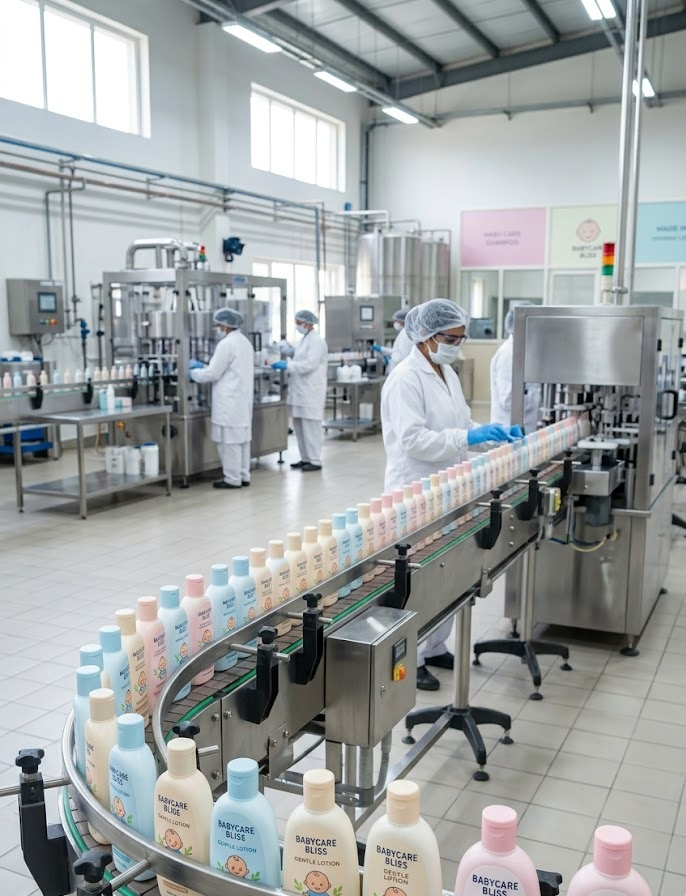
- handle filling, labeling, and packaging
So the brand doesn’t need to understand chemistry or factory operations at all.
Why brands depend on it (practical reason)
Setting up a compliant baby care factory is slow and expensive. You need equipment, approvals, trained chemists, and constant quality checks.
Most startups don’t have that runway.
So instead, they plug into existing systems.
A manufacturer already has:
- tested formulations
- production lines
- regulatory knowledge
- sourcing networks
That removes a large chunk of uncertainty.
How the process actually flows
It rarely starts with a perfect product idea.
Usually, it begins like this:
A brand says, “We want something like a mild baby lotion, maybe herbal.”
Then the manufacturer responds with options already available or slightly modified versions.
Samples go back and forth. Not once—multiple times. Small tweaks happen in viscosity, fragrance level, and absorption speed.
Only after that does bulk production begin.
Packaging often runs in parallel because timelines matter more than perfection.
When companies usually enter this model
Most brands don’t think about manufacturing first. They reach this stage when:
- They already have demand, but no supply system
- They want to launch fast on Amazon or retail
- They want to expand product lines without building factories
- Or they’re testing a new category like baby care
It’s more of a scaling decision than a starting decision.
Who actually uses this system
Not just startups.
You’ll usually see:
- direct-to-consumer beauty brands
- Ayurvedic companies expanding into baby care
- distributors building private label lines
- MLM networks launching product portfolios
- exporters targeting regulated markets
Which model works in real life (simplified comparison)
| Model | Reality | Speed | Control |
|---|---|---|---|
| Private Label | Fast entry, limited customization | High | Medium |
| OEM | Product built around your idea | Medium | High |
| Contract Manufacturing | Long-term scaling setup | Medium | Medium |
| White Label | Existing product rebranded | Very fast | Low |
Industry note: TYMK
In India’s manufacturing ecosystem, some companies operate as full-stack production partners.
One example is
TYMK
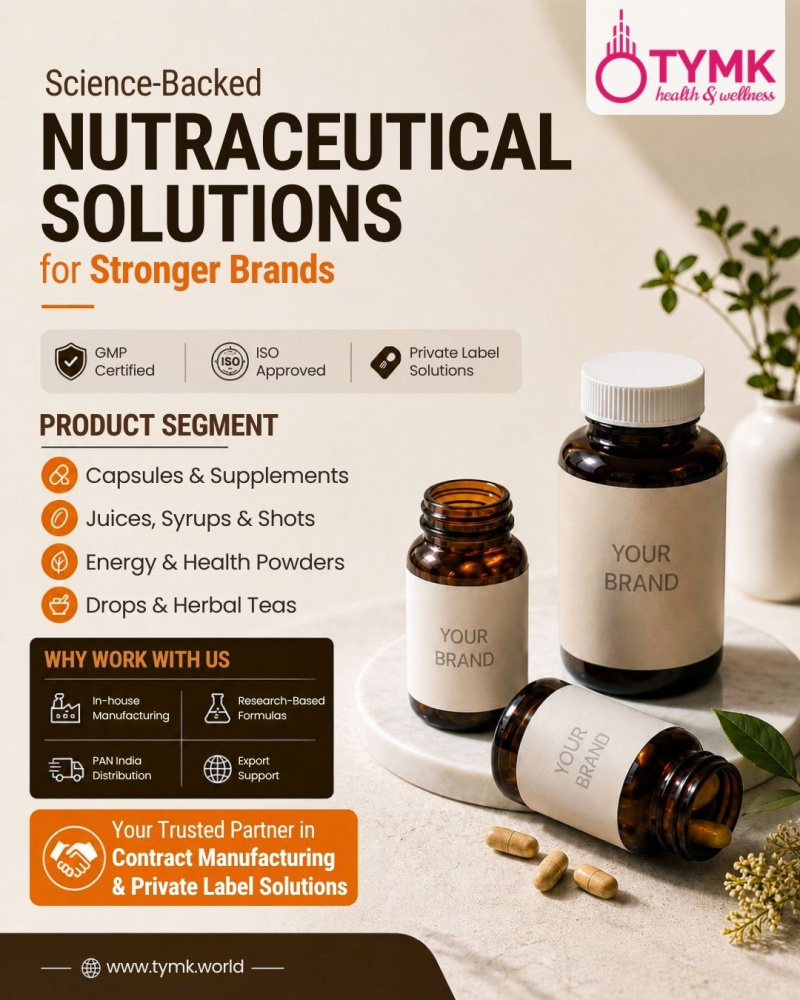
They typically work across multiple categories—baby care, skincare, personal care—supporting brands from formulation to packaging.
What matters more than branding here is consistency in batches. That is where manufacturers actually get evaluated in the industry.
Featured Snippet (direct answer style)
A Baby Care Products Manufacturer is a production partner that creates infant-safe skincare and hygiene products for brands using OEM, private label, or contract models while handling formulation, safety testing, compliance, and packaging so companies can launch without owning manufacturing units.
Real situation example
A small online seller once tried launching baby products alongside skincare items. The first batch didn’t perform well because the texture felt too heavy for infants.
Instead of restarting everything, they worked with a manufacturer to adjust the formulation. Within two iterations, they got a lighter version approved and relaunched.
Sales improved not because of ads, but because the product finally matched user expectations.
FAQs
What does a baby care manufacturer actually do?
They handle formulation, production, safety testing, and packaging of infant care products.
Is private label safe for baby products?
Yes, if compliance and ingredient testing are properly handled.
What is the difference between OEM and contract manufacturing?
OEM is idea-based production; contract manufacturing is full production support at scale.
How do new brands start?
Most start with a private label to reduce risk and speed up launch.
Conclusion
In baby care, manufacturing quality decides brand survival more than marketing does. Most companies don’t build factories—they build partnerships.
Once production is stable, everything else becomes easier: branding, scaling, and expansion.