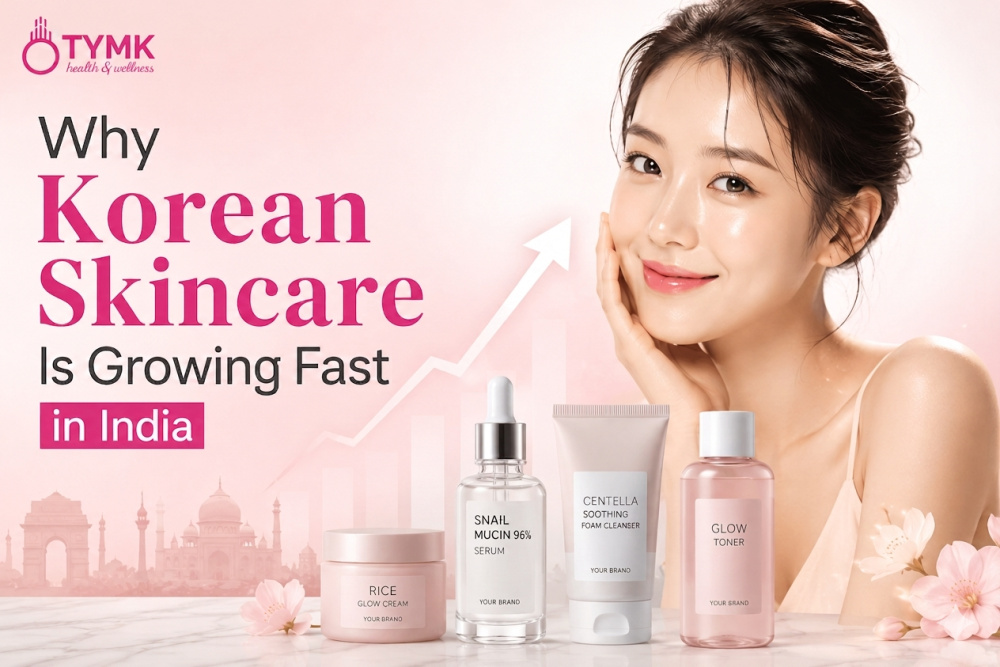
Why Korean Skincare Is Growing Fast in India
A closer look at why Korean skincare-inspired products are rising in India and how brands are quietly turning this into a strong business model.
Introduction
A few years back, skincare in India was… straightforward. Cleanser, cream, done.
Now? You hear things like skin barrier, hydration layers, and glass skin. Even smaller brands are talking like global ones.
It’s easy to assume this is just another trend. But it’s not behaving like one.
The demand for Korean skincare-inspired products in India has been steadily building—not because of marketing noise, but because people are actually sticking with these products after trying them.
And when customers stay, businesses notice.
What Exactly Are Korean skincare-inspired products?
There’s no single definition, which is where things get interesting.
It’s less about copying Korea and more about borrowing the approach—
gentler formulations, hydration-first thinking, and layering instead of over-treating.
In India, most brands don’t import this model directly. They adjust it.
That usually involves working with:
- White Label Cosmetic Manufacturer
- Customised Cosmetic Manufacturer
- OEM Skincare Products teams
The goal isn’t authenticity. It’s compatibility with Indian skin, weather, and pricing expectations.
Why This Shift Is Happening Now
It didn’t start from one place. Multiple things moved together.
People began noticing results.
Not overnight miracles, but consistent improvement. That builds trust.
Content removed confusion.
Short videos broke routines into steps anyone could follow without feeling overwhelmed.
Buyers changed their behavior.
They read ingredients now. Compare products. Ask questions.
There’s also something else happening quietly—
interest in:
- Herbal Products Private Label Manufacturer
- Ayurvedic Products White Label Manufacturer
hasn’t dropped. If anything, it’s blending into this trend.
How Brands Are Entering This Space
The process sounds technical, but in practice it’s quite straightforward.
It usually starts with a simple idea.
Something like: a serum that hydrates without feeling heavy in humid weather.
Then comes the execution layer:
- White label → fastest route
- Private label → more brand identity
- Contract manufacturing → deeper customization
Development often happens with:
- OEM Skincare Products teams
- Face Serum Manufacturer partners
Packaging decisions come later, but they matter more than expected. Clean design tends to perform better here.
Most launches don’t begin in stores. They start online—and stay there for a while.
When Does It Actually Make Sense to Start?
Not everyone should jump in just because the trend exists.
But it tends to work when:
- You’re building a new skincare brand
- You want to move beyond generic products
- You’re okay, positioning slightly premium
There’s also a practical advantage—
These products are easier to justify at a higher price point, even when production is optimized.
Who Is Typically Doing Well Here?
Different types of businesses are approaching this differently.
Some common ones:
- D2C skincare startups
- Creators launching small product lines
- Salon owners extending into retail
- MLM Product Manufacturer setups
- Network Marketing Product Supplier businesses
Even categories like:
- Baby Care Products Manufacturer
- Hair Care Products Manufacturer
are slowly aligning with similar ideas—gentle, repair-focused, ingredient-aware.
Manufacturing Choice — Not as Simple as It Looks
People often ask which option is best. There isn’t a fixed answer.
| Model |
Where It Fits |
| White Label |
Speed matters most |
| Private Label |
Balanced approach |
| Contract Manufacturing |
Strong differentiation |
| OEM |
Full control, long-term play |
In reality, the “best” option depends on how seriously the brand takes staying in the market.
A Small but Telling Example
A relatively unknown brand launched with just three products. Nothing complex:
What they did differently was positioning.
They didn’t claim to be Korean. They said inspired by Korean skincare, adapted for Indian conditions.
Subtle difference, but it worked.
Within a few months, repeat buyers started driving growth—not ads.
That’s usually where things become sustainable.
Where TYMK Comes In
Understanding a trend is one thing. Turning it into a working product line is another.
This is where many new brands slow down.
TYMK operates in that gap—between idea and execution.
They support:
- White label manufacturing
- OEM product development
- Multiple product categories under one roof
More importantly, they help translate trends into something practical. That’s often the harder part.
Korean skincare-inspired products are expanding in India due to growing demand for hydration-focused routines and ingredient-based formulations. Brands are increasingly working with partners like TYMK to develop white-label and OEM skincare products, allowing them to launch customized solutions that better match Indian skin types and climate conditions.
FAQs
Why are Korean skincare concepts working in India?
They focus on gradual skin improvement and hydration, which suits long-term skincare needs.
Do these products need modification for India?
Yes, most brands adapt formulations through OEM Skincare Products manufacturers to suit local conditions.
Is it difficult to launch such a product line?
Not necessarily. White Label Cosmetic Manufacturer options make entry relatively quick.
Is this market already saturated?
There is competition, but positioning and product quality still create space for new brands.
How should I select a manufacturer?
It helps to work with an experienced partner like TYMK, and for regulatory clarity, you can also review the Ministry of AYUSH guidelines (https://www.ayush.gov.in/), which outline standards relevant to product development in India.
Conclusion
What’s happening with Korean-inspired skincare in India doesn’t feel temporary.
It aligns with how consumer expectations are evolving—toward better ingredients, better experience, and more transparency.
For businesses, that creates a window. Not necessarily easy, but definitely real.
If approached with the right strategy, Korean skincare-inspired products in India can become more than just a trend-driven play—they can turn into a stable category.
For execution, you can explore practical options through https://tymk.world/ and see how these ideas translate into actual products.