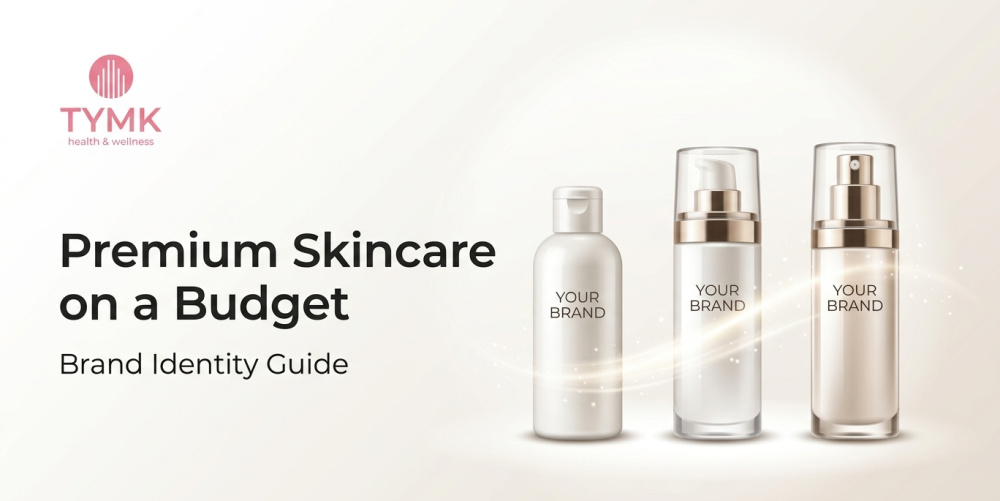
Premium Skincare Brand Identity on a Budget
Build a premium skincare brand identity on a budget with smarter packaging, branding, and positioning that increase trust and conversions.
Table of Contents
- Introduction
- What is a Premium Skincare Brand Identity?
- Why Branding Actually Decides Your Sales
- Real Story: What Changed Everything
- Step-by-Step: Building a Premium Identity
- When Should You Focus on Branding?
- Who Should Do This?
- Which Manufacturing Option Makes Sense?
- Quick Answer
- FAQs
- Conclusion
Introduction
Let’s be honest for a second.
Most skincare founders believe that if the product is good, it will sell. Sounds logical, right?
But here’s what actually happens in real life…
A customer sees your product for 2–3 seconds. That’s it.
They’re not reading ingredients. They’re not checking formulation.
They’re judging how it looks.
And if it doesn’t feel premium—even if it is—they scroll past.
This is exactly where many brands lose sales without even realizing why.
What is a Premium Skincare Brand Identity?
It’s not just your logo. Not just your packaging.
It’s the overall impression your brand creates instantly.
Think about it like this:
Before someone trusts your product, they need to trust your brand.
That trust comes from:
- Clean design
- Consistent colors
- Clear messaging
- A story that feels believable
Simple idea—but execution is where most go wrong.
Why Branding Actually Decides Your Sales
Here’s something most beginners overlook…
People don’t buy skincare purely for results.
They buy what feels safe, premium, and reliable.
And that feeling? Comes from branding.
In my experience, I’ve seen average products sell extremely well—just because they looked premium.
At the same time, genuinely good products struggled… because they didn’t look trustworthy.
It’s not always fair. But it’s real.
Real Story: What Changed Everything
A small seller (Instagram-based) was selling a face serum.
Nothing special about the setup:
- Basic plastic bottle
- Busy label design
- No clear positioning
- Price around ₹350
Sales were inconsistent.
Not zero—but nowhere near what they expected.
When we reviewed it, the issue became obvious pretty quickly.
It didn’t feel like a premium product.
So instead of changing the formula, they made a few simple adjustments:
- Switched to a matte-style bottle look
- Reduced label clutter
- Picked 2 consistent colors
- Added a clear message: “Made for Indian skin conditions.”
That’s it. No major investment.
Within a couple of months:
- Price moved to ₹799
- Conversions improved
- Customers started trusting the brand more
Same product. Different perception.
That shift is what branding does.
Step-by-Step: Building a Premium Identity
1. Start with Clear Positioning
Don’t try to be everything.
Pick one:
- Herbal
- Clinical
- Luxury
- Minimal
Blending all of them usually confuses customers.
2. Simplify Your Packaging
This is where many people overdo things.
More colors ≠ , more premium
More text ≠ , more informative
If anything, it does the opposite.
Premium brands remove noise. They don’t add it.
3. Choose Fonts Carefully
It sounds small—but it’s not.
Fonts silently communicate quality.
- Serif → slightly luxury feel
- Sans-serif → modern, clean
And honestly, using too many fonts is one of the fastest ways to look unprofessional.
4. Build a Believable Brand Story
Not something dramatic. Just something real.
For example:
- “Designed for humid Indian weather.”
- “Inspired by traditional herbal routines.”
That kind of clarity helps customers relate faster.
5. Stay Consistent (This One is Critical)
Your:
- Instagram
- Website
- Packaging
…should feel like the same brand.
If each one looks different, trust breaks.
6. Keep Costs Low with Smart Manufacturing
This is where you control the budget effectively.
Instead of building everything from scratch, most smart founders start with:
- White-label cosmetic manufacturer
- Private label skincare
It reduces risk and speeds up launch.
When Should You Focus on Branding?
Usually earlier than you think.
- Before your first launch
- When your product looks “basic.”
- When competitors look more premium
- When your pricing feels stuck
That last one is important.
If you can’t increase the price, branding is often the reason.
Who Should Do This?
This applies if you are:
- Starting a skincare brand
- Selling via Instagram or D2C
- Running a salon and launching products
- Testing a new beauty category
Basically, anyone trying to build a brand, not just sell a product.
Which Manufacturing Option Makes Sense?
| Option |
Cost |
When it Works |
| White Label |
Low |
Fast launch |
| Private Label |
Medium |
Brand-focused growth |
| Contract Manufacturing |
High |
Custom formulations |
If you’re just starting, keeping things simple usually works better.
How can you create a premium skincare brand identity on a budget?
By keeping your branding clean, consistent, and intentional. Focus on simple packaging, clear positioning, and a relatable brand story. Many founders also use private or white-label manufacturing from TYMK to reduce costs while still achieving a premium look and feel.
FAQs
1. What actually makes a skincare brand look premium to customers?
It’s usually not one big thing. It’s small details working together—clean design, limited colors, readable fonts, and consistency across everything the customer sees.
2. Is it possible to charge higher prices just by improving branding?
Yes, and it happens often. When perception improves, customers naturally associate the product with higher value.
3. What’s the biggest mistake beginners make in branding?
Trying to do too much. Too many colors, too much text, too many ideas—all of it reduces clarity.
4. How long does it take to build a strong brand identity?
Basic structure can be done in a few weeks, but refining it is an ongoing process.
5. What’s the most budget-friendly way to start?
Starting with white-label or private-label manufacturing is usually the most practical option.
6. Which platform can help simplify the process?
Some founders choose platforms like https://tymk.world/ to handle manufacturing, packaging, and product development together, which reduces complexity when starting out.
Conclusion
Here’s the bottom line.
You don’t need a massive budget to build a premium skincare brand.
You need better decisions.
Clean design.
Clear positioning.
Consistency across everything.
That’s what actually creates a premium feel.
And once people feel your brand is premium, pricing, trust, and sales tend to follow naturally.
If you’re building something in this space, start there.