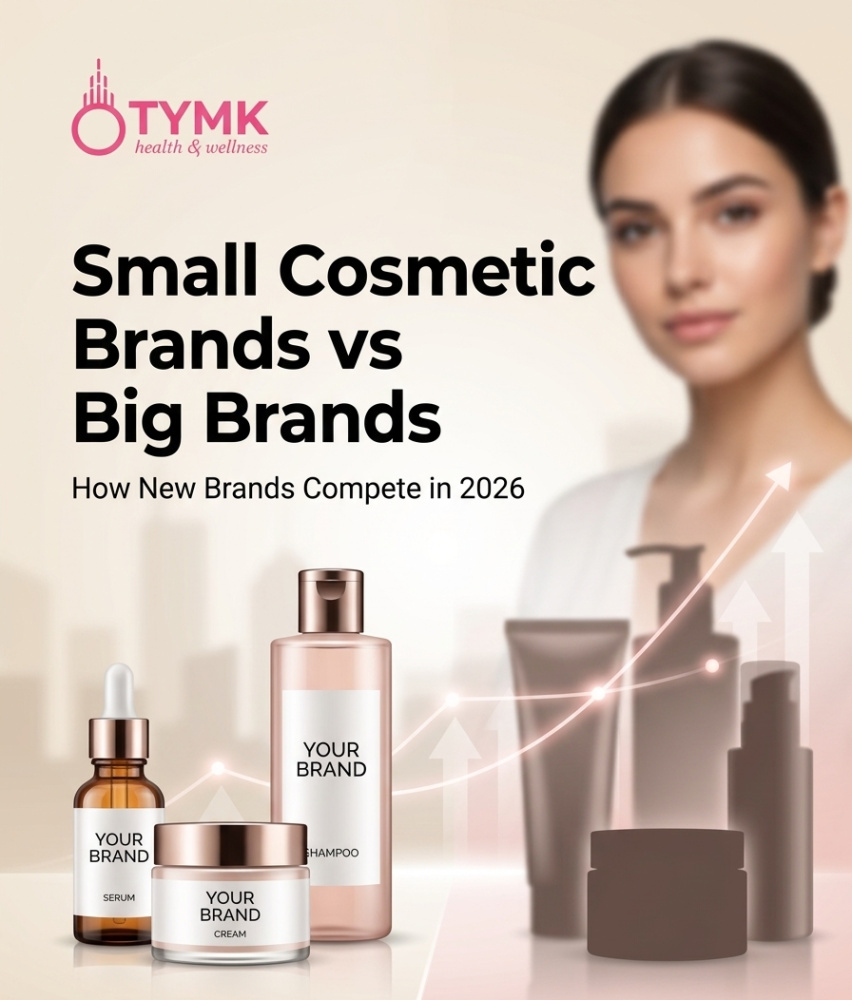
How Small Cosmetic Brands Compete with L’Oréal, Nivea & HUL
Learn how small cosmetic brands compete with L’Oréal, Nivea & HUL using private label manufacturing, faster innovation, and niche branding.
Table of Contents
- Why Small Cosmetic Brands Are Growing Fast
- What Makes Big FMCG Brands Vulnerable?
- How Small Brands Build Market Share
- The Role of Private Label & OEM Manufacturing
- Real-World Brand Growth Example
- Which Manufacturing Model Works Best?
- Why Businesses Prefer TYMK
- Featured Snippet
- FAQs
- Conclusion
Introduction
Ten years ago, launching a cosmetic brand against companies like L'Oréal or Hindustan Unilever looked unrealistic for smaller businesses.
Today, the market works differently.
Consumers are no longer loyal to only famous names. They are actively exploring herbal skincare, niche beauty products, customised formulations, cruelty-free cosmetics, and ingredient-focused brands. That shift has quietly changed the industry.
A small startup with smart branding and the right manufacturing partner can now grow faster than many traditional FMCG businesses in selected categories.
This is exactly why demand for a White Label Cosmetic Manufacturer, Customised Cosmetic Manufacturer, and Herbal Products Private Label Manufacturer continues to rise across India.
The interesting part is that most successful cosmetic startups don’t own factories. They focus on branding, marketing, packaging, and customer experience, while experienced manufacturing companies handle production.
Why Small Cosmetic Brands Are Growing Fast
Large corporations have scale, but smaller cosmetic brands have flexibility.
That flexibility matters more than ever because beauty trends now change rapidly through:
- Instagram,
- influencer marketing,
- YouTube reviews,
- and ecommerce marketplaces.
A multinational company may take months to approve and launch a new product line. A smaller business working with a white-label herbal products manufacturer can sometimes launch within weeks.
That speed creates opportunity.
Smaller brands also connect better with modern buyers because they focus on:
- personalized communication,
- niche targeting,
- premium packaging,
- and trend-driven product development.
What Makes Big FMCG Brands Vulnerable?
Most people assume big brands dominate every category permanently. In reality, large companies face several limitations.
| Big Brand Challenge |
Why Smaller Brands Benefit |
| Slow innovation cycles |
Faster product launches |
| Mass-market positioning |
Better niche targeting |
| Complex approvals |
Quick decision-making |
| Standardized products |
Customized offerings |
| Heavy operational systems |
Lower startup flexibility |
Now here’s the important part…
Customers today care more about ingredients and brand identity than television advertising. A small skincare brand with authentic positioning can outperform larger brands in specific segments.
That is why categories like:
- Face Serum Manufacturer
- Shampoo Private Label Manufacturer
- Perfume Contract Manufacturer
- Baby Care Products Manufacturer
- Colour Cosmetics Products Manufacturer
have become highly competitive.
How Small Brands Build Market Share
1. Faster Product Innovation
Smaller cosmetic brands quickly respond to trends like:
- niacinamide serums,
- herbal shampoos,
- sulfate-free products,
- vegan skincare,
- Ayurvedic cosmetics,
- and baby-safe formulations.
Working with a Face care products Contract Manufacturer or OEM Skincare Products supplier helps brands launch faster without large infrastructure investment.
2. Strong Community Marketing
Unlike traditional corporations, small brands build communities instead of only running advertisements.
They use:
- creator collaborations,
- real customer testimonials,
- short-form videos,
- educational content,
- and founder-led storytelling.
Consumers trust relatable brands more than overly polished corporate campaigns.
3. Smart Manufacturing Partnerships
Many growing brands scale using:
- MLM Product Manufacturer
- Direct Selling Product Manufacturer
- Network Marketing Product Supplier
- OEM Herbal Products
- Personal Care Products Manufacturer
This approach lowers operational costs and allows founders to focus on growth.
The Role of Private Label & OEM Manufacturing
Private label and OEM manufacturing changed the cosmetic industry completely.
Earlier, businesses needed:
- factory setups,
- huge machinery investments,
- technical staff,
- and regulatory infrastructure.
Today, experienced manufacturers already provide these systems.
Private Label Manufacturing
A Private Label Cosmetic Manufacturer offers ready-to-sell formulations that businesses can rebrand under their own name.
Best for:
- startups,
- ecommerce sellers,
- salons,
- and quick-launch beauty brands.
OEM Manufacturing
OEM manufacturing focuses on custom product development.
Examples include:
- OEM Face Care Products
- OEM Shampoo Manufacturer
- OEM Baby Care Products
- OEM Nutraceuticals Products
This model works better for brands wanting unique formulations and stronger market differentiation.
Real-World Example of a Growing Beauty Brand
A small Indian skincare startup began with only two products:
- a vitamin C face serum,
- and a herbal shampoo.
Instead of investing in machinery, the founders partnered with a Face Serum Contract Manufacturer and a Hair Care Products Contract Manufacturer.
For the first six months, sales remained average.
Then they improved:
- packaging quality,
- influencer collaborations,
- ingredient transparency,
- and customer education content.
Within two years:
- The brand expanded into marketplaces,
- Repeat orders increased,
- and the company introduced baby care and perfume categories.
Their success did not come from factory ownership.
It came from smart positioning and strong manufacturing partnerships.
Which Manufacturing Model Works Best?
| Business Goal |
Recommended Manufacturing Model |
| Quick market launch |
White Label |
| Unique formulations |
OEM |
| Large-scale production |
Contract Manufacturing |
| Low investment startup |
Private Label |
| Multi-category expansion |
Third-Party Manufacturing |
Search demand today clearly shows rising interest in:
- Healthcare Products Private Label Manufacturer
- Herbal supplements Products Manufacturer
- Toothpaste White Label Manufacturer
- PET Care Products Private Label Manufacturer
- Nutritional supplements Products White Label Manufacturer
This reflects how fast outsourced manufacturing is expanding in India.
Why Businesses Prefer TYMK
TYMK World supports brands looking to launch or scale cosmetic, skincare, herbal, wellness, and personal care products through private label and OEM manufacturing solutions.
Businesses often choose TYMK because of:
- multi-category product expertise,
- scalable manufacturing support,
- custom formulation options,
- packaging flexibility,
- and startup-friendly production systems.
Whether a company needs a:
- White Label Cosmetic Manufacturer,
- Shampoo Third-party Manufacturer,
- Baby Care Products Contract Manufacturer,
- or OEM Colour Cosmetics Products supplier,
TYMK supports different growth stages under one manufacturing ecosystem.
How do small cosmetic brands compete with large FMCG companies?
Small cosmetic brands compete with large FMCG companies by using private label manufacturing, faster product innovation, niche branding, influencer marketing, and flexible production systems. Companies like TYMK help emerging brands launch skincare, haircare, baby care, and cosmetic products without building their own manufacturing facilities.
FAQs
What is a White Label Cosmetic Manufacturer?
A White Label Cosmetic Manufacturer creates ready-made cosmetic products that businesses can sell under their own brand name.
Is OEM manufacturing better for cosmetic startups?
OEM manufacturing is ideal for brands wanting customised products, while private label manufacturing works better for faster market entry.
Why are small cosmetic brands growing rapidly?
Small cosmetic brands grow faster because they adapt quickly to trends, build stronger online communities, and launch products faster than large corporations.
What products can be launched through third-party manufacturing?
Businesses can launch:
- skincare,
- shampoo,
- perfumes,
- toothpaste,
- baby care,
- nutraceuticals,
- herbal supplements,
- and colour cosmetics.
Why is private label manufacturing popular in India?
Private label manufacturing reduces investment costs and helps businesses launch products quickly without factory ownership.
For cosmetic regulations and compliance updates in India:
Conclusion
The beauty industry has changed dramatically over the last few years.
Today, smaller cosmetic brands compete successfully against established FMCG giants by focusing on:
- speed,
- niche positioning,
- digital branding,
- and smart manufacturing partnerships.
Modern consumers care more about authenticity, ingredients, and personalisation than legacy advertising power.
With experienced manufacturing support from companies like TYMK World, emerging brands can scale across skincare, haircare, baby care, wellness, and cosmetic categories without massive infrastructure investment.