How Beverage Contract Manufacturing Works in India (2026 Guide)
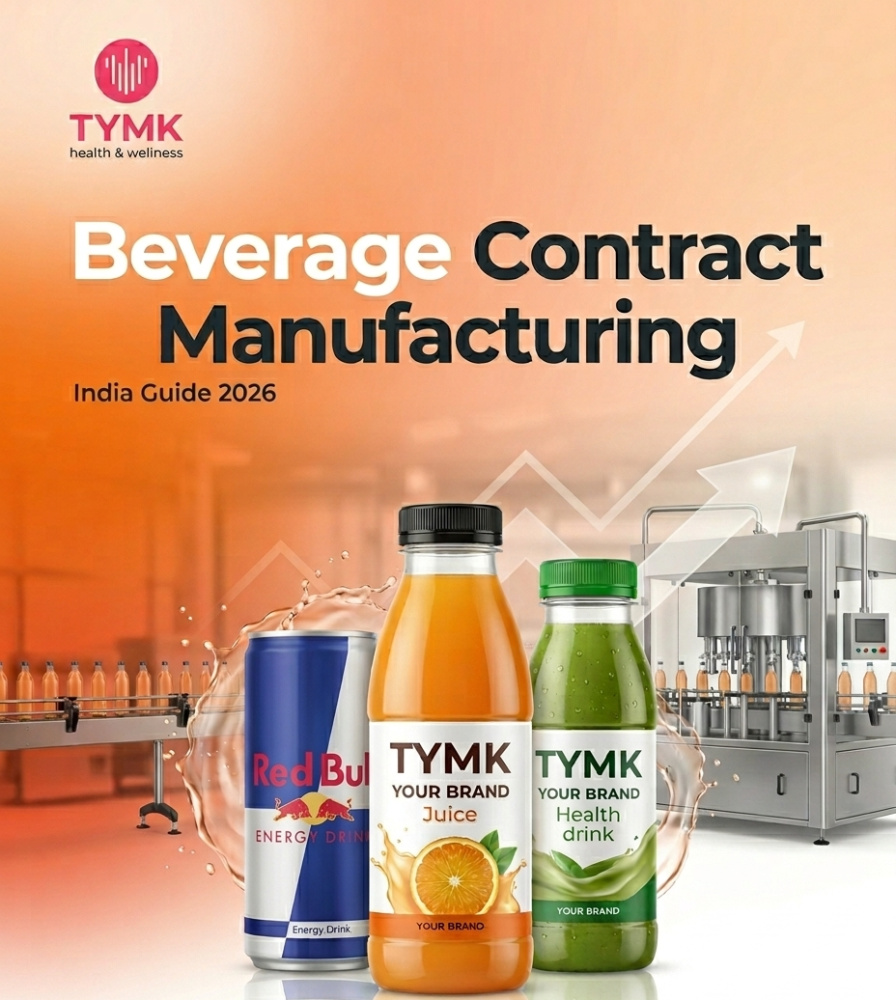
India’s beverage industry is rapidly shifting toward contract manufacturing as startups and established brands look for faster, cost-effective production solutions. This guide explains how beverage contract manufacturing works in 2026, including OEM, private label, and white-label models, along with the step-by-step process, benefits, challenges, and tips for choosing the right manufacturing partner.
How Beverage Contract Manufacturing Works in India (2026 Guide)
Discover how beverage contract manufacturing works in India in 2026. Learn OEM, white label, and private label processes, costs, benefits, and scaling tips.
Table of Contents
- What is Beverage Contract Manufacturing?
- Why Beverage Manufacturing is Booming in India
- How Beverage Contract Manufacturing Actually Works
- Types of Beverage Manufacturing Models
- Benefits for Startups and Growing Brands
- Common Challenges Brands Face
- Real Industry Example
- How to Choose the Right Manufacturing Partner
- Why Brands Work With TYMK
- Featured Snippet
- FAQs
- Conclusion
Introduction
A few years ago, launching a beverage brand in India usually meant one thing — massive investment.
You needed machinery, bottling systems, factory licenses, packaging vendors, testing labs, storage units, and a production team before even selling your first bottle.
Now the industry works very differently.
In 2026, most modern beverage startups prefer working with a beverage products contract manufacturer instead of building factories from scratch. It is faster, lower risk, and far more practical for brands that want to enter the market quickly.
This shift is one of the biggest reasons India’s FMCG and wellness sectors are expanding so aggressively.
From herbal drinks and protein beverages to functional nutrition products, brands are increasingly using:
- Beverages Private Label Manufacturer
- Beverages Products White Label Manufacturer
- OEM Beverages
- Third-party beverage manufacturing partnerships
to scale operations without owning manufacturing infrastructure.
Now here’s the important part…
Contract manufacturing is not only for large companies anymore. Small D2C brands, MLM companies, Ayurvedic startups, and even influencer-led beverage brands are using the same manufacturing ecosystem.
What is Beverage Contract Manufacturing?
Beverage contract manufacturing is a process where a company hires a specialized manufacturer to produce beverages under its own brand name.
The manufacturing company handles:
- Product formulation
- Ingredient sourcing
- Compliance
- Production
- Filling
- Packaging
- Labeling
- Bulk manufacturing
while the brand focuses on:
- Marketing
- Sales
- Branding
- Distribution
A Beverages Products Contract Manufacturer may produce:
- Energy drinks
- Herbal beverages
- Nutritional drinks
- Juice blends
- Functional beverages
- Ayurvedic wellness drinks
- Protein beverages
In many cases, businesses also combine:
- OEM Beverages
- Beverages Products White Label Manufacturer
- Beverages Private Label Manufacturer
Depending on customization requirements.
Why Beverage Manufacturing is Booming in India
India’s beverage sector has changed rapidly since 2023.
Consumers now actively search for:
- Low-sugar beverages
- Herbal drinks
- Functional wellness beverages
- Nutritional supplements
- Ayurvedic formulations
That demand created huge opportunities for:
- Food supplements Products Manufacturer
- Nutraceutical Products White Label Manufacturer
- Herbal supplements Products Third Party Manufacturer
At the same time, manufacturing costs increased significantly.
Most startups realized that building their own beverage plant involved:
- Crores in machinery investment
- FSSAI approvals
- Technical staff hiring
- Quality testing systems
- Warehousing infrastructure
That is why outsourcing became the smarter model.
In real-world terms, contract manufacturing allows brands to enter the market in months instead of years.
How Beverage Contract Manufacturing Actually Works
Step 1 — Product Discussion
The process usually starts with a consultation.
Brands explain:
- Product idea
- Flavor expectations
- Ingredients
- Packaging type
- Target audience
- Pricing goals
For example:
A startup may want a herbal hydration beverage for gym users.
Another company may require:
- Ayurvedic energy drinks
- Kids nutrition beverages
- MLM wellness drinks
This stage is extremely important because formulation decisions affect manufacturing costs later.
Step 2 — Formula Development
The manufacturer’s R&D team creates product samples.
This is common in:
- OEM Beverages
- Herbal products Contract Manufacturer
- Nutritional supplements products Contract Manufacturer
Some brands request:
- Sugar-free formulations
- Vegan ingredients
- Herbal extracts
- Protein blends
- Natural preservatives
The samples go through taste testing, stability checks, and shelf-life analysis.
Step 3 — Packaging Selection
Packaging influences:
- Shelf life
- Branding perception
- Logistics cost
- Retail appeal
Popular packaging choices include:
| Packaging Type | Common Usage |
|---|---|
| PET Bottles | Juice & flavored beverages |
| Cans | Energy drinks |
| Sachets | Nutritional beverages |
| Glass Bottles | Premium drinks |
| Tetra Packs | Dairy & wellness beverages |
An experienced Beverages Products White Label Manufacturer usually helps optimize packaging for both cost and product safety.
How Beverage Contract Manufacturing Works
A Beverages Products Contract Manufacturer produces beverages for brands using outsourced production facilities. The process includes formulation development, packaging selection, compliance approvals, bulk manufacturing, filling, labeling, and distribution support. In India, many companies use OEM, private label, and white-label beverage manufacturing to reduce investment costs and launch products faster in 2026.
Step 4 — Compliance & Certifications
This stage includes approvals like:
- FSSAI
- GMP
- ISO certifications
- HACCP standards
Without proper certifications, large retail distribution becomes difficult.
Most people don’t realize this, but compliance issues are one of the biggest reasons beverage startups fail during expansion.
Step 5 — Commercial Production
Once formulas and packaging are approved, production begins.
This includes:
- Ingredient blending
- Batch testing
- Sterilization
- Filling
- Sealing
- Labeling
- Quality inspection
A professional OEM Beverages partner maintains consistency across every batch.
Step 6 — Dispatch & Distribution
Finished products are delivered to:
- Warehouses
- Retail distributors
- E-commerce fulfillment centers
- Direct-selling networks
This model is also widely used by:
- MLM Product Manufacturer
- Network Marketing Product Manufacturer
- Direct Selling Product Supplier
Companies across India.
Types of Beverage Manufacturing Models
Private Label Beverage Manufacturing
A Beverages Private Label Manufacturer offers ready formulations with custom branding.
Best for:
- Fast product launch
- Low investment
- Startup brands
White Label Beverage Manufacturing
A Beverages Products White Label Manufacturer produces standard products sold to multiple brands with different labels.
Best for:
- Quick scaling
- Minimal R&D involvement
OEM Beverage Manufacturing
OEM Beverages involves custom formulations designed specifically for one brand.
Best for:
- Unique products
- Competitive differentiation
- Premium positioning
Benefits for Startups and Growing Brands
Lower Investment Risk
No need to purchase expensive machinery.
Faster Market Entry
Many products launch within 60–120 days.
Better Scalability
Production capacity increases as demand grows.
Access to Experts
Manufacturers already have:
- R&D teams
- Compliance specialists
- Packaging experts
- Production engineers
Common Challenges Brands Face
Choosing Cheap Manufacturers
Low-cost production often creates:
- Leakage problems
- Flavor inconsistency
- Packaging defects
Weak Shelf-Life Testing
Some brands ignore stability testing and later face product returns.
Poor Ingredient Sourcing
Low-quality raw materials damage customer trust quickly.
Real Industry Example
In 2025, a wellness startup from Gujarat planned to launch a herbal electrolyte beverage.
Initially, the founders wanted to build a small factory. But after reviewing machinery costs, staff requirements, and licensing expenses, the estimated setup crossed ₹3 crore.
Instead, they partnered with a Beverages Products Contract Manufacturer.
The company used:
- White-label formulation support
- PET bottle packaging
- OEM flavor customization
- Distributor-ready logistics
Within 8 months, the brand expanded into:
- Amazon
- Modern retail stores
- Gym distribution chains
Later, they upgraded from standard white-label products to a customized OEM Beverages model.
How to Choose the Right Manufacturing Partner
Before selecting a manufacturer, check:
| Factor | Why It Matters |
|---|---|
| Certifications | Compliance & retail approval |
| Production Capacity | Future scalability |
| R&D Support | Better formulations |
| Packaging Options | Branding flexibility |
| MOQ Flexibility | Startup-friendly operations |
| Quality Testing | Product consistency |
A strong manufacturing partner reduces operational headaches significantly.
Why Brands Prefer TYMK
TYMK supports multiple FMCG and wellness manufacturing categories, including:
- Beverages Products Contract Manufacturer
- Healthcare Products Private Label Manufacturer
- Ayurvedic Products White Label Manufacturer
- Shampoo Manufacturer
- Face Serum Manufacturer
- Colour Cosmetics Products Contract Manufacturer
- Baby Care Products White Label Manufacturer
- Herbal Toothpaste Manufacturer
Many businesses choose TYMK because of:
- Product customization support
- OEM manufacturing solutions
- Packaging development
- Scalable production systems
- Multi-category expertise
For startups, this creates a smoother launch process with fewer operational barriers.
FAQs
What is a Beverages Products Contract Manufacturer?
A beverage contract manufacturer produces drinks for brands using outsourced production facilities and manufacturing infrastructure.
What is the difference between OEM and white-label beverages?
White-label beverages use pre-developed formulas, while OEM beverages involve custom product development.
Is beverage contract manufacturing profitable?
Yes. It reduces infrastructure investment and speeds up market entry for beverage brands.
How long does beverage manufacturing take?
Most beverage projects take between 45 days and 6 months, depending on formulation complexity.
Can startups use private-label beverage manufacturing?
Yes. Many startups use private-label beverage manufacturing because it lowers risk and launch costs.
Why do companies choose TYMK?
TYMK offers manufacturing support across beverages, Ayurvedic products, healthcare, nutraceuticals, cosmetics, and personal care categories.
Conclusion
The Indian beverage market is becoming more competitive every year.
Brands that move faster, launch smarter, and scale efficiently usually perform better in this space.
That is why companies increasingly rely on:
- Beverages Products Contract Manufacturer
- Beverages Products White Label Manufacturer
- Beverages Private Label Manufacturer
- OEM Beverages
Instead of building manufacturing plants from scratch.
For startups and growing FMCG companies, contract manufacturing has become one of the most practical growth strategies in 2026.
To explore beverage manufacturing solutions, OEM development, or private-label opportunities, visit TYMK's official website.