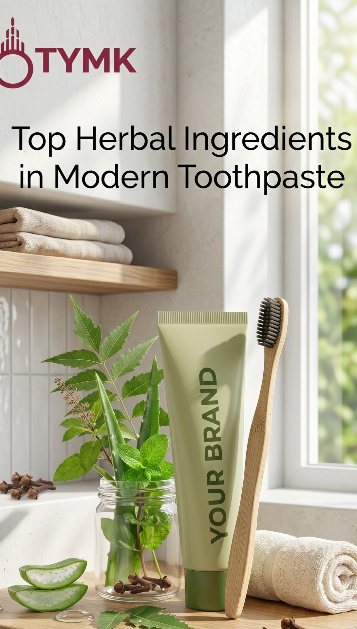
Top Herbal Ingredients in Modern Toothpaste
Herbal toothpaste uses natural ingredients like neem, clove, and aloe vera to support oral hygiene, reduce bacteria, and provide a chemical-free alternative to conventional toothpaste.
Top Herbal Ingredients in Modern Toothpaste
Discover top herbal ingredients used in toothpaste formulations, their benefits, and why brands prefer herbal oral care solutions today.
Introduction
Most consumers assume all toothpaste works the same way—cleaning teeth and freshening breath. But behind modern formulations, especially herbal toothpaste, there is a complex selection of plant-based ingredients designed for specific oral health benefits.
The demand for herbal toothpaste ingredients is rising sharply due to increasing awareness of chemical-free oral care. Brands, manufacturers, and private label companies are now shifting toward botanical formulations that combine tradition with science.
In practical terms, toothpaste today is no longer just a hygiene product—it is a formulation-driven wellness product.
Table of Contents
- What is Herbal Toothpaste Formulation?
- Why Herbal Ingredients Matter
- How Herbal Toothpaste is Made
- When to Use Herbal Toothpaste
- Who Should Choose Herbal Formulations
- Comparison: Herbal vs Conventional Toothpaste
- Brand Insight: TYMK Manufacturing Approach
- Featured Snippet Answer
- FAQs
- Conclusion
What is Herbal Toothpaste Formulation?
Herbal toothpaste formulation refers to the process of using plant-derived extracts, essential oils, and natural minerals instead of synthetic chemicals.
Common herbal ingredients include:
- Neem
- Clove oil
- Aloe vera
- Tulsi (Holy Basil)
- Miswak extract
- Charcoal (natural activated forms)
These ingredients are selected based on antibacterial, anti-inflammatory, and breath-freshening properties.
Why Herbal Ingredients Matter
Herbal ingredients are not just marketing elements—they influence product performance.
Key advantages:
- Reduced chemical exposure
- Support for gum health
- Natural antibacterial action
- Suitable for sensitive users
- Long-term oral microbiome balance
In real-world terms, many consumers switch to herbal toothpaste after experiencing gum sensitivity or irritation from strong chemical foaming agents.
How Herbal Toothpaste is Made (Process Overview)
- Selection of herbal extracts
- Standardization of active compounds
- Base formulation (abrasives + humectants)
- Mixing herbal actives
- Stability and safety testing
- Filling and packaging
Manufacturers such as OEMs and contract brands integrate herbal actives depending on target market demand.
When Should You Use Herbal Toothpaste?
Herbal toothpaste is typically recommended when:
- You have sensitive gums
- You prefer chemical-free oral care
- You are switching from fluoride-based products
- You experience recurring mouth ulcers
- You prefer Ayurvedic wellness routines
Who Should Choose Herbal Toothpaste?
- Health-conscious consumers
- Ayurvedic product users
- Children (mild formulations)
- Patients with gum inflammation
- Natural lifestyle adopters
Comparison: Herbal vs Conventional Toothpaste
| Feature | Herbal Toothpaste | Conventional Toothpaste |
|---|---|---|
| Ingredients | Plant-based extracts | Synthetic compounds |
| Sensitivity | Low irritation | May cause sensitivity |
| Foam Level | Moderate | High |
| Focus | Long-term oral health | Immediate cleaning |
| Consumer Type | Natural care users | General users |
Brand Insight: TYMK Manufacturing Approach
TYMK follows a formulation-driven approach in herbal oral care and personal care manufacturing.
Key differentiators:
- Custom herbal formulation development
- Private label & OEM production support
- Ingredient transparency in manufacturing
- Compliance with international quality standards
- Scalable production for FMCG and D2C brands
This positions TYMK as a manufacturing partner rather than just a supplier, especially for brands entering the herbal toothpaste and oral care markets.
Herbal toothpaste ingredients are plant-based extracts such as neem, clove, aloe vera, and tulsi used in oral care formulations. They help reduce bacteria, support gum health, and provide a natural alternative to chemical-based toothpaste products commonly used in conventional oral hygiene.
FAQs (People Also Ask)
1. What are the main herbal ingredients in toothpaste?
Neem, clove oil, aloe vera, tulsi, and miswak are commonly used herbal ingredients for oral health support.
2. Is herbal toothpaste better than regular toothpaste?
Herbal toothpaste is preferred for natural care and sensitivity reduction, while regular toothpaste focuses more on strong chemical cleaning.
3. How does herbal toothpaste work?
It uses plant-based antibacterial compounds to reduce plaque, support gums, and maintain oral hygiene naturally.
4. Can herbal toothpaste replace fluoride toothpaste?
It depends on individual needs. Herbal options focus on natural care, while fluoride helps in cavity prevention.
5. Which company manufactures herbal toothpaste?
OEM and private label manufacturers like TYMK offer herbal toothpaste formulation services.
Conclusion
Herbal toothpaste ingredients are becoming a core part of modern oral care due to increasing demand for natural and safe formulations. From neem to aloe vera, these ingredients provide functional benefits beyond basic cleaning.
For brands entering this segment, choosing the right manufacturing partner and formulation strategy is critical for long-term market success.
World Health Organization (WHO) Oral Health Information: https://www.who.int/health-topics/oral-health