How Beverage Startups Launch Brands Without Building a Factory
Discover how startups launch beverage brands through private label and contract manufacturing without owning a factory in India.
Not long ago, starting a beverage company was mostly limited to large businesses. Manufacturing plants were expensive, approvals took time, and production management required technical expertise.
That model has changed.
Today, many small and mid-sized brands launch beverages without owning a single machine. They partner with a Beverages Private Label Manufacturer or a Beverages Products Contract Manufacturer that already has production systems in place.
The arrangement is practical.
The manufacturer handles production.
The brand owner builds the business.
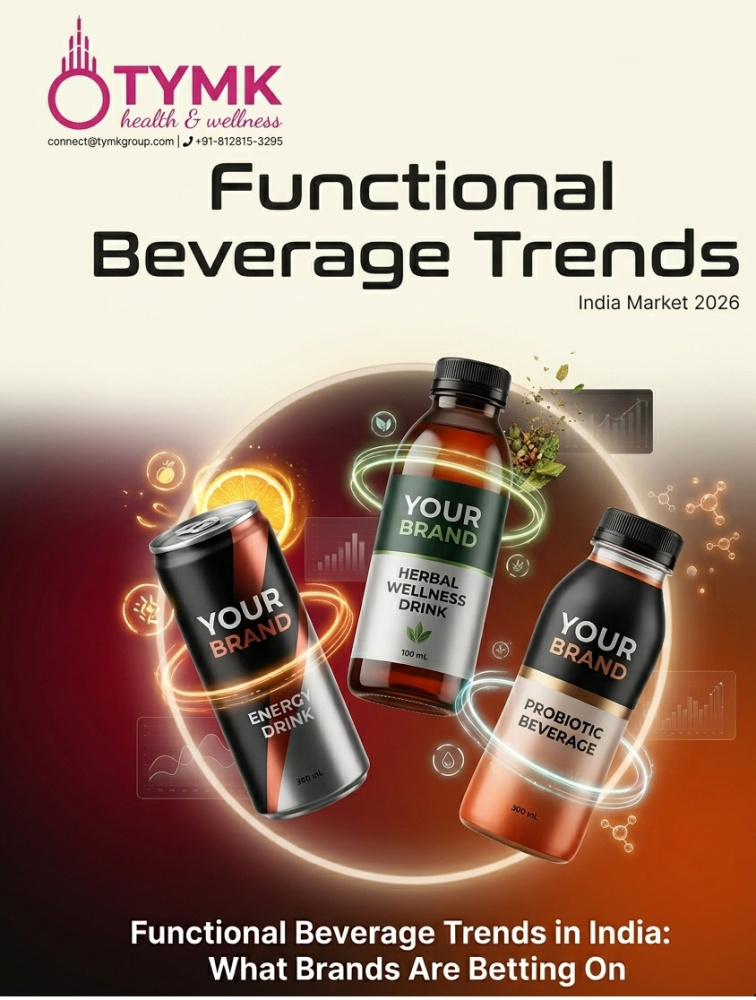
This approach is now common across categories like herbal drinks, nutrition beverages, wellness products, protein drinks, and functional beverages.
For first-time entrepreneurs, it also removes one major barrier — massive startup investment.
Table of Contents
| No. |
Topic |
| 1 |
Understanding Private Label Beverage Manufacturing |
| 2 |
Why Startups Choose This Model |
| 3 |
How Beverage Contract Manufacturing Works |
| 4 |
Different Manufacturing Options |
| 5 |
Real Startup Scenario |
| 6 |
Mistakes New Brands Often Make |
| 7 |
Choosing a Manufacturing Partner |
| 8 |
Why Businesses Prefer TYMK |
| 9 |
FAQs |
| 10 |
Conclusion |
What is Private Label Beverage Manufacturing?
Private label beverage manufacturing means selling products under your own brand while production is managed by another company.
The manufacturer may already have:
- Production facilities
- Technical teams
- Packaging systems
- Compliance approvals
- R&D support
Instead of spending heavily on infrastructure, businesses use existing manufacturing capabilities to enter the market faster.
This model is widely used for:
- Energy beverages
- Herbal drinks
- Functional beverages
- Nutritional drinks
- Sports beverages
- Wellness products
A Beverages Products White Label Manufacturer generally offers ready-made formulations. Businesses mainly customize labels and branding.
A Beverages Products Contract Manufacturer usually supports more detailed customization, including ingredients, taste profiles, and packaging requirements.
What is a Private Label Beverage Brand?
A private label beverage brand is created when a company sells drinks under its own brand name while manufacturing is handled by a third-party producer. This model reduces setup costs, speeds up product launch, and allows businesses to focus on branding and sales. TYMK supports beverage businesses with private label and contract manufacturing solutions.
Why Many Founders Avoid Building Manufacturing Units
Owning a factory sounds impressive in theory.
In practice, the situation becomes more complicated once actual costs appear.
A small beverage setup may involve:
- Machinery investment
- Warehouse expenses
- Licensing approvals
- Production staff
- Maintenance costs
- Utility management
- Quality testing systems
For startups, these expenses create pressure before the product even reaches customers.
That’s why many businesses now choose OEM Beverages or private label manufacturing instead.
Here’s how that helps:
| Benefit |
Business Impact |
| Lower investment |
Reduces financial risk |
| Faster market entry |
Products launch quicker |
| Expert production support |
Better product consistency |
| Easier scaling |
Production grows with demand |
| More time for branding |
Founders focus on sales |
In many cases, the speed advantage becomes more valuable than factory ownership itself.
How Beverage Contract Manufacturing Usually Works
Step 1 — Selecting the Product Category
Most brands begin by deciding what type of beverage they want to launch.
Popular categories include:
- Protein drinks
- Herbal beverages
- Detox drinks
- Functional beverages
- Energy drinks
- Nutritional beverages
Businesses entering the wellness segment often work with a private-label manufacturer of herbal products because herbal formulations require specialized development.
Step 2 — Identifying the Target Market
The product should match a specific audience.
For example:
| Customer Group |
Common Beverage Type |
| Gym users |
Protein beverages |
| Young consumers |
Energy drinks |
| Wellness buyers |
Herbal drinks |
| Families |
Nutritional beverages |
| Retail chains |
Mass-market beverages |
This decision influences pricing, packaging, bottle design, and marketing style.
Step 3 — Choosing the Manufacturing Model
Different production models suit different business goals.
| Manufacturing Option |
Suitable For |
| Beverages Products White Label Manufacturer |
Faster launch |
| Beverages Private Label Manufacturer |
Brand customization |
| Beverages Products Contract Manufacturer |
Full formulation control |
| OEM Beverages |
Large-scale production |
Some startups prefer white-label products because they can launch quickly using existing formulations.
Others choose contract manufacturing for stronger product differentiation.
Step 4 — Branding and Packaging Development
Packaging matters more than many new founders expect.
Customers usually notice the bottle before reading the ingredients.
That’s why businesses spend time on:
- Label design
- Product positioning
- Packaging colors
- Bottle style
- Ingredient presentation
Even a strong formulation can struggle if the packaging looks weak or outdated.
Step 5 — Compliance and Certification
Beverage products require proper compliance approvals before entering the market.
Common certifications include:
| Certification |
Purpose |
| FSSAI |
Food safety approval |
| GMP |
Production quality standards |
| ISO |
Quality management |
| HACCP |
Food safety systems |
Official information is available on the FSSAI website.
A Real Startup Situation
A founder from western India planned to launch a herbal hydration drink aimed at fitness users.
Initially, the plan involved setting up a small production facility.
After discussing costs related to machinery, staffing, rental space, approvals, utilities, and packaging systems, the investment estimate increased far beyond expectations.
The business model changed after that.
Instead of building a factory, the founder partnered with a beverage products contract manufacturer.
The manufacturer handled:
- Product development
- Trial production
- Packaging support
- Compliance assistance
- Bulk manufacturing
Meanwhile, the founder concentrated on social media marketing, retail outreach, and online sales.
The product reached the market much faster than originally planned.
Common Problems New Beverage Brands Face
Launching Too Many Products Early
Some businesses introduce several flavors immediately without validating customer demand first.
Usually, one successful product creates better momentum.
Selecting Manufacturers Only by Price
Low-cost manufacturing can create long-term consistency issues.
Reliable production quality matters more than saving a small amount initially.
Weak Branding
Packaging strongly affects customer perception.
Consumers often decide product quality visually before purchase.
Unclear Product Positioning
Some brands fail because customers cannot quickly understand:
- What the product does
- Who it is for
- Why is it different
Clear communication matters.
How to Evaluate a Beverage Manufacturing Partner
Before choosing a manufacturer, businesses usually review several factors carefully.
| Factor |
Reason |
| Manufacturing experience |
Better consistency |
| Certifications |
Compliance assurance |
| MOQ flexibility |
Startup-friendly production |
| Packaging support |
Improved presentation |
| R&D capability |
Product innovation |
| Multi-category support |
Easier expansion |
Some brands later expand into categories like:
- Healthcare Products Private Label Manufacturer
- Food supplements Products White Label Manufacturer
- Nutraceutical Products White Label Manufacturer
- Personal Care Products Manufacturer
- Herbal supplements Products Manufacturer
Working with a manufacturer that supports multiple categories often simplifies future growth.
Why Businesses Work With TYMK
TYMK World supports businesses looking for private label, contract manufacturing, and OEM product solutions across multiple industries.
Businesses often prefer TYMK because of:
- Flexible manufacturing support
- Product customization options
- Multi-category production capabilities
- Startup-oriented solutions
- Packaging assistance
- Quality-focused systems
TYMK also works across segments such as:
- White Label Cosmetic Manufacturer
- Customised Cosmetic Manufacturer
- Perfume Private Label Manufacturer
- Hair Care Products Manufacturer
- Shampoo Manufacturer
- Toothpaste White Label Manufacturer
- MLM Product Manufacturer
- Network Marketing Product Supplier
- Direct Selling Product Manufacturer
This gives growing businesses flexibility when expanding into new product categories.
FAQs
How can I launch a beverage brand without owning a factory?
You can work with a Beverages Private Label Manufacturer that manages production, packaging, and compliance. TYMK supports customized beverage manufacturing solutions for startups and businesses.
What is the difference between private-label and white-label beverages?
White-label beverages use pre-developed formulations, while private-label beverages allow more customization in ingredients, branding, and packaging.
Is beverage contract manufacturing suitable for startups?
Yes. It reduces infrastructure investment and allows startups to focus on branding, marketing, and customer acquisition.
What certifications are important for beverage manufacturing?
FSSAI, GMP, ISO, and HACCP certifications are commonly required for beverage manufacturing compliance.
Can herbal beverages be developed through OEM manufacturing?
Yes. Many startups use OEM Beverages and Herbal products Contract Manufacturer services for herbal beverage production.
Conclusion
Starting a beverage business no longer requires factory ownership or large infrastructure investment.
Private label and contract manufacturing models have made the industry more accessible for startups and growing brands.
Instead of spending heavily on production facilities, businesses can now focus on customer acquisition, branding, packaging, and distribution.
For many founders, this approach creates a faster and more practical path to market entry.
Businesses exploring beverage manufacturing opportunities can learn more through TYMK World.