Beverages Products White Label Manufacturer (Practical Guide 2026)
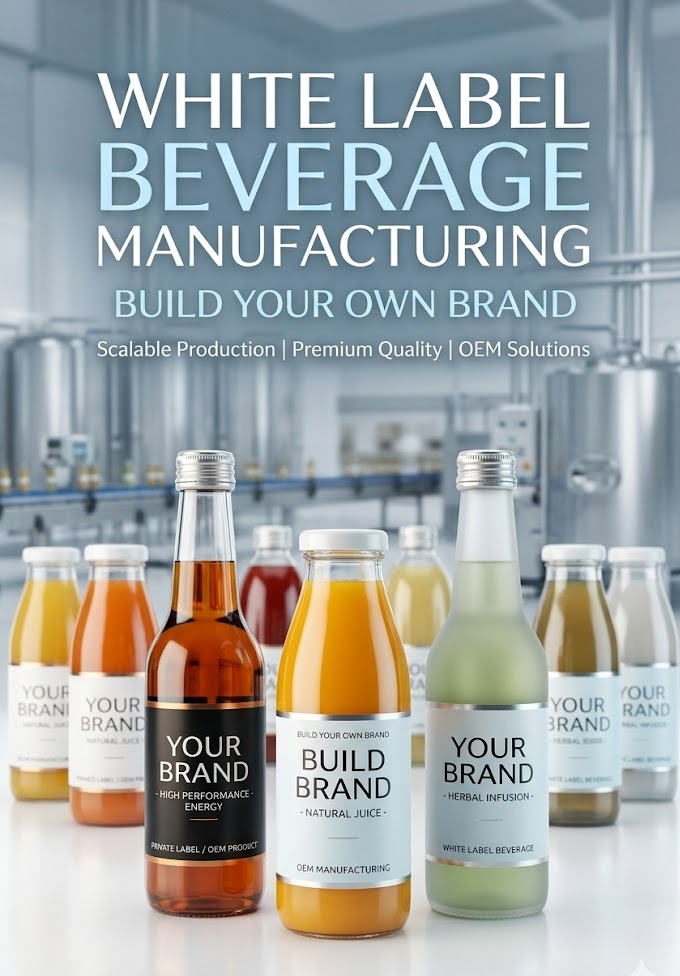
A beverage product's white-label manufacturer helps brands launch ready-made drink products under their own label without setting up manufacturing units. It reduces cost, speeds up market entry, and allows businesses to focus on branding, marketing, and distribution while production and quality control are handled by the manufacturer.
Beverages Products White Label Manufacturer (Practical Guide 2026)
Introduction
A lot of people underestimate how difficult it actually is to launch a beverage brand.
On paper, it looks simple — create a drink, design a label, sell it. But in reality, things move slowly. Formulation testing, licensing, packaging trials, production setup… it easily stretches into months, sometimes even years.
That’s exactly why beverages white label manufacturing has quietly become a standard route for new brands.
Instead of building everything internally, companies simply take a ready-made product and build their own identity around it. Not glamorous, but practical. And in fast-moving FMCG categories, practicality wins more often than creativity.
What is a Beverages Products White Label Manufacturer?
A beverages white label manufacturer is basically a production company that already has drink formulations ready.
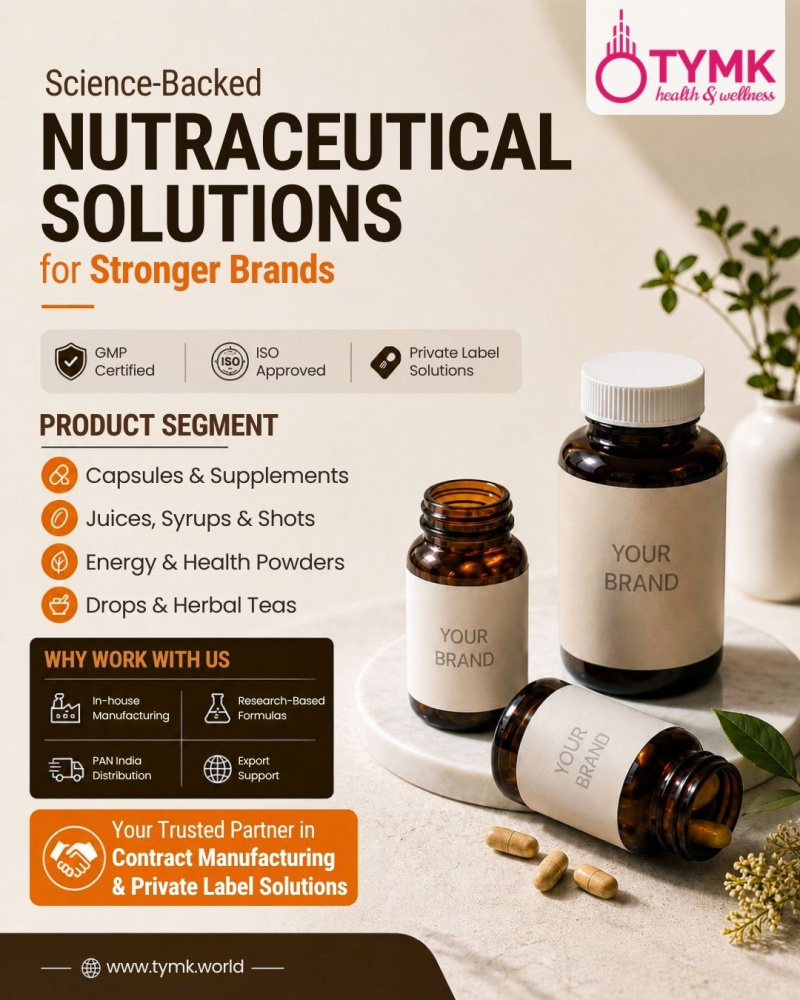
These could be juices, energy drinks, health beverages, or functional wellness drinks. The product is already developed and tested. What changes is only the branding.
So one product can exist in the market under multiple brand names.
To put it simply:
- Manufacturer makes the drink
- You add branding and positioning
- You sell it as your own product
Nothing complicated in theory. Execution is where most businesses differentiate themselves.
Why This Model Matters in Real Business Terms
If you look at FMCG expansion over the last decade, speed has become more important than perfection.
Brands don’t fail because they don’t have good ideas. They fail because they take too long to execute.
White label manufacturing solves a very specific problem — time.
Instead of spending months developing formulas and testing stability, businesses start from something already proven. That alone removes a big chunk of uncertainty.
There’s another angle too. Cash flow.
Most startups don’t have the luxury of investing heavily in R&D and production infrastructure. White label reduces that pressure significantly.
How the Process Actually Works (Behind the Scenes)
The process is more structured than most people assume, but not overly complex.
First comes selection. You don’t start from zero. You choose from existing beverage formulations that the manufacturer already has in production cycles.
Then branding comes into play. This is where most businesses spend their effort — packaging, label design, and positioning.
After that, samples are shared. This step is often underestimated. Small changes in taste or sweetness level are usually adjusted here.
Once approved, production moves into batches. Depending on scale, this could be small pilot runs or full commercial production.
Finally, packaging and dispatch happen. At this stage, the product is no longer “manufactured goods” — it becomes a brand-ready product.
When It Actually Makes Sense to Use White Label Manufacturing
Not every business should go for this model.
It works best in a few specific situations:
If you want to test a product idea without heavy investment, this is probably the safest route.
If you already run a retail or online brand and want to expand into beverages, it saves a lot of operational complexity.
And if speed matters more than deep customization, white label is usually the logical choice.
Where it doesn’t work well is when a brand wants something extremely unique in formulation. At that point, private label or contract development becomes more relevant.
Who Typically Uses This Model
In practice, this is not limited to startups.
You’ll find different types of businesses using it:
New FMCG entrepreneurs entering the beverage space
E-commerce sellers building private brands
MLM and network marketing companies
Retail chains launching in-house products
Fitness and wellness brands expanding product lines
It’s less about company size and more about execution speed.
White Label vs Private Label vs Contract Manufacturing
There’s often confusion between these terms.
White label is the simplest form — ready product, minimal changes.
Private label allows more customization in formulation and ingredients.
Contract manufacturing is the most flexible but also the most resource-heavy, because the product is built from scratch.
| Model | Customization | Speed | Cost | Use Case |
|---|---|---|---|---|
| White Label | Low | Fast | Low | Entry-level brands |
| Private Label | Medium | Medium | Medium | Growing brands |
| Contract | High | Slow | High | Established companies |
Most new beverage brands begin with white label and evolve later.
A Simple Real-World Example
A small wellness brand I came across recently wanted to enter the functional drink category.
They didn’t have production capability, so instead of waiting a year to build infrastructure, they partnered with a white label manufacturer.
Within about a month and a half, they had:
- Product finalized
- Packaging designed
- First batch ready for distribution
They didn’t “innovate” anything dramatic in the beginning. They just moved faster than competitors.
That was the real advantage.
Key Advantages (Without Overcomplicating It)
The biggest benefit is obvious — faster launch.
But there are smaller advantages that matter more in practice:
You reduce upfront risk. You don’t invest heavily in uncertain demand. You also avoid operational headaches like production downtime, machinery issues, or ingredient sourcing problems.
Most importantly, it allows founders to focus on branding and customer acquisition instead of manufacturing details.
Limitations You Should Be Aware Of
It’s not a perfect system.
Since formulations are pre-developed, differentiation can be limited unless branding is strong.
Also, dependency on manufacturer consistency is real. If they change anything in production, it affects your product too.
So while it’s efficient, it requires choosing the right manufacturing partner carefully.
Trust and Manufacturing Standards
In serious manufacturing setups, especially in regulated FMCG sectors, quality control is not optional.
Facilities typically follow GMP standards, batch testing, and regulatory compliance checks.
That is where credibility actually comes from — not marketing language, but repeatable production quality.
Featured Snippet (Direct Answer Style)
A beverages white label manufacturer produces ready-made drink formulations that companies can brand and sell as their own. It allows faster product launches, reduces investment cost, and removes the need for manufacturing infrastructure while ensuring compliance and consistency.
FAQs
What is a white-label beverage manufacturer?
It is a company that produces ready-made beverages that other brands sell under their own name.
Is the white-label beverage business profitable?
Yes, because it reduces setup cost and speeds up time to market.
How long does it take to launch a beverage brand?
Usually between 3 and 8 weeks, depending on packaging and approvals.
Do I need my own factory?
No, the manufacturer handles production completely.
What is the main difference between white label and private label?
White label uses existing formulas, and private label allows more customization.
Conclusion
White-label beverage manufacturing is less about shortcuts and more about efficiency.
It removes unnecessary barriers so brands can focus on what actually matters — positioning, marketing, and distribution.
For many new entrants in FMCG, it’s not just an option anymore. It’s the default starting point.