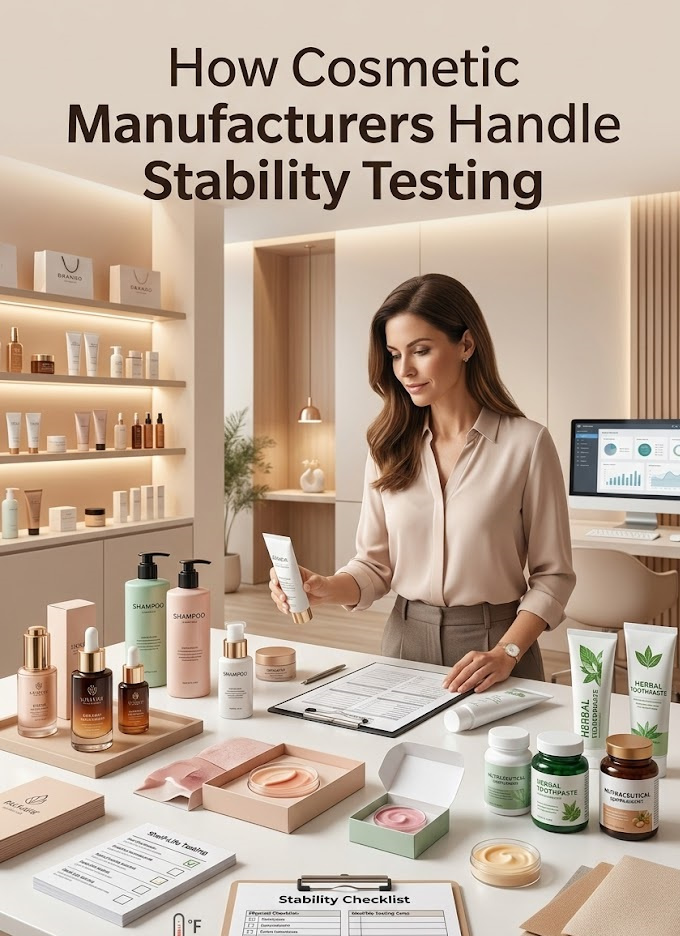
How Cosmetic Manufacturers Handle Product Stability Testing
Understand how cosmetic manufacturers test product stability before launch. Learn about temperature testing, shelf life analysis, packaging compatibility, and why stability testing matters for skincare, shampoo, toothpaste, and supplements.
How Cosmetic Manufacturers Handle Product Stability Testing
Table of Contents
| No. | Section |
|---|---|
| 1 | Introduction |
| 2 | What is Cosmetic Stability Testing? |
| 3 | Why Stability Testing Matters in Manufacturing |
| 4 | Types of Stability Testing Used by Manufacturers |
| 5 | Step-by-Step Cosmetic Stability Testing Process |
| 6 | Real Problems Manufacturers Discover During Testing |
| 7 | Stability Testing for Skincare, Shampoo, Toothpaste & Supplements |
| 8 | Real-World Manufacturing Case Example |
| 9 | How Packaging Impacts Product Stability |
| 10 | Common Mistakes New Brands Make |
| 11 | Who Should Prioritize Stability Testing |
| 12 | Why Many Brands Prefer TYMK |
| 13 | Featured Snippet |
| 14 | FAQs |
| 15 | Conclusion |
How Cosmetic Manufacturers Handle Product Stability Testing
Introduction
Many people assume cosmetic manufacturing is mainly about creating attractive packaging and trendy formulations.
But experienced manufacturers know the real challenge starts after the product is actually made.
A shampoo may become watery after transportation in the summer heat.
A face serum may change color after exposure to light.
An herbal toothpaste may start separating inside the tube after a few weeks.
Supplements may lose potency if moisture protection fails.
These issues usually appear after production, not during sample approval.
That’s exactly why stability testing exists.
Professional manufacturers do not simply create a formula and immediately start mass production. Before a product reaches the market, it goes through multiple testing stages designed to evaluate how stable, safe, and effective the formulation remains under real-world conditions.
This process is critical for:
- skincare brands
- shampoo manufacturers
- toothpaste companies
- supplement businesses
- baby care brands
- herbal product startups
- private label cosmetic companies
Whether someone works with a White Label Cosmetic Manufacturer, a Customised Cosmetic Manufacturer, or an OEM Skincare Products supplier, stability testing becomes one of the most important quality-control processes in the entire production cycle.
Now here’s the important part…
Consumers may never see the testing process directly, but they immediately notice the results when products fail.
One unstable product can damage:
- customer trust
- online reviews
- repeat purchases
- distributor confidence
- marketplace reputation
This is why serious manufacturers spend weeks or even months evaluating product stability before commercial launch.
What is Cosmetic Stability Testing?
Cosmetic stability testing is the process of evaluating whether a product maintains its:
- safety
- texture
- fragrance
- color
- effectiveness
- microbial protection
- packaging compatibility
throughout its intended shelf life.
Manufacturers expose products to different environmental conditions to simulate real-world storage and transportation situations.
The purpose is to identify whether the formulation can remain stable over time.
These tests often include:
- heat exposure
- humidity testing
- freeze-thaw cycles
- UV/light exposure
- packaging interaction checks
- transportation simulation
- microbial analysis
For example, a Face Serum Private Label Manufacturer may evaluate whether active ingredients like niacinamide or Vitamin C remain chemically stable after prolonged temperature exposure.
A Shampoo Contract Manufacturer may monitor viscosity changes to ensure the formula does not become too thin or too thick after storage.
Meanwhile, a Nutraceuticals products Contract Manufacturer focuses heavily on moisture sensitivity and ingredient potency preservation.
Why Stability Testing Matters in Manufacturing
Most startup brands focus heavily on:
- logo design
- packaging aesthetics
- influencer marketing
- website creation
But manufacturers understand something far more important:
A product that performs poorly after purchase creates long-term business damage.
Even premium packaging cannot save an unstable formulation.
Imagine:
- a moisturizer separating inside the jar
- toothpaste leaking during transportationThe
- shampoo fragrance disappears after two months
- supplements reacting with humidity
- herbal products developing odor changes
These situations lead to:
- product returns
- customer complaints
- marketplace penalties
- distributor rejection
- loss of repeat customers
Professional stability testing helps prevent these problems before products reach consumers.
Why Manufacturers Invest Heavily in Stability Testing
| Testing Goal | Why It Matters |
|---|---|
| Shelf-Life Validation | Determines expiry date accuracy |
| Formula Safety | Prevents harmful microbial growth |
| Texture Stability | Maintains product consistency |
| Packaging Compatibility | Avoids leakage and reactions |
| Transportation Resistance | Handles climate and logistics stress |
| Brand Reputation | Reduces negative customer experiences |
| Regulatory Support | Helps maintain compliance documentation |
This is especially important for companies working as:
- Skin Care Products White Label Manufacturer
- Hair Care Products Manufacturer
- Herbal products Contract Manufacturer
- Baby Care Products Manufacturer
- Toothpaste Contract Manufacturer
because product quality directly affects long-term brand credibility.
Types of Stability Testing Used by Manufacturers
Different product categories require different testing methods.
Experienced cosmetic manufacturers typically combine multiple testing systems to evaluate product durability.
1. Accelerated Stability Testing
This is one of the most widely used methods.
Products are stored under extreme environmental conditions, such as:
- high temperatures
- elevated humidity
- direct light exposure
- cold storage
The idea is to simulate aging in a shorter time period.
For example:
A cream stored at higher temperatures for several weeks may help predict how it behaves after months of standard storage.
This helps manufacturers estimate:
- shelf life
- packaging performance
- ingredient degradation
- texture stability
2. Real-Time Stability Testing
Unlike accelerated testing, this method observes products under normal storage conditions over longer periods.
Manufacturers evaluate:
- color changes
- fragrance retention
- texture consistency
- microbial safety
- packaging durability
This process provides more realistic shelf-life data.
3. Freeze-Thaw Testing
Products repeatedly move between:
- hot conditions
- cold conditions
This simulates transportation and climate fluctuations.
Products that fail freeze-thaw testing often show:
- separation
- crystallization
- texture instability
- packaging stress
4. Packaging Compatibility Testing
Most people don’t realize this, but packaging itself can destabilize a formula.
Manufacturers test:
- plastic interaction
- cap sealing
- pump functionality
- leakage resistance
- label durability
A poor-quality bottle can:
- allow oxygen exposure
- reduce ingredient potency
- cause fragrance evaporation
- increase contamination risk
This becomes especially important for:
- serums
- essential oil products
- herbal formulations
- active skincare products
5. Microbial Challenge Testing
Products are intentionally exposed to microorganisms to evaluate preservative effectiveness.
This is critical for:
- skincare
- baby care
- herbal products
- toothpaste
- shampoos
A professional Baby Care Products Contract Manufacturer cannot risk microbial instability because sensitive-skin consumers require extremely safe formulations.
Step-by-Step Cosmetic Stability Testing Process
Professional manufacturers usually follow a structured evaluation workflow before approving large-scale production.
Step 1 — Formula Development
The R&D team develops initial formulations based on:
- ingredient compatibility
- target texture
- product claims
- fragrance profile
- preservative systems
At this stage, multiple sample variations may be created.
Some products go through 5–10 revisions before finalization.
Step 2 — Initial Physical Evaluation
Manufacturers evaluate:
- appearance
- viscosity
- pH balance
- spreadability
- foam quality
- fragrance behavior
This helps identify visible formulation risks early.
Step 3 — Environmental Stress Testing
Samples are placed in:
- heat chambers
- humidity chambers
- refrigeration conditions
- light exposure cabinets
Products are monitored over time for:
- color shifts
- odor changes
- texture breakdown
- ingredient instability
Step 4 — Packaging Analysis
Packaging and formula combinations are tested together.
Manufacturers evaluate:
- leakage
- cap strength
- air exposure
- product dispensing
- pump durability
This is especially important for export-focused cosmetic brands.
Step 5 — Microbial Safety Testing
Microbial analysis ensures preservatives remain effective during product usage.
This is critical for:
- creams
- lotions
- baby care
- herbal cosmetics
- toothpaste
Step 6 — Final Stability Approval
Once the product successfully passes all testing stages, manufacturers finalize:
- shelf life
- storage instructions
- packaging recommendations
- production approval
Only after this stage does mass manufacturing begin.
Real Problems Manufacturers Discover During Testing
One reason experienced manufacturers value stability testing so highly is because many formulation issues only appear later.
Here are some common problems discovered during testing:
| Problem Found | Likely Cause |
|---|---|
| Product separation | Weak emulsifier system |
| Color darkening | Oxidation |
| Fragrance fading | Heat sensitivity |
| Water leakage | Packaging defects |
| Thickness reduction | Temperature instability |
| Crystal formation | Ingredient incompatibility |
| Mold growth | Preservative failure |
Without testing, these problems could easily reach customers.
Stability Testing for Skincare, Shampoo, Toothpaste & Supplements
Skincare Products
Skincare formulations often contain active ingredients sensitive to:
- oxygen
- sunlight
- heat
- pH fluctuations
A professional OEM Skincare Products manufacturer carefully monitors ingredient stability throughout testing.
Shampoo Products
Shampoo manufacturers mainly focus on:
- viscosity consistency
- foam stability
- fragrance retention
- preservative performance
A Hair Care Products White Label Manufacturer must ensure products remain stable during transportation and warehouse storage.
Toothpaste Products
Toothpaste testing includes:
- tube compatibility
- moisture control
- texture consistency
- ingredient separation analysis
This is especially important for herbal toothpaste formulations.
Supplements & Nutraceuticals
Supplement manufacturers monitor:
- moisture exposure
- ingredient potency
- capsule stability
- oxidation risk
A food supplement product contract manufacturer typically uses humidity-control testing extensively.
Real-World Manufacturing Case Example
A herbal skincare startup once developed a turmeric and saffron brightening cream for summer skincare.
Initial samples looked excellent.
The texture was smooth.
The fragrance was pleasant.
Packaging looked premium.
But during accelerated testing, the cream started separating after prolonged heat exposure.
The manufacturer discovered:
- Natural extracts were destabilizing the emulsion
- preservative levels need adjustment
- packaging trapped internal heat
After reformulation and packaging changes, the product passed testing successfully.
Without stability testing, the brand could have faced:
- customer complaints
- product returns
- online reputation damage
This is why experienced Customised Cosmetic Manufacturer companies prioritize testing before scaling production.
How Packaging Impacts Product Stability
Packaging is not only about branding.
It directly affects:
- shelf life
- ingredient protection
- contamination resistance
- oxidation control
For example:
Vitamin C serums often require air-resistant packaging because oxygen exposure rapidly reduces effectiveness.
Professional manufacturers evaluate:
- bottle material quality
- UV resistance
- sealing strength
- transportation durability
- pump performance
Many Personal Care Products White Label Manufacturer companies now prioritize packaging engineering almost as much as formulation development.
Common Mistakes New Brands Make
Many new cosmetic startups make similar mistakes:
| Common Mistake | Result |
|---|---|
| Skipping stability testing | Product failures |
| Choosing cheap packaging | Leakage and oxidation |
| Rushing production | Poor product consistency |
| Ignoring climate conditions | Transportation damage |
| Overusing natural ingredients | Formula instability |
Now here’s the reality…
Launching quickly may save time initially, but unstable products create much higher long-term costs.
Who Should Prioritize Stability Testing?
Stability testing is essential for:
- skincare startups
- herbal product brands
- shampoo businesses
- toothpaste companies
- baby care brands
- supplement businesses
- MLM brands
- direct-selling companies
Many MLM Product Manufacturer and Network Marketing Product Manufacturer companies depend heavily on repeat customer trust, making product consistency extremely important.
Why Many Brands Prefer TYMK
TYMK supports businesses looking for reliable manufacturing systems across:
- skincare
- hair care
- herbal products
- toothpaste
- nutraceuticals
- personal care categories
Brands work with TYMK because of:
- formulation understanding
- product category expertise
- packaging guidance
- scalable manufacturing support
- quality-focused production systems
- private label manufacturing assistance
Whether someone requires a:
- Perfume Contract Manufacturer
- Bath Soap Contract Manufacturer
- OEM Hair Care Products
- Face Serum Private Label Manufacturer
- Healthcare Products White Label Manufacturer
TYMK focuses on balancing manufacturing efficiency with long-term product quality and stability.
How do cosmetic manufacturers handle product stability testing?
Cosmetic manufacturers handle product stability testing by evaluating formulations under heat, humidity, light exposure, transportation conditions, and long-term storage environments. Companies like TYMK also test packaging compatibility, microbial safety, texture stability, fragrance retention, and ingredient performance before approving products for commercial manufacturing.
FAQs
What is cosmetic stability testing?
Cosmetic stability testing evaluates whether products remain safe, effective, and physically stable throughout their intended shelf life.
Why is stability testing important for skincare products?
It helps prevent product separation, ingredient degradation, microbial contamination, and packaging-related issues.
How long does cosmetic stability testing usually take?
Depending on the product category and testing method, stability testing may take several weeks to several months.
Can packaging affect cosmetic product stability?
Yes. Poor packaging can increase oxidation, leakage, contamination, and ingredient breakdown.
Do herbal cosmetic products require special stability testing?
Yes. Herbal ingredients are often more sensitive to heat, oxidation, and microbial growth compared to synthetic ingredients.
Why do brands choose TYMK for manufacturing support?
TYMK provides formulation guidance, quality-focused manufacturing systems, packaging assistance, and scalable private label production support.
Conclusion
Stability testing plays a major role in cosmetic manufacturing success.
It protects:
- product quality
- shelf life
- consumer trust
- brand reputation
- long-term business growth
Whether working with a White Label Cosmetic Manufacturer, a Face Serum Private Label Manufacturer, or a Nutraceuticals products Contract Manufacturer, proper stability testing helps ensure products perform consistently from production to customer usage.
As the cosmetic and personal care industry becomes more competitive, brands that prioritize formulation quality, packaging compatibility, and testing systems will build stronger long-term market credibility.
Explore reliable manufacturing solutions with TYMK and understand how quality-focused product development supports sustainable brand growth.