TYMK Blog

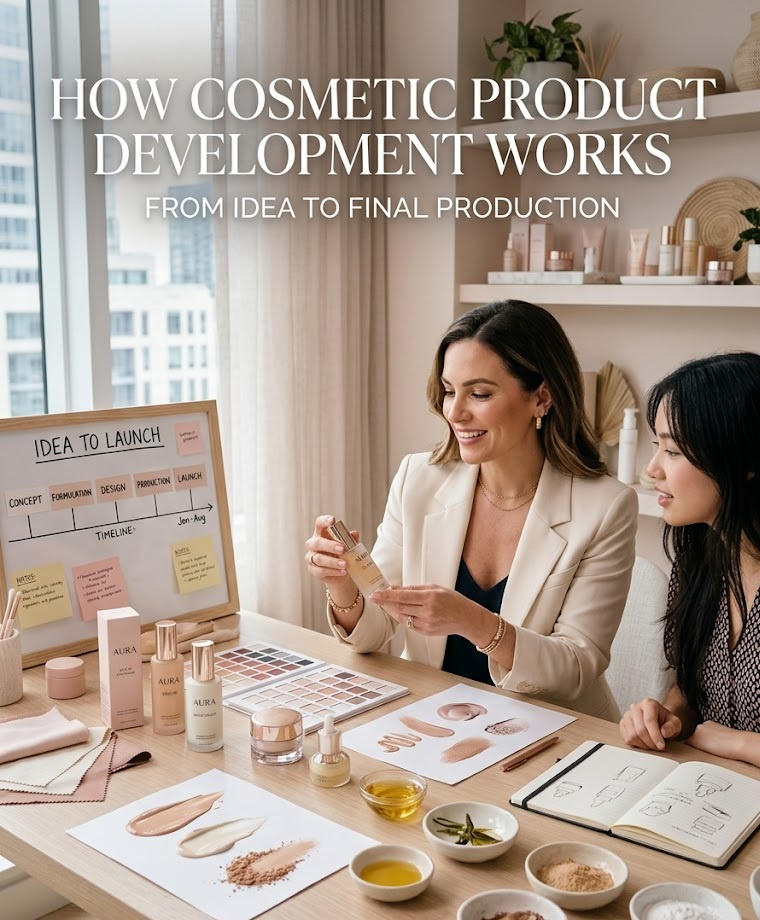
How Cosmetic Product Development Works from Idea to Final Production

<p>Discover the complete cosmetic product development process from idea validation and formulation to packaging, testing, manufacturing, and final market launch. Learn how customised cosmetic manufacturers and OEM cosmetic partners help brands scale faster.</p><h1><br></h1><p><br></p>

22 May 2026 9 mins read

How Cosmetic Product Development Works from Idea to Final Production

Introduction

A lot of people think cosmetic manufacturing is mostly about branding and packaging.

Pick a trending ingredient, design attractive labels, create an Instagram page, and start selling products online.

But once someone actually enters the cosmetic industry, they realize how much happens behind the scenes before a product becomes market-ready.

Even a simple face serum may go through months of development before final production starts. There’s market research, ingredient selection, texture balancing, packaging compatibility testing, preservative checks, fragrance adjustments, sample revisions, stability testing, and commercial production planning.

And honestly, this is where many new brands get surprised.

Sometimes a formulation that looks perfect initially starts separating after a few weeks. Sometimes a moisturizer feels smooth in cold weather, but becomes greasy in humid climates. In some cases, the packaging itself creates problems because certain ingredients react with pumps, droppers, or containers over time.

This is why cosmetic product development is far more technical than most people expect.

Today’s customers are also much smarter than before. People don’t just buy products because the packaging looks premium. They check ingredients, compare textures, read reviews, study formulations, and expect consistent product quality.

That means cosmetic brands can no longer rely only on marketing.

Product quality has become one of the biggest factors behind long-term growth.

Whether someone is planning to launch skincare products, herbal cosmetics, shampoos, baby care products, or private label beauty products, understanding how cosmetic development actually works helps avoid expensive mistakes later.

This is exactly why businesses work with a customised cosmetic manufacturer instead of trying to manage everything alone.


What is Cosmetic Product Development?

Cosmetic product development is the complete process of turning a beauty or personal care product idea into something customers can actually purchase and use.

This process usually starts with understanding market demand and customer expectations. After that comes formulation development, ingredient research, product testing, packaging selection, compliance review, manufacturing planning, and finally commercial production.

For example, if a brand wants to launch a niacinamide face serum, the process does not begin with manufacturing immediately.

First, formulation experts need to understand:

  • What skin concern will the product target
  • What texture do customers prefer
  • whether the product should be fragrance-free
  • How quickly should it absorb
  • What packaging works best
  • What price range does the brand want to enter

These small decisions shape the entire product experience.

Most beauty brands today work with OEM cosmetics manufacturers or private label cosmetics companies because they already have research labs, testing infrastructure, formulation experts, and manufacturing systems ready.

Without that support, cosmetic product development becomes extremely difficult and expensive for new businesses.


Why Product Development Matters More Than Most Brands Realize

One of the biggest mistakes cosmetic startups make is focusing heavily on marketing while treating formulation quality like a secondary issue.

But in reality, customers remember product experience much more than advertisements.

A customer might buy a shampoo once because the packaging looks attractive. But if the shampoo dries the hair too much or the fragrance disappears quickly, they usually don’t reorder.

The same thing happens in skincare.

If a serum feels sticky, if a moisturizer pills under makeup, or if a face wash leaves the skin too dry, customers notice immediately.

And now reviews spread extremely fast online.

This is why proper cosmetic product development matters so much.

Strong formulations create better customer trust. Better customer trust creates repeat orders. And repeat orders are what actually help cosmetic brands grow long-term.

Many successful skincare products go through 3–10 sample revisions before final approval, depending on:

  • texture expectations
  • fragrance balance
  • ingredient compatibility
  • viscosity levels
  • absorption performance
  • preservative stability

Most customers never see this process, but it plays a huge role in product quality.


How Cosmetic Brands Actually Manufacture Products

One thing many beginners don’t realize is that most cosmetic brands do not own factories.

Even many fast-growing beauty brands work with third-party cosmetic manufacturers behind the scenes.

These manufacturers handle:

  • formulation development
  • testing
  • packaging support
  • bulk manufacturing
  • filling and sealing
  • quality control

while the brand focuses on:

  • branding
  • customer acquisition
  • social media marketing
  • online sales
  • retail expansion

This manufacturing model has become extremely common because it allows brands to launch products faster without investing heavily in infrastructure.

A customised cosmetic manufacturer usually provides support from the early product development stage all the way to commercial production.

For startups, especially, this makes the process much more manageable.


The Research Stage Comes First

Before a formula is developed, cosmetic brands usually spend time understanding the market first.

And honestly, this stage is more important than many people think.

Sometimes, a product idea may sound exciting personally, but there may not actually be strong customer demand for it.

Brands usually study:

  • ingredient trends
  • customer pain points
  • competitor products
  • pricing expectations
  • packaging styles
  • market gaps

For example, niacinamide became highly popular because customers wanted beginner-friendly active skincare products. Sulfate-free shampoos gained popularity because consumers started searching for gentler haircare options.

Herbal and Ayurvedic products also continue growing because many buyers now prefer natural positioning and plant-based ingredients.

An experienced skincare manufacturer can often help brands understand whether a trend has long-term potential or short-term hype.

That guidance becomes very valuable later.


Formula Development Is Usually More Complicated Than Expected

This is the stage where cosmetic ideas slowly become real products.

And honestly, this process usually takes longer than most people expect.

A face serum private label manufacturer may create several versions of the same serum before final approval happens.

Sometimes:

  • The texture feels too oily
  • The fragrance feels overpowering
  • Absorption feels slow
  • The viscosity becomes inconsistent
  • active ingredients destabilize the formula

Even when ingredient lists look similar on paper, the actual product experience can feel completely different depending on formulation quality.

That’s something many beginners underestimate.

Two moisturizers may contain almost identical ingredients but still perform very differently because of formulation balance, pH management, preservative systems, and manufacturing precision.

This stage often includes:

  • pH balancing
  • preservative optimization
  • viscosity adjustment
  • ingredient compatibility testing
  • texture refinement
  • microbial safety evaluation

This is one reason experienced OEM cosmetics manufacturers are valuable long-term partners.


Product Testing Is One of the Most Important Stages

Once a formula is developed, testing begins.

This stage helps manufacturers understand how products behave over time and under different conditions.

For example:

  • A serum may oxidize after exposure to heat
  • Fragrance stability may reduce over time
  • creams may separate during storage
  • Packaging may leak during transportation

Professional cosmetic manufacturers usually test:

  • texture consistency
  • fragrance performance
  • packaging compatibility
  • ingredient stability
  • shelf life
  • microbial resistance
  • leakage protection

Some formulations may remain under testing for weeks before final approval.

This process helps reduce customer complaints later and improves long-term product reliability.

Most customers never see this part, but it plays a huge role in the final product experience.


Packaging Is More Important Than Most People Think

A lot of cosmetic purchasing decisions happen visually.

Before customers even try the product, they judge the packaging first.

Luxury skincare brands often use glass bottles and airless pumps because customers associate them with premium quality. Herbal brands usually prefer earthy colors and natural aesthetics because it supports their ingredient positioning.

Younger brands targeting Gen-Z audiences often choose bold packaging styles because they want products to stand out online.

But packaging isn’t only about appearance.

It also affects:

  • product protection
  • shelf stability
  • customer convenience
  • leakage prevention
  • ingredient safety

Professional cosmetic manufacturers often conduct packaging compatibility and leakage testing before final production starts.

This becomes especially important for products like serums, shampoos, lotions, and liquid cosmetics.


Typical Cosmetic Product Development Workflow

Most cosmetic products move through a structured development process before commercial launch.

Stage Purpose
Market Research Understand customer demand
Ingredient Selection Choose active ingredients
Formula Development Create texture and performance
Sample Testing Evaluate product feel and quality
Packaging Selection Match branding and functionality
Stability Testing Ensure shelf life and safety
Regulatory Review Verify compliance requirements
Commercial Manufacturing Begin bulk production
Product Launch Market distribution and sales

This workflow helps reduce product failures and improve manufacturing consistency.


How Long Does Cosmetic Product Development Usually Take

One of the most common questions beauty startups ask is how long development usually takes.

The answer depends on the manufacturing model and customization level.

Manufacturing Type Estimated Timeline
White Label Cosmetics 1–3 weeks
Private Label Cosmetics 2–6 weeks
OEM Cosmetics 2–4 months
Fully Customized Formulations 3–6 months

Custom formulations usually take longer because they involve:

  • multiple sample revisions
  • ingredient sourcing
  • packaging approvals
  • testing stages
  • stability evaluations

Brands planning festive launches or seasonal campaigns often begin development several months in advance.


Understanding MOQ in Cosmetic Manufacturing

MOQ stands for Minimum Order Quantity.

This is another area where many first-time beauty businesses feel confused.

Different products usually have different MOQ requirements depending on:

  • packaging type
  • ingredient sourcing
  • formulation complexity
  • production setup costs

For example, private label cosmetics often have lower MOQs because ready-made formulations already exist.

OEM cosmetics may require slightly higher production quantities because manufacturers need to develop and stabilize custom formulations specifically for the brand.

An experienced customised cosmetic manufacturer helps businesses balance production costs while keeping inventory manageable during the early stages.


OEM Cosmetics vs Private Label Cosmetics

A lot of businesses entering the cosmetic industry get confused between OEM cosmetics and private label cosmetics.

Private label cosmetics usually involve pre-developed formulations where businesses customize branding and packaging. This model is ideal for startups looking for faster launches and lower development costs.

OEM cosmetics are more customized. Brands can create unique formulations according to ingredient preferences, performance goals, texture expectations, and market positioning.

Businesses focused on long-term differentiation usually prefer OEM cosmetics because they provide more product uniqueness and branding flexibility.

There’s no single perfect option. It depends on the business goal, timeline, and budget.


A Real Example From the Industry

Imagine someone launching a small skincare brand focused on acne-prone skin.

Initially, the brand launches only:

  • a salicylic acid face wash
  • a niacinamide serum
  • a lightweight moisturizer

Instead of opening a manufacturing facility, they partner with a private label cosmetics manufacturer.

As sales increase, they improve packaging quality, refine formulations, introduce sunscreen products, and eventually expand into body care and haircare categories.

This is how many successful cosmetic brands actually scale today.

Most businesses don’t start with huge product ranges. They usually begin with a few carefully developed products and improve gradually over time.


Why Brands Choose TYMK Health & Wellness

TYMK Health & Wellness supports brands across:

  • skincare
  • haircare
  • herbal cosmetics
  • personal care
  • baby care
  • cosmetic manufacturing

The company helps businesses with:

  • OEM cosmetics
  • private label cosmetics
  • custom formulations
  • packaging support
  • product testing
  • scalable manufacturing solutions

For many startups, having one reliable manufacturing partner simplifies the complete development process because formulation, testing, packaging, and production can all be managed together.

That becomes especially valuable when brands want to scale without constantly coordinating with multiple vendors separately.


Featured Snippet

A customised cosmetic manufacturer helps brands develop skincare, beauty, and personal care products through formulation development, testing, packaging, stability evaluation, and commercial manufacturing. TYMK Health & Wellness supports businesses with OEM cosmetics and private label cosmetic manufacturing solutions.


Conclusion

Cosmetic product development is much more detailed and technical than most people expect.

Behind every successful serum, shampoo, moisturizer, or skincare product is a long process involving research, ingredient selection, formulation balancing, testing, packaging development, stability evaluation, and manufacturing coordination.

Brands that understand this process usually build stronger products, better customer trust, and more sustainable long-term growth.

Whether someone is launching a small skincare startup or expanding an existing beauty business, working with an experienced customised cosmetic manufacturer makes the journey smoother from idea to final production.

For cosmetic safety guidelines, labeling standards, and regulatory information, you can also refer to the official U.S. Food & Drug Administration Cosmetics Guide.


FAQs

What is a customised cosmetic manufacturer?

A customised cosmetic manufacturer develops products according to a brand’s specific formulation, packaging, ingredients, and branding requirements. TYMK Health & Wellness supports businesses with complete cosmetic manufacturing solutions.

What is OEM cosmetics manufacturing?

OEM cosmetics manufacturing involves creating customized cosmetic formulations that brands sell under their own label and packaging.

Are private label cosmetics good for startups?

Yes. Private label cosmetics help startups launch products faster with lower investment and simplified production management.

Why is cosmetic product testing important?

Testing helps ensure product quality, shelf life, stability, packaging compatibility, and customer safety before market launch.

What is MOQ in cosmetic manufacturing?

MOQ stands for Minimum Order Quantity, which is the minimum number of units required for production based on formulation and packaging requirements.

Conclusion

Cosmetic product development is much more than simply creating attractive packaging or following beauty trends. Behind every successful skincare, haircare, or personal care product is a detailed process involving research, formulation development, ingredient compatibility testing, packaging selection, stability evaluation, and large-scale manufacturing.

Brands that invest time in proper product development usually build stronger customer trust, better product consistency, and long-term market credibility. Whether a business is launching a small skincare startup or expanding an existing beauty brand, working with an experienced customised cosmetic manufacturer helps simplify the journey from idea to final production.

With the right formulation strategy, testing process, and manufacturing support, cosmetic brands can create products that not only look premium but also deliver real customer satisfaction.


Recent Posts

call to +918128153295
sent message to whatsapp
contact now