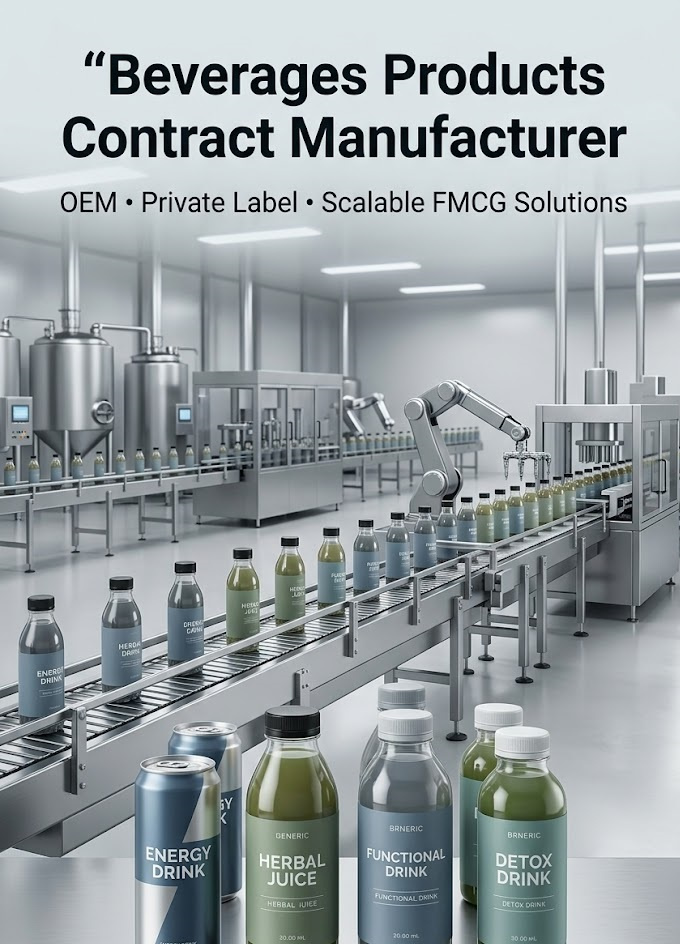
Beverages Products Contract Manufacturer for Brands
A beverage products contract manufacturer is a third-party FMCG partner that produces drinks like juices, energy drinks, and herbal beverages for brands under OEM or private label models. It manages formulation, production, packaging, and compliance to ensure consistent quality and scalability.
This model helps brands reduce setup cost, launch faster in the market, and scale production without investing in manufacturing infrastructure.
Beverages Products Contract Manufacturer for Brands
Introduction
The beverage industry is growing rapidly, but building a brand in this space is not easy. From formulation to production, compliance, packaging, and scaling—each step requires infrastructure and expertise.
This is exactly where a beverage product contract manufacturer becomes essential.
Instead of investing heavily in factories and machinery, brands collaborate with manufacturing partners who already have production systems in place. This allows businesses to focus on branding, distribution, and sales while the technical side is handled professionally.
In real-world FMCG operations, most successful beverage brands rely on this model during both launch and expansion stages.
What is a Beverages Products Contract Manufacturer?
A beverage products contract manufacturer is a third-party FMCG production company that manufactures beverages for other brands under OEM or private label arrangements.
These manufacturers produce a wide range of products, such as:
- Fruit juices
- Energy drinks
- Herbal beverages
- Functional wellness drinks
- Carbonated and non-carbonated drinks
They handle the complete backend process, including formulation, sourcing ingredients, production, filling, labeling, and packaging.
Simply put, the brand owns the product identity, while the manufacturer handles execution.
Why is the Beverages Products Contract Manufacturer Important?
The FMCG beverage sector is capital-intensive and highly regulated. Setting up a manufacturing unit requires heavy investment, approvals, and technical expertise.
A contract manufacturer solves these challenges:
- Eliminates factory setup cost
- Reduces operational risk
- Ensures food safety compliance (FSSAI, ISO standards)
- Enables faster product launch cycles
- Provides scalable production capacity
Most people don’t realize this, but even established FMCG companies outsource production during expansion phases to manage demand fluctuations efficiently.
This model reduces dependency on internal infrastructure and improves market responsiveness.
How Does Beverages Contract Manufacturing Work?
The process follows a structured workflow:
1. Product Development Discussion
The brand shares its concept, target market, and product type.
2. Formulation & Sampling
R&D teams develop sample formulations based on requirements.
3. Testing & Approval
Samples undergo quality testing, taste evaluation, and safety checks.
4. Bulk Production
Once approved, large-scale manufacturing begins using industrial systems.
5. Quality Assurance
Each batch is tested for consistency, hygiene, and compliance.
6. Packaging & Labeling
Products are filled, sealed, labeled, and prepared for distribution.
7. Dispatch & Logistics
Final products are shipped to warehouses or distributors.
This structured process ensures consistency and reduces production errors.
When Should You Use It?
A beverage product contract manufacturer should be considered when:
- Launching a new beverage brand
- Expanding existing FMCG portfolio
- Testing new product lines with low risk
- Entering new geographic markets
- Scaling production beyond internal capacity
It is especially useful for startups that want to avoid heavy upfront investment.
Who Should Choose This Model?
This manufacturing model is suitable for:
- FMCG startups
- Herbal beverage brands
- E-commerce sellers
- MLM and direct selling companies
- Export-oriented beverage businesses
- Retail distribution companies
Each of these segments benefits from outsourced production due to flexibility and cost control.
Which Manufacturing Model is Better? (Comparison Table)
| Model | Investment | Control | Scalability | Risk |
|---|---|---|---|---|
| In-house Manufacturing | Very High | Full | Medium | High |
| Contract Manufacturing | Medium | Shared | High | Medium |
| White Label Manufacturing | Low | Limited | High | Low |
Contract manufacturing is considered the most balanced option for long-term FMCG growth because it combines scalability with a manageable cost structure.
Real-World Example (Case Insight)
A small beverage startup planning to launch herbal detox drinks often struggles with production setup costs and compliance approvals.
By using a contract manufacturer, they can:
- Launch in 60–90 days instead of 1–2 years
- Avoid machinery investment
- Test market response quickly
- Scale production only when demand increases
This model significantly reduces failure risk in early stages.
Brand Integration Section (Expanded)
Choosing the right manufacturing partner is often the difference between a product that succeeds in the market and one that never scales beyond launch.
In the FMCG and beverage industry, execution matters more than ideas. Even a strong concept fails if production quality, consistency, and compliance are not maintained.
This is where TYMK Health & Wellness positions itself as a support system for emerging and scaling brands.
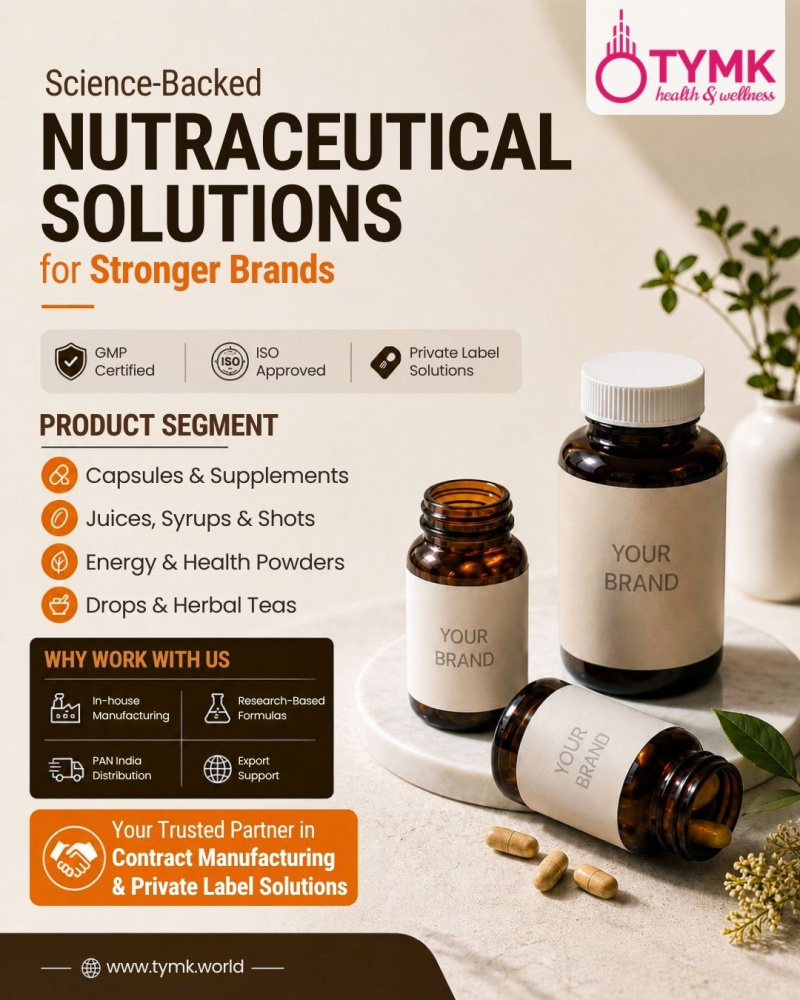
TYMK focuses on end-to-end FMCG manufacturing support, including beverages, personal care, and wellness product lines. The goal is not just production, but helping brands move from concept to market-ready products with structured execution.
Key advantages typically associated with such manufacturing partnerships include:
- Controlled and standardized production processes
- R&D-backed formulation development for beverages and FMCG products
- Private label and OEM flexibility based on brand requirements
- Scalable manufacturing capacity for growing demand
- Compliance-focused production aligned with industry regulations
For beverage brands specifically, this type of manufacturing support reduces operational complexity and allows faster market entry without compromising on quality consistency.
In practical terms, businesses can focus on branding, marketing, and distribution while the manufacturing backbone remains stable and professionally managed.
Featured Snippet (40–60 words)
A beverage products contract manufacturer is a third-party FMCG company that produces drinks like juices, energy drinks, and herbal beverages for brands under private label or OEM agreements. It manages formulation, production, packaging, and compliance, enabling businesses to launch products without owning manufacturing facilities.
FAQs
What does a beverage contract manufacturer do?
It produces beverages for brands, handling formulation, manufacturing, packaging, and quality control.
Is contract manufacturing good for startups?
Yes, it reduces cost, risk, and time to market significantly.
What types of beverages can be manufactured?
Juices, energy drinks, herbal drinks, functional beverages, and soft drinks.
What is OEM in beverage manufacturing?
OEM means original equipment manufacturing, where products are made as per brand specifications.
How long does production take?
Typically, 30–90 days depending on formulation and scale.
Conclusion
A beverage product contract manufacturer plays a critical role in modern FMCG growth strategies. It removes infrastructure barriers, reduces investment pressure, and allows brands to scale faster in competitive markets.
For businesses aiming to enter the beverage industry, this model is one of the most practical and scalable approaches available today.