TYMK Blog

Why Smart Brands Choose White Label Cosmetic Manufacturers Instead of Building Factories

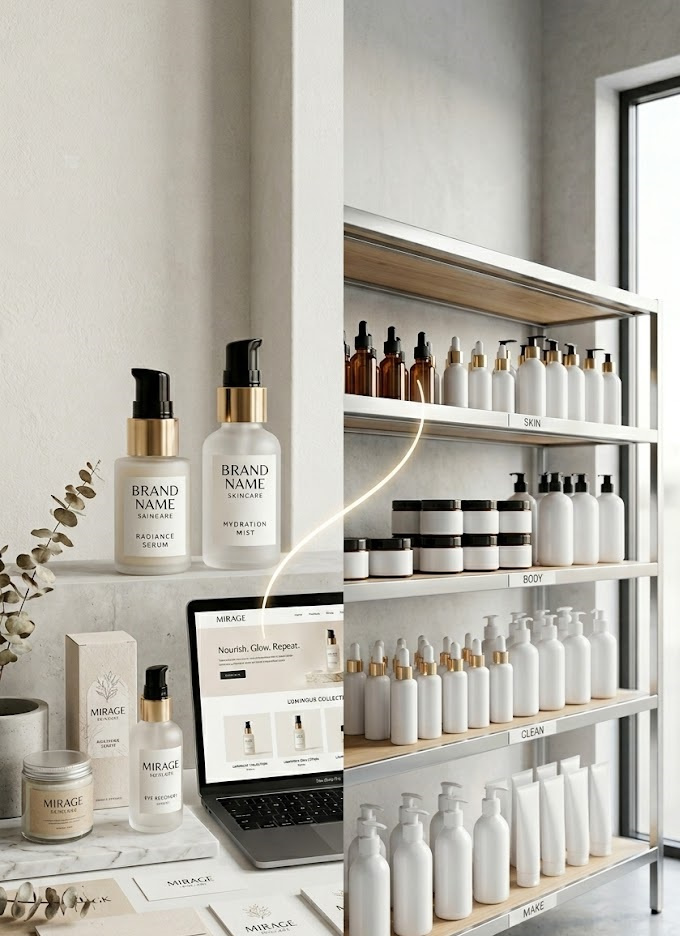
<p>A premium split-scene visual showing cosmetic brand packaging setup on one side and organized outsourced manufacturing workflow on the other, representing white label cosmetic production vs factory setup.</p><p><br></p>

27 May 2026 5 mins read

Why Smart Brands Choose White Label Cosmetic Manufacturers Instead of Building Factories

Table of Contents (TOC)

  1. Introduction
  2. Featured Snippet Summary
  3. What is a White Label Cosmetic Manufacturer?
  4. Why Smart Brands Choose White Label Over Factories
  5. How White Label Manufacturing Works
  6. When Should You Choose White Label?
  7. Who Benefits the Most?
  8. White Label vs Factory Ownership (Table)
  9. Real Industry Insight
  10. Role of TYMK in Manufacturing
  11. FAQ
  12. Final Thoughts

Introduction

Most people entering the cosmetic business assume that building a factory is the ultimate step toward success. The logic sounds convincing—own production, control quality, maximize profit. But the modern beauty industry no longer works that way.

Today, most successful brands avoid factories completely and instead rely on white-label cosmetic manufacturers who already have production systems, tested formulations, and compliance infrastructure ready. This shift is not about avoiding investment—it is about avoiding unnecessary operational complexity at the wrong stage of business.

Building a factory requires heavy capital, long timelines, and continuous operational management. In contrast, white label manufacturing allows brands to focus on marketing, branding, and customer acquisition, which are the real growth drivers in today’s market.


Featured Snippet Summary

Smart cosmetic brands choose white-label manufacturers instead of factories because it reduces investment cost, eliminates production complexity, and enables faster market entry. This allows founders to focus on branding and sales while manufacturing is handled by experts.


What is a White Label Cosmetic Manufacturer?

A white-label cosmetic manufacturer produces ready-made cosmetic products that can be sold under different brand names. These products are already formulated, tested, and compliant with safety standards.

In simple terms, the manufacturer handles production while the brand handles marketing and sales. This removes the need for labs, chemists, machinery, and regulatory systems at the startup stage.


Why Smart Brands Choose White Label Over Factories

The shift toward white-label manufacturing is driven by practical business logic rather than preference. Building a factory requires a large upfront investment in infrastructure, machinery, staff, compliance systems, and raw material sourcing. Even before selling a single product, a brand is locked into high fixed costs.

White label manufacturing removes this burden. Brands can launch products within weeks instead of waiting months or years for factory setup. This speed is critical in the cosmetic industry, where trends change quickly, and early market entry often determines success.

Another important factor is risk management. Factory ownership creates fixed monthly costs regardless of sales performance. White-label models convert these into variable costs, which makes the business far safer for new entrepreneurs.


How White Label Manufacturing Works

White-label manufacturing follows a structured and efficient process. A brand first selects an existing product from a manufacturer’s portfolio. Since formulations are already developed and tested, there is no need for research and development.

After selection, the brand focuses on identity creation—this includes packaging, branding, and positioning. The manufacturer then handles production, filling, testing, and dispatch. The final product is delivered ready for market launch.

This system allows founders to operate like brand owners rather than production managers, which is the core structure of modern D2C beauty businesses.


When Should You Choose White Label?

White-label manufacturing is most suitable for early-stage entrepreneurs who are still validating their product-market fit. It is ideal when capital is limited, and speed is important.

It also works well when a brand wants to test multiple product categories before committing to a large-scale investment. Instead of investing heavily in infrastructure, founders can test demand first and scale only successful products.

However, a white label is not always a permanent solution. As brands grow and require unique formulations or deeper customization, they may transition to OEM or contract manufacturing models.


Who Benefits the Most?

White label manufacturing is particularly useful for startup founders, skincare entrepreneurs, influencer-led brands, MLM businesses, and ecommerce sellers. These businesses rely heavily on branding and marketing rather than technical manufacturing control.

In fast-growing markets like India, this model has become the default entry strategy for cosmetic entrepreneurs because it reduces both financial risk and operational complexity.


White Label vs Factory Ownership (Comparison Table)

Factor White Label Manufacturing Factory Ownership
Initial Investment Low Very High
Time to Market Fast (weeks) Slow (months/years)
Operational Complexity Low High
Financial Risk Low High
Control Over Production Medium Full
Scalability High High but complex
Best For Startups & D2C brands Large established companies

Real Industry Insight

In real cosmetic industry operations, production and branding are often separated. Most successful brands do not manufacture their own products; instead, they partner with specialized manufacturers who focus only on production efficiency and compliance.

This separation allows brands to scale faster without becoming operationally heavy. It also reduces dependency on internal infrastructure, which is expensive to maintain.


Role of TYMK in White Label Manufacturing

Companies like TYMK support emerging brands by providing ready-to-market cosmetic formulations, packaging solutions, and scalable production systems.

Instead of building manufacturing units, new brands can rely on such partners to handle production while focusing on marketing, distribution, and customer acquisition. This significantly reduces entry barriers for first-time entrepreneurs.


FAQ (People Also Ask)

What is a white-label cosmetic manufacturer?

It is a company that produces ready-made cosmetic products, which brands can rebrand and sell under their own name.

Why do brands choose white-label over factories?

Because it reduces cost, speeds up launch, and removes the need for manufacturing infrastructure.

Is factory ownership better than white label?

Only for large-scale established brands. For startups, white-label is more practical and cost-efficient.

Can a cosmetic brand grow without a factory?

Yes, many successful global brands scale using contract and white-label manufacturing models.

How does TYMK help new brands?

TYMK provides formulation support, packaging solutions, and scalable white-label manufacturing services.


Final Thoughts

The cosmetic industry is no longer driven by factory ownership. It is driven by speed, branding strength, and market execution. White label manufacturing allows brands to launch faster, reduce financial pressure, and focus on building demand instead of managing production.

In today’s competitive beauty market, the smartest strategy is not to own factories—it is to own strong brands built on efficient manufacturing partnerships.


Recent Posts

call to +918128153295
sent message to whatsapp
contact now