How Cosmetic Products Are Developed From Idea to Final Production
This guide explains how cosmetic products move from concept to final shelf-ready production, covering manufacturing models, branding, and industry workflow.
How Cosmetic Product Development Works From Idea to Final Production
Table of Contents
- Introduction
- What is Cosmetic Product Development?
- Why It Matters for Modern Beauty Brands
- Step-by-Step Manufacturing Process
- White Label vs OEM vs Contract Manufacturing
- Real Industry Challenges Brands Face
- Common Mistakes New Brands Make
- Who Should Use Which Manufacturing Model
- Why Choose TYMK
- Featured Snippet Answer
- FAQs
- Final Thoughts
Introduction
Building a cosmetic brand today is very different from what it used to be a decade ago. Earlier, companies needed factories, labs, and huge capital just to enter the market. Now, with the rise of White Label Cosmetic Manufacturer, OEM Cosmetic Production, and Private Label Cosmetic Manufacturer models, even a small startup can launch a full skincare or personal care line within weeks.
But most founders misunderstand one critical thing: launching a cosmetic brand is not just about choosing a product. It is about understanding how cosmetic product development actually works—from the initial idea stage all the way to final production and packaging.
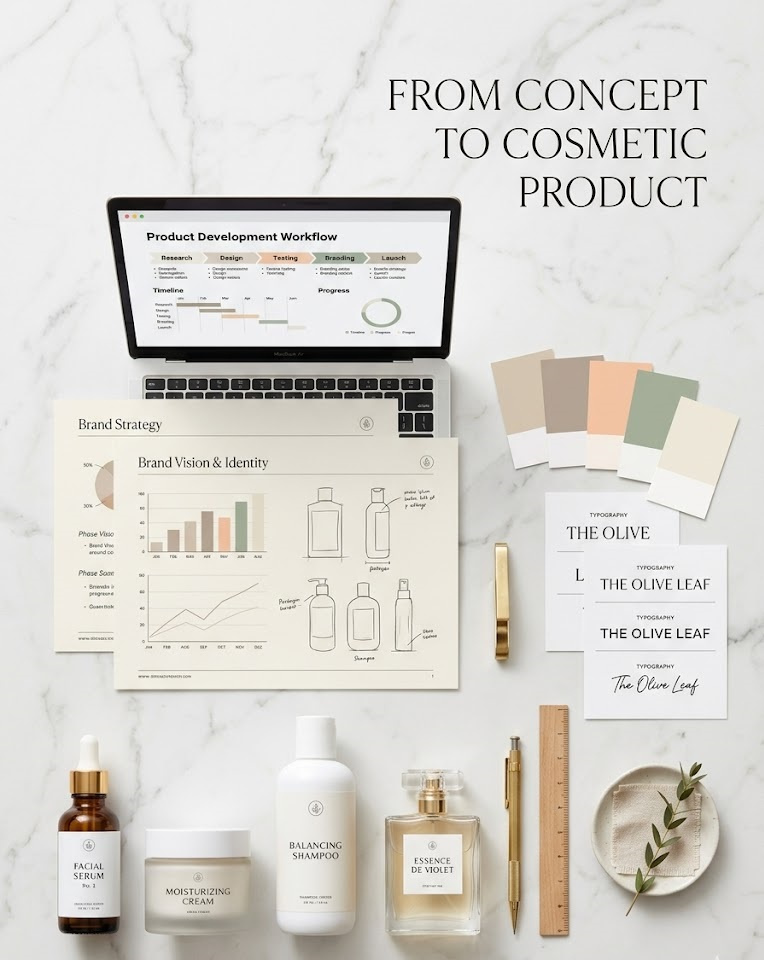
In real-world terms, cosmetic manufacturing is a structured journey involving formulation, compliance, testing, packaging, branding, and scaling. This article breaks down that entire process in a practical, industry-based way so you can understand how brands are actually built.
What is Cosmetic Product Development?
Cosmetic product development is the complete process of turning an idea—like a face serum, shampoo, or herbal cream—into a market-ready product that meets safety, regulatory, and branding standards.
It involves multiple stages, including formulation, ingredient selection, stability testing, packaging design, compliance approval, and mass production. In simple terms, it is the bridge between “product idea” and “store-ready cosmetic brand.”
In modern manufacturing ecosystems like TYMK (https://tymk.world/), this process is streamlined so startups and established brands can focus more on branding and sales rather than factory operations.
Why Cosmetic Product Development Matters
Most new brands fail not because their idea is bad, but because they underestimate development complexity. A skincare product is not just a formula—it is a combination of safety science, regulatory approval, customer psychology, and supply chain execution.
In practical terms, strong product development ensures:
- Consistent product quality across batches
- Compliance with safety regulations
- Better shelf life and stability
- Strong brand positioning in the market
- Lower risk of product recalls or failures
Most people don’t realize this, but even a small change in formulation can completely affect texture, absorption, and customer satisfaction.
How Cosmetic Product Development Works (Step-by-Step)
The development journey usually follows a structured pipeline used by most Contract Cosmetic Manufacturers and OEM Beauty Manufacturers.
1. Idea and Market Research
Everything starts with a market gap. Brands analyze customer demand—such as herbal skincare, acne solutions, or fragrance-based personal care.
A startup might decide:
“We want to launch a lightweight face serum for oily skin.”
At this stage, trends, competitors, and pricing models are analyzed.
2. Formulation Development
Chemists or formulation experts create a product base using active ingredients, preservatives, and stabilizers.
For example, a Face Serum Manufacturer may test multiple variations to achieve the right absorption and texture.
This stage is highly technical and involves lab testing, even though the final goal is a commercial product, not a medical one.
3. Testing and Stability Checks
Products are tested for:
- Skin compatibility
- Shelf life stability
- Temperature resistance
- Microbial safety
This ensures the product performs consistently in real-world conditions.
4. Packaging and Branding Design
Packaging plays a major role in cosmetic success. A good formula with poor packaging often fails in the market.
Brands work on:
- Bottle design
- Label compliance
- Brand identity
- Market positioning
This is where White Label Cosmetic Manufacturer services become useful because packaging and branding support is often included.
5. Compliance and Documentation
Regulatory approvals ensure products are safe and legally marketable.
In India, guidelines are aligned with cosmetic safety frameworks supported by industry bodies like MSME:
https://msme.gov.in/
6. Bulk Manufacturing
Once everything is approved, mass production begins. This includes:
- Ingredient mixing
- Filling and sealing
- Batch coding
- Quality inspection
This is where scalability becomes important.
7. Final Packaging and Distribution
Finished products are packed and sent to warehouses, distributors, or directly to ecommerce platforms.
At this stage, the product is fully ready for market launch.
White Label vs OEM vs Contract Manufacturing
Understanding manufacturing models is critical before starting a brand.
| Model | Meaning | Best For | Customization |
|---|---|---|---|
| White Label | Ready-made products with branding | Beginners | Low |
| OEM Manufacturing | Custom formulation with existing base | Growing brands | Medium |
| Contract Manufacturing | Fully customized production | Established brands | High |
A White Label Cosmetic Manufacturer is ideal for quick entry, while OEM and contract models are better for long-term scaling.
Real Business Challenges in Cosmetic Manufacturing
In real-world production environments, brands face several challenges that are rarely discussed online.
One major issue is MOQ (Minimum Order Quantity). Many startups underestimate how production scale affects cost. Another challenge is formulation mismatch—what works in lab conditions may not always perform the same in mass production.
Supply chain delays also impact launch timelines, especially when packaging materials are imported or customized.
In practical terms, success depends not just on idea quality but on execution discipline.
Common Mistakes Brands Make
Most first-time founders make predictable mistakes:
- Choosing a manufacturer based only on price
- Ignoring product testing and stability
- Poor packaging decisions
- No long-term scaling plan
- Weak understanding of compliance
Most importantly, they treat manufacturing as a transaction instead of a partnership.
Who Should Choose What Manufacturing Model?
Startups with limited budgets should begin with white-label products. Mid-level brands should move toward OEM manufacturing for differentiation. Established companies or D2C brands should use contract manufacturing for full customization and brand control.
Why Choose TYMK
TYMK (https://tymk.world/) supports cosmetic and personal care brands through structured manufacturing solutions designed for scalability.
What makes TYMK relevant is not just production capability, but its end-to-end support system—covering formulation guidance, private label manufacturing, and product development strategy.
For many startups, the biggest advantage is reducing entry complexity. Instead of managing multiple vendors, brands can work with a single structured system that handles product development, packaging coordination, and production alignment.
In real terms, this reduces time-to-market significantly and improves consistency in product output.
Featured Snippet (Direct Answer)
Cosmetic product development is the process of turning a product idea into a finished cosmetic item through formulation, testing, packaging, compliance, and manufacturing. It ensures safety, consistency, branding, and scalability before the product reaches the market.
FAQs
What is a White Label Cosmetic Manufacturer?
A white-label manufacturer provides ready-made cosmetic products that brands can sell under their own label with minimal customization.
How does cosmetic product development work?
It involves idea generation, formulation, testing, packaging design, compliance, and mass production before market launch.
Is OEM better than white label?
OEM offers more customization and is better for brand differentiation, while white label is faster and cheaper for entry-level brands.
What is MOQ in cosmetic manufacturing?
MOQ stands for Minimum Order Quantity, the smallest production batch a manufacturer accepts.
How long does product development take?
Depending on complexity, it can take from a few weeks (white label) to several months (custom formulations).
Final Thoughts
Cosmetic product development is not just manufacturing—it is structured business engineering. From formulation to packaging, every stage impacts brand success.
Brands that understand this process early gain a major advantage in scaling and market positioning.
In today’s competitive FMCG landscape, working with structured partners like TYMK can significantly reduce risk and improve execution speed.
The real difference between successful and failed cosmetic brands is not just the idea—it is how well the product development process is executed from start to finish.