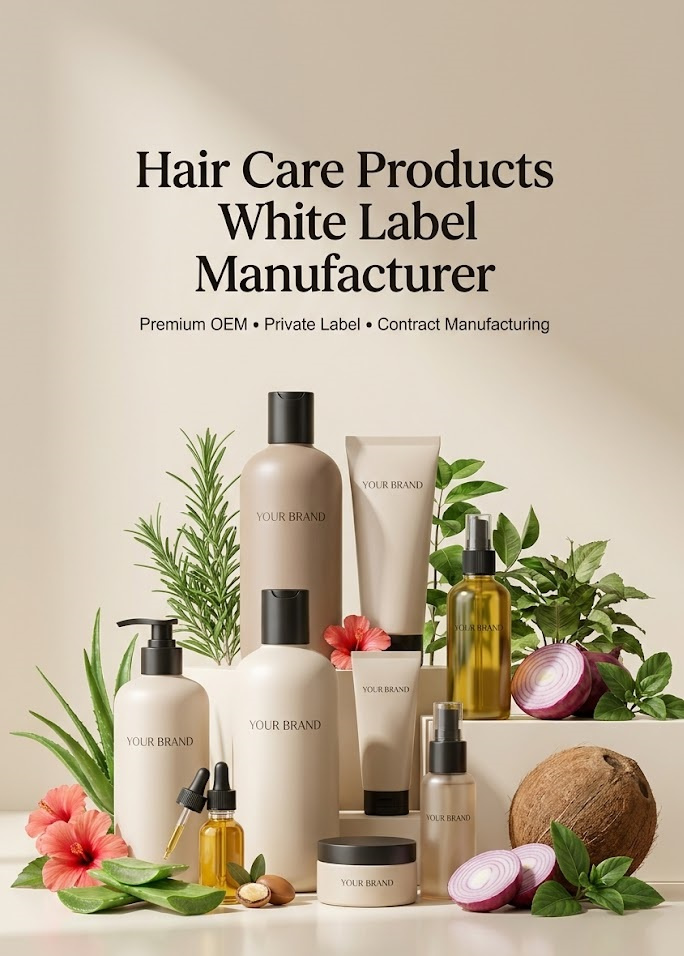
Hair Care Products White Label Manufacturer: How Smart Brands Build Scalable Hair Care Businesses
A complete industry-focused guide explaining how hair care white label manufacturing works, why modern brands prefer it, common mistakes to avoid, and how TYMK supports scalable product growth.
Hair Care Products White Label Manufacturer: How Smart Brands Build Scalable Hair Care Businesses
Introduction
The hair care industry has changed dramatically over the last few years.
Consumers no longer purchase shampoos or oils only because of advertising. Today’s buyers read ingredient labels, compare formulations, search reviews, check packaging quality, and even research manufacturing standards before trusting a brand.
This shift has created a major challenge for startups and growing businesses.
Launching a hair care brand now requires:
- product quality,
- stable manufacturing,
- attractive packaging,
- ingredient transparency,
- fast production,
- and scalable operations.
Most new businesses underestimate how difficult this becomes after initial product demand starts growing.
At first, small-batch production may appear manageable. But once order volumes increase, operational problems begin surfacing:
- inconsistent formulations,
- delayed packaging,
- stock shortages,
- unstable fragrances,
- leaking bottles,
- compliance problems,
- and poor batch consistency.
That is exactly why the demand for a professional Hair Care Products White Label Manufacturer is increasing rapidly across India and global cosmetic markets.
Instead of investing heavily in factory infrastructure, technical labs, machinery, testing systems, and production staff, modern brands now collaborate with experienced manufacturing partners who already understand the industry from the inside.
And honestly, this model is reshaping how cosmetic businesses scale today.
A startup can focus on:
- branding,
- digital marketing,
- customer acquisition,
- influencer campaigns,
- distribution,
- and eCommerce growth,
while the manufacturer handles:
- formulation,
- quality testing,
- production,
- filling,
- packaging,
- compliance,
- and large-scale manufacturing support.
Now here’s the important part…
The success of a hair care brand is often determined less by marketing and more by manufacturing reliability.
Most customers may forgive delayed shipping once.
They usually do not forgive poor product performance twice.
That is why choosing the right manufacturing partner matters far more than most founders realize in the beginning.
Table of Contents
- What is a Hair Care Products White Label Manufacturer?
- Why White Label Manufacturing Is Growing Rapidly
- Understanding the Modern Hair Care Industry
- How Hair Care White Label Manufacturing Works
- Types of Hair Care Products You Can Launch
- Real Manufacturing Challenges Most Brands Ignore
- White Label vs OEM vs Contract Manufacturing
- Cost Factors in Hair Care Manufacturing
- Common Mistakes New Brands Make
- How TYMK Supports Modern Hair Care Brands
- Real-World Business Example
- Future Trends in Hair Care Manufacturing
- Expert Recommendations
- Featured Snippet
- FAQs
- Conclusion
What is a Hair Care Products White Label Manufacturer?
A Hair Care Products White Label Manufacturer produces ready-made or semi-customized hair care products that businesses can sell under their own branding.
The manufacturer already has:
- developed formulations,
- production systems,
- ingredient sourcing networks,
- packaging infrastructure,
- and quality control processes.
This allows brands to enter the market faster without building their own manufacturing facilities.
In practical business terms, white label manufacturing reduces:
- startup risk,
- operational complexity,
- technical barriers,
- and development timelines.
The business owner focuses mainly on:
- marketing,
- sales,
- distribution,
- customer engagement,
- and brand positioning.
Meanwhile, the manufacturer manages:
- formulation consistency,
- batch production,
- testing,
- filling,
- packaging,
- and compliance.
This manufacturing model has become extremely common in:
- D2C cosmetic brands,
- salon chains,
- export businesses,
- herbal brands,
- influencer-led beauty companies,
- and network marketing businesses.
Quick Industry Summary
| Factor | White Label Manufacturing |
|---|---|
| Initial Investment | Lower |
| Product Launch Speed | Fast |
| Factory Requirement | Not Needed |
| R&D Cost | Reduced |
| Scalability | High |
| Product Customization | Medium to High |
| Best For | Startups & Growing Brands |
| Market Expansion Potential | Strong |
Why White Label Manufacturing Is Growing Rapidly
The cosmetic and hair care market has become highly competitive.
Consumers now expect:
- premium quality,
- fast product availability,
- ingredient transparency,
- attractive packaging,
- and visible product results.
At the same time, digital platforms like:
- Instagram,
- Amazon,
- Flipkart,
- Nykaa,
- and Shopify stores
have made launching brands easier than ever before.
But easier launching does not mean easier scaling.
That difference is where many brands fail.
A professional Hair Care Products White Label Manufacturer helps solve this scaling problem by offering production systems that are already optimized for commercial growth.
Faster Market Entry
One of the biggest advantages of white-label manufacturing is speed.
Traditional product development can take:
- 8 months,
- 12 months,
- or sometimes longer.
White-label manufacturing significantly reduces this timeline because:
- formulations already exist,
- Testing systems are established,
- production equipment is ready,
- and packaging supply chains are active.
This allows businesses to launch products much faster.
In industries driven by trends and social media demand, speed often becomes a competitive advantage.
Lower Operational Risk
Manufacturing facilities require massive investment.
A proper cosmetic production setup includes:
- mixers,
- filling machines,
- water treatment systems,
- storage infrastructure,
- quality testing labs,
- technical chemists,
- packaging lines,
- and compliance systems.
For most startups, building this infrastructure independently is financially unrealistic.
White-label manufacturing removes much of this burden.
Instead of investing crores into machinery, businesses can allocate budgets toward:
- branding,
- marketing,
- performance ads,
- influencer campaigns,
- and customer acquisition.
Easier Product Expansion
One major reason modern brands choose OEM Hair Care Products and white label manufacturing is category expansion.
A brand may initially launch:
- shampoo,
- conditioner,
- and hair oil.
But later expand into:
- scalp serums,
- anti-dandruff ranges,
- hair masks,
- keratin systems,
- and herbal treatments.
A multi-category manufacturer makes this expansion smoother.
Understanding the Modern Hair Care Industry
The global hair care industry is evolving quickly because consumer behavior has changed.
Today’s customers actively search for:
- sulfate-free shampoos,
- silicone-free formulas,
- herbal ingredients,
- onion oil products,
- vegan formulations,
- Ayurvedic hair solutions
- and scalp-focused treatments.
This shift is especially visible in India, where herbal and Ayurvedic personal care products continue gaining popularity.
External Industry Reference:
IBEF Beauty Industry Report
Modern buyers are also becoming more educated about ingredients.
Most people now recognize terms like:
- parabens,
- sulfates,
- keratin,
- biotin,
- niacinamide,
- caffeine,
- and rosemary oil.
That means brands cannot rely only on packaging anymore.
Product quality and manufacturing consistency now directly influence brand survival.
How Hair Care White Label Manufacturing Works
Step 1: Product Selection
The first stage involves choosing product categories and formulations.
Businesses decide:
- target audience,
- pricing range,
- ingredient positioning,
- packaging style,
- and market segment.
For example:
A premium urban D2C brand may choose:
- sulfate-free shampoo,
- argan oil conditioner,
- rosemary scalp serum,
- and minimalist matte packaging.
Meanwhile, a salon-focused brand may prioritize:
- larger packaging,
- professional-grade formulations,
- and bulk production pricing.
Step 2: Formula Finalization
Some manufacturers offer:
- ready-made formulations,
- while others provide semi-custom options.
This stage may involve:
- fragrance selection,
- texture adjustments,
- active ingredients,
- herbal combinations,
- and performance modifications.
An experienced OEM Hair Care Products partner also ensures:
- product stability,
- viscosity balance,
- shelf-life consistency,
- and compatibility with packaging materials.
Step 3: Packaging Development
Packaging is far more important than most founders initially assume.
Packaging directly influences:
- perceived value,
- customer trust,
- social media appeal,
- and repeat purchases.
This stage includes:
- bottle selection,
- cap systems,
- pumps,
- labels,
- cartons,
- and design finishing.
Premium packaging often improves customer retention because consumers associate packaging quality with product quality.
Step 4: Production & Filling
The manufacturer begins:
- raw material procurement,
- mixing,
- heating processes,
- batch testing,
- filling,
- sealing,
- and coding.
Quality control becomes extremely important here.
A poor-quality production batch can damage customer trust immediately.
Step 5: Dispatch & Distribution
Finished products are packed and shipped to:
- warehouses,
- distributors,
- eCommerce sellers,
- retailers,
- salons,
- or export channels.
This allows brands to focus on sales growth instead of factory operations.
Types of Hair Care Products You Can Launch
A strong Hair Care Products White Label Manufacturer usually supports multiple product categories.
Popular Product Categories
| Product Category | Demand Level |
| Herbal Shampoo | Very High |
| Anti-Hair Fall Oil | Very High |
| Conditioner | High |
| Hair Growth Serum | Growing |
| Hair Mask | Growing |
| Scalp Care Products | High |
| Keratin Shampoo | Growing |
| Ayurvedic Hair Oil | Very High |
| Sulfate-Free Shampoo | Extremely High |
| Anti-Dandruff Shampoo | Strong |
Real Manufacturing Challenges Most Brands Ignore
Most SEO blogs only discuss “benefits.”
But real manufacturing involves operational complexity.
Here’s what actually happens behind the scenes.
Packaging Delays
Packaging vendors often delay:
- caps,
- pumps,
- cartons,
- bottles,
- or printing materials.
This affects launch timelines significantly.
Experienced manufacturers maintain backup supplier networks to reduce delays.
Formula Instability
Some herbal ingredients separate over time.
Poor formulation balancing may lead to:
- texture breakdown,
- color changes,
- fragrance instability,
- or reduced shelf life.
This becomes a serious reputation problem once products reach customers.
MOQ Problems
Many manufacturers advertise low MOQs initially but increase prices heavily for smaller production runs.
New brands often fail to calculate:
- packaging costs,
- shipping expenses,
- label wastage,
- and testing charges.
Inventory Mismanagement
One major mistake brands make is overestimating demand.
Unsold inventory can damage cash flow badly.
This is especially dangerous in cosmetic businesses because packaging trends change quickly.
White Label vs OEM vs Contract Manufacturing
| Factor | White Label | OEM | Contract Manufacturing |
| Launch Speed | Fast | Medium | Medium |
| Product Customization | Medium | High | Very High |
| Investment Requirement | Lower | Medium | Higher |
| Best For | Startups | Growing Brands | Large Businesses |
| Scalability | Strong | Strong | Very Strong |
Which Option Is Best?
White Label Manufacturing
Best for:
- startups,
- quick market entry,
- low investment models,
- influencer brands,
- and D2C businesses.
OEM Hair Care Products
Best for:
- exclusive formulations,
- premium positioning,
- unique ingredient systems,
- and brand differentiation.
Contract Manufacturing
Best for:
- established businesses,
- export operations,
- retail distribution chains,
- and large production volumes.
Cost Factors in Hair Care Manufacturing
Many founders ask:
“How much does manufacturing actually cost?”
The answer depends on several factors.
Main Cost Variables
| Factor | Impact on Cost |
| Ingredients | High |
| Packaging Quality | Very High |
| MOQ Size | Significant |
| Product Complexity | Medium to High |
| Fragrance Quality | Medium |
| Printing & Finishing | Medium |
| Custom Formulation | Higher Cost |
Premium matte packaging and imported fragrances usually increase costs substantially.
Common Mistakes New Brands Make
Choosing the Cheapest Manufacturer
Lower pricing often means compromises in:
- ingredient quality,
- stability testing,
- packaging reliability,
- and consistency.
Cheap production sometimes becomes expensive later through customer complaints and product returns.
Ignoring Product Positioning
Launching “another shampoo” rarely works anymore.
Successful brands usually build stronger positioning, such as:
- Ayurvedic scalp repair,
- curly hair solutions,
- anti-pollution hair care,
- salon-grade products,
- or herbal hair growth systems.
Weak Packaging Strategy
Packaging influences:
- online conversion rates,
- customer perception,
- shelf visibility,
- and social sharing.
Many founders realize this too late.
Poor Scalability Planning
A manufacturer that handles small batches well may struggle during large-scale growth.
Scalability should be evaluated from the beginning.
Why Choose TYMK?
TYMK Official Website supports businesses looking for scalable cosmetic and personal care manufacturing solutions across multiple product categories.
Instead of operating only as a production supplier, TYMK focuses on supporting long-term brand scalability.
TYMK Manufacturing Strengths
| Feature | Business Benefit |
| White Label Solutions | Faster Product Launch |
| OEM Support | Product Differentiation |
| Packaging Assistance | Better Branding |
| Multi-Category Expertise | Easier Expansion |
| Quality Systems | Consistent Production |
| Scalable Operations | Long-Term Growth |
TYMK supports categories including:
- hair care,
- skincare,
- herbal products,
- personal care,
- wellness products,
- and cosmetic manufacturing.
For startups especially, operational guidance becomes valuable because manufacturing mistakes are expensive to fix later.
Real-World Business Example
A small D2C hair care startup initially launched products using local small-batch suppliers.
The brand gained traction through Instagram marketing.
But within six months, customers started reporting:
- inconsistent shampoo texture,
- leaking bottles,
- fragrance variation,
- and delayed deliveries.
Marketing performance remained strong, but operational failures began hurting repeat purchases.
The founders eventually partnered with a professional Hair Care Products third-party manufacturer to standardize:
- formulations,
- packaging,
- batch testing,
- and logistics.
Within one year:
- customer retention improved,
- reviews became more positive,
- return rates reduced,
- and retail opportunities increased.
This is one of the biggest realities of the cosmetic industry.
Scaling requires operational systems, not only marketing creativity.
Future Trends in Hair Care Manufacturing
The next phase of hair care manufacturing will focus heavily on:
- ingredient transparency,
- clean beauty,
- sustainability,
- personalization,
- and functional hair solutions.
Strong demand growth is expected in:
- vegan products,
- scalp health systems,
- herbal formulations,
- Ayurvedic hair care,
- and premium sulfate-free products.
Consumers are also becoming more interested in:
- recyclable packaging,
- cruelty-free positioning,
- and clinically backed ingredients.
Manufacturers adapting early to these trends will likely dominate the market long term.
Expert Recommendations
If you are planning to launch a hair care brand, focus on:
- product positioning,
- packaging quality,
- formulation consistency,
- and manufacturing scalability.
Most founders spend too much time on logos and too little time understanding production systems.
That imbalance creates long-term operational problems.
Choose manufacturing partners carefully.
Because eventually, customer retention depends more on product performance than on advertisements.
Featured Snippet
What is a Hair Care Products White Label Manufacturer?
A Hair Care Products White Label Manufacturer creates ready-made hair care products that businesses can sell under their own brand name. TYMK supports brands with formulation, manufacturing, packaging, quality control, and scalable production solutions for shampoos, conditioners, oils, and other hair care products.
FAQs
What does a Hair Care Products White Label Manufacturer do?
A white-label manufacturer produces hair care products that businesses can rebrand and sell under their own company identity.
Is white-label manufacturing profitable?
Yes. It reduces manufacturing investment, speeds up market entry, and allows businesses to focus on branding and sales growth.
What is the difference between OEM and white-label manufacturing?
White label manufacturing uses ready-made formulations, while OEM manufacturing allows higher customization and exclusive product development.
How long does hair care manufacturing take?
Production timelines depend on packaging, formulation, and order quantity. Most projects take a few weeks after approvals.
Why do brands choose TYMK?
TYMK offers scalable manufacturing support, quality-focused production systems, packaging assistance, and multi-category expertise.
Can startups launch products through white-label manufacturing?
Yes. White-label manufacturing is commonly used by startups because it lowers operational complexity and reduces initial investment.
Conclusion
The modern hair care industry rewards brands that combine:
- strong positioning,
- reliable manufacturing,
- scalable operations,
- and product consistency.
A professional Hair Care Products White Label Manufacturer helps businesses launch faster while reducing operational risk and improving long-term scalability.
But the real opportunity goes beyond manufacturing alone.
The brands winning today are the ones building customer trust through:
- product quality,
- ingredient transparency,
- operational consistency,
- and smarter market positioning.
That is where experienced manufacturing partnerships become critical.
Businesses looking to scale efficiently should focus not only on launching products quickly but also on building systems that support sustainable long-term growth.
To explore scalable manufacturing, OEM solutions, and private label opportunities, businesses can learn more through TYMK’s manufacturing platform and product development support.