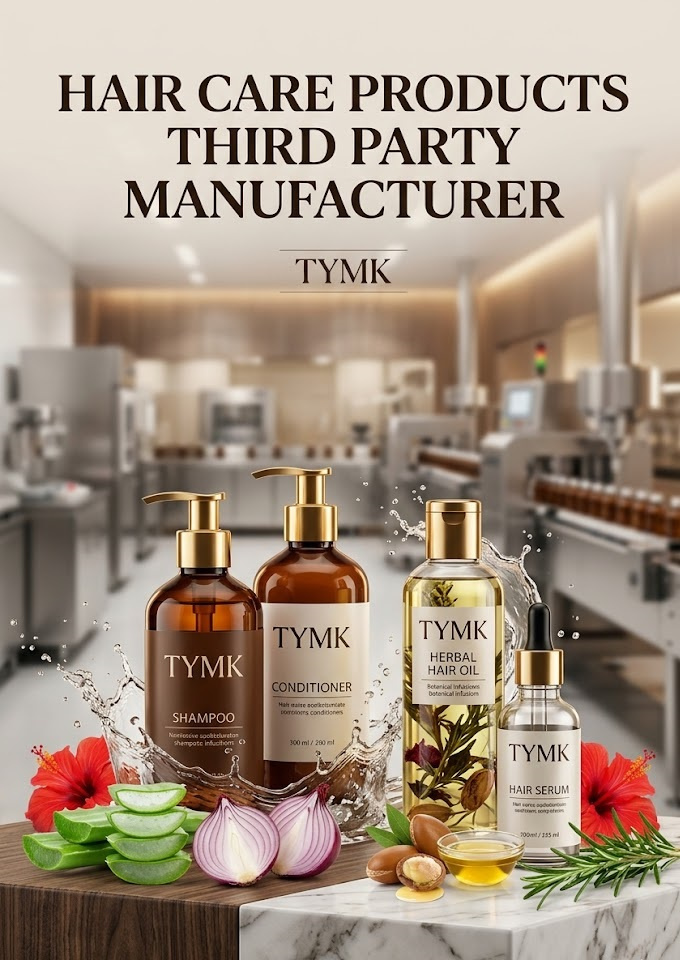
Hair Care Products Third-Party Manufacturer: How Modern Brands Scale Faster
Discover how a Hair Care Products Third Party Manufacturer helps beauty brands launch scalable, high-quality shampoo, conditioner, serum, and hair wellness products with lower investment and faster market entry.
Hair Care Products Third-Party Manufacturer: How Modern Brands Scale Faster
Table of Contents
- Introduction
- Quick Summary
- What is a Hair Care Products Third-Party Manufacturer?
- Why This Industry Matters Today
- How Third-Party Hair Care Manufacturing Works
- Types of Hair Care Products You Can Manufacture
- Real Manufacturing Workflow Explained
- Common Challenges Brands Face
- Comparison Table: OEM vs White Label vs Third Party Manufacturing
- Real-World Business Example
- Important Buyer Decision Factors
- Why Brands Choose TYMK
- Industry Trends Shaping the Hair Care Market
- Featured Snippet Section
- FAQs
- Final Thoughts
Introduction
Launching a hair care brand sounds exciting in the beginning. Most founders imagine premium shampoo bottles, strong branding, influencer marketing, and growing online sales. But once the process starts, reality becomes very different.
Product formulation, testing, packaging, compliance, MOQ planning, sourcing raw materials, fragrance selection, stability testing, and manufacturing timelines quickly become overwhelming. This is exactly why many startups and even established FMCG businesses now prefer working with a Hair Care Products third-party manufacturer instead of setting up their own production facility.
Now here’s the important part…
The modern hair care market is no longer driven only by large cosmetic companies. Today, niche brands focused on herbal shampoos, sulfate-free formulas, scalp repair serums, anti-hair fall oils, and customized conditioners are growing rapidly. Consumers want targeted solutions, not generic products.
That shift has created huge opportunities for businesses that understand manufacturing partnerships correctly.
A reliable third party manufacturer does much more than simply produce products. They help brands reduce risk, improve scalability, speed up launches, and maintain product consistency while focusing on branding and sales growth.
For startups, especially, this model changes everything.
Quick Summary
A Hair Care Products Third Party Manufacturer produces hair care products for brands under their own label. Instead of investing heavily in factories, machinery, staff, and compliance systems, businesses outsource production to experienced cosmetic manufacturers.
This model helps businesses:
- Reduce manufacturing costs
- Launch products faster
- Access expert formulations
- Scale production efficiently
- Focus on branding and marketing
- Maintain product quality standards
Modern brands increasingly prefer third-party manufacturing because it offers flexibility, faster market adaptation, and lower operational complexity.
What is a Hair Care Products Third-Party Manufacturer?
A Hair Care Products Third-Party Manufacturer is a company that manufactures hair care products on behalf of another brand. The products are sold under the client’s brand name rather than the manufacturer’s identity.
These products may include:
- Shampoos
- Hair oils
- Hair serums
- Hair masks
- Conditioners
- Scalp treatment products
- Anti-dandruff formulas
- Herbal hair care products
- Sulfate-free products
- Professional salon formulations
In practical business terms, the manufacturer handles production while the brand focuses on marketing, sales, distribution, and customer acquisition.
Most people don’t realize this, but many successful cosmetic brands do not own factories at all. They operate through highly specialized manufacturing partnerships.
This is extremely common in the beauty and personal care industry.
Why This Industry Matters Today
The global hair care industry is changing very quickly. Consumer awareness has increased dramatically over the past few years.
Customers now check:
- Ingredient transparency
- Sulfate-free claims
- Paraben-free formulations
- Cruelty-free standards
- Herbal ingredients
- Packaging sustainability
- Dermatological safety
This has increased pressure on brands to deliver high-quality products consistently.
At the same time, launching manufacturing facilities independently has become expensive. Machinery costs, GMP compliance, quality control systems, testing laboratories, and regulatory approvals require significant capital.
That’s why the Hair Care Products Third Party Manufacturer model has become highly attractive.
According to the cosmetic industry insights published by Statista, the beauty and personal care market continues showing strong global growth, especially in premium and herbal categories.
Brands now need speed, flexibility, and innovation more than ever.
Third-party manufacturing supports exactly that.
How Third-Party Hair Care Manufacturing Works
The process usually follows several stages.
Step 1: Product Planning
The brand identifies:
- Target audience
- Product category
- Ingredient preferences
- Market positioning
- Pricing strategy
- Packaging style
For example, a startup may want:
- Herbal anti-hair fall shampoo
- Premium salon conditioner
- Ayurvedic scalp serum
The manufacturer then evaluates formulation possibilities.
Step 2: Formula Development
The manufacturer creates formulations based on the brand’s requirements.
This stage may include:
- Ingredient selection
- Fragrance development
- Texture balancing
- Product testing
- Stability analysis
- Performance optimization
Experienced manufacturers often guide brands here because many founders underestimate formulation complexity.
A shampoo that works in testing may fail in large-scale production if viscosity, preservation systems, or surfactant balance are incorrect.
Step 3: Sampling & Approval
Samples are shared with the client for approval.
Brands test:
- Texture
- Fragrance
- Product performance
- Packaging compatibility
- User experience
This stage is extremely important because changes become more expensive later.
Step 4: Packaging & Labeling
Packaging decisions include:
- Bottle selection
- Cap design
- Label printing
- Carton packaging
- Compliance labeling
This is where branding becomes visible to customers.
Many startups ignore packaging psychology initially, but packaging heavily influences purchase behavior in the beauty industry.
Step 5: Bulk Manufacturing
Once approvals are complete:
- Raw materials are sourced
- Production batches are scheduled
- Filling and packaging begin
- Quality checks are performed
Professional manufacturers maintain consistency across batches.
That consistency builds customer trust.
Types of Hair Care Products You Can Manufacture
Modern third party manufacturers usually support a broad range of categories.
| Product Category | Market Demand | Suitable For |
|---|---|---|
| Herbal Shampoo | Very High | Ayurvedic brands |
| Sulfate-Free Shampoo | High | Premium brands |
| Hair Growth Oil | Very High | D2C businesses |
| Hair Serum | High | Salon-focused brands |
| Hair Mask | Growing | Premium skincare/haircare brands |
| Conditioner | Stable | General hair care brands |
| Anti-Dandruff Products | Strong | Mass-market brands |
| Kids Hair Care | Emerging | Family-focused brands |
One interesting industry trend is the rise of scalp-focused formulations. Consumers increasingly understand that scalp health directly affects hair quality.
Because of this, scalp serums and microbiome-friendly products are gaining traction.
Real Manufacturing Workflow Explained
In real-world operations, manufacturing partnerships involve much more coordination than most blogs explain.
A typical workflow looks like this:
- Brand finalizes concept
- The manufacturer creates formulations
- Regulatory review begins
- Packaging procurement starts
- Raw materials are ordered
- Pilot batches are tested
- The production schedule is allocated
- Manufacturing begins
- Quality inspection happens
- Dispatch and logistics are managed
Now here’s where many new brands struggle…
Timelines rarely stay perfect.
Packaging delays, raw material shortages, fragrance modifications, compliance updates, or MOQ adjustments can impact launch schedules significantly.
An experienced Hair Care Products Third Party Manufacturer helps minimize these disruptions.
Common Challenges Brands Face
1. Unrealistic MOQ Expectations
Many startups want extremely low MOQs while expecting premium customization.
In manufacturing, customization increases production complexity. Lower quantities may not always be commercially viable.
2. Poor Packaging Decisions
Cheap packaging often damages premium positioning.
Consumers judge cosmetic products visually before testing them.
3. Weak Formula Differentiation
Some brands enter crowded categories without meaningful uniqueness.
Simply launching another shampoo is no longer enough.
Brands need:
- Ingredient positioning
- Problem-solving focus
- Strong storytelling
- Visible differentiation
4. Choosing Price Over Quality
This is extremely common.
Businesses sometimes choose the cheapest manufacturer instead of evaluating:
- Batch consistency
- Compliance systems
- Quality testing
- Ingredient sourcing
- Production reliability
Short-term savings can create long-term brand damage.
Comparison Table: OEM vs White Label vs Third Party Manufacturing
| Model | Best For | Customization | Investment Level | Speed |
| White Label | Fast launches | Low | Low | Very Fast |
| OEM Hair Care Products | Custom formulas | High | Medium | Medium |
| Third-Party Manufacturing | Balanced scalability | Medium-High | Medium | Fast |
| Private Label Manufacturing | Brand-focused selling | Medium | Medium | Medium |
Businesses often combine multiple models depending on growth stage.
Real Business Example
A small startup launched a herbal anti-hair-fall range through a Hair Care Products Third-Party Manufacturer instead of building its own factory.
Initially, they started with:
- One shampoo
- One oil
- One serum
Their first batch size was intentionally small to test market demand.
Within 14 months, the brand expanded into marketplaces, salon distribution, and influencer marketing campaigns.
The important lesson here is not just product quality.
It was operational flexibility.
Because manufacturing was outsourced, the founders focused entirely on:
- Customer acquisition
- Branding
- Content marketing
- Distribution partnerships
That flexibility accelerated growth significantly.
Important Buyer Decision Factors
Before choosing a manufacturer, businesses should evaluate:
Manufacturing Capabilities
Check whether the company supports:
- Hair oils
- Herbal formulations
- Sulfate-free products
- Custom fragrances
- Premium packaging
Compliance & Certifications
Reliable manufacturers usually maintain:
- GMP standards
- ISO certifications
- Quality testing systems
This directly affects product credibility.
Product Development Support
Some manufacturers only produce.
Others actively help brands improve formulations, positioning, and packaging strategy.
The second category usually creates stronger long-term partnerships.
Scalability
A manufacturer should support future growth.
Many brands outgrow small facilities quickly.
Why Brands Choose TYMK
TYMK works with modern brands looking for scalable manufacturing solutions across cosmetic, herbal, personal care, and wellness categories.
What makes TYMK different is the broader business-focused approach rather than just production execution.
Brands often need support with:
- Product planning
- Packaging strategy
- Formula positioning
- Manufacturing scalability
- Market readiness
TYMK supports businesses across multiple manufacturing models, including:
- White Label Cosmetic Manufacturer
- Customised Cosmetic Manufacturer
- OEM Hair Care Products
- Shampoo Third-Party Manufacturer
- Personal Care Products White Label Manufacturer
The company also understands modern market requirements around branding, ingredient positioning, and scalable production systems.
For startups, especially, this becomes important because operational guidance is often just as valuable as manufacturing itself.
Industry Trends Shaping the Hair Care Market
Herbal & Ayurvedic Positioning
Consumers increasingly prefer natural ingredient-focused products.
Ingredients like:
- Amla
- Bhringraj
- Onion extract
- Rosemary oil
- Argan oil
continue gaining popularity.
Sulfate-Free Growth
Premium consumers now actively search for gentler formulations.
This trend is particularly strong in urban markets.
Personalized Hair Care
AI-driven scalp analysis and customized formulations are slowly entering the mainstream market.
Brands entering early may gain long-term advantages.
Sustainable Packaging
Eco-conscious packaging is becoming commercially important.
Consumers increasingly notice:
- Recyclable bottles
- Minimal plastic usage
- Sustainable packaging materials
Featured Snippet
What is a Hair Care Products Third-Party Manufacturer?
A Hair Care Products Third Party Manufacturer produces shampoos, oils, conditioners, serums, and other hair care products for brands under their own label. Companies like TYMK help businesses reduce manufacturing investment, improve scalability, access professional formulations, and launch products faster without setting up their own factory.
FAQs
What does a Hair Care Products Third Party Manufacturer do?
They manufacture hair care products for brands that sell products under their own company name.
Is third party manufacturing good for startups?
Yes. It reduces investment risk and allows startups to focus on branding, marketing, and sales growth.
What products can be manufactured?
Shampoos, conditioners, hair oils, hair serums, scalp treatments, hair masks, herbal products, and salon formulations.
What is the difference between OEM and white-label manufacturing?
OEM involves custom product development, while white-label products are pre-developed formulas sold under different brand names.
How long does product manufacturing usually take?
Depending on formulation complexity and packaging availability, timelines may range from a few weeks to several months.
Why do brands work with TYMK?
TYMK supports scalable cosmetic and hair care manufacturing with formulation guidance, packaging support, and flexible manufacturing solutions.
For cosmetic compliance and ingredient guidance, refer to:
FDA Cosmetic Guidance
Final Thoughts
The hair care market is becoming more competitive, but also more opportunity-driven.
Consumers now expect better formulations, stronger ingredient transparency, premium experiences, and trustworthy branding. That creates pressure for brands, but it also creates massive room for growth.
Working with a hair care product's third-party manufacturer allows businesses to move faster without carrying the burden of full-scale production infrastructure.
The key is choosing the right manufacturing partner.
Brands that focus only on pricing often struggle later with consistency, delays, and quality concerns. Businesses that prioritize scalability, formulation expertise, operational support, and long-term partnership usually build stronger brands over time.
For modern startups and growing cosmetic businesses, manufacturing partnerships are no longer just operational decisions.
They are strategic growth decisions.
To explore scalable hair care manufacturing solutions, formulations, and private-label opportunities, visit TYMK and learn how modern cosmetic manufacturing partnerships work.