Why Beverage Brands Are Choosing Contract Manufacturing Instead of Building Factories
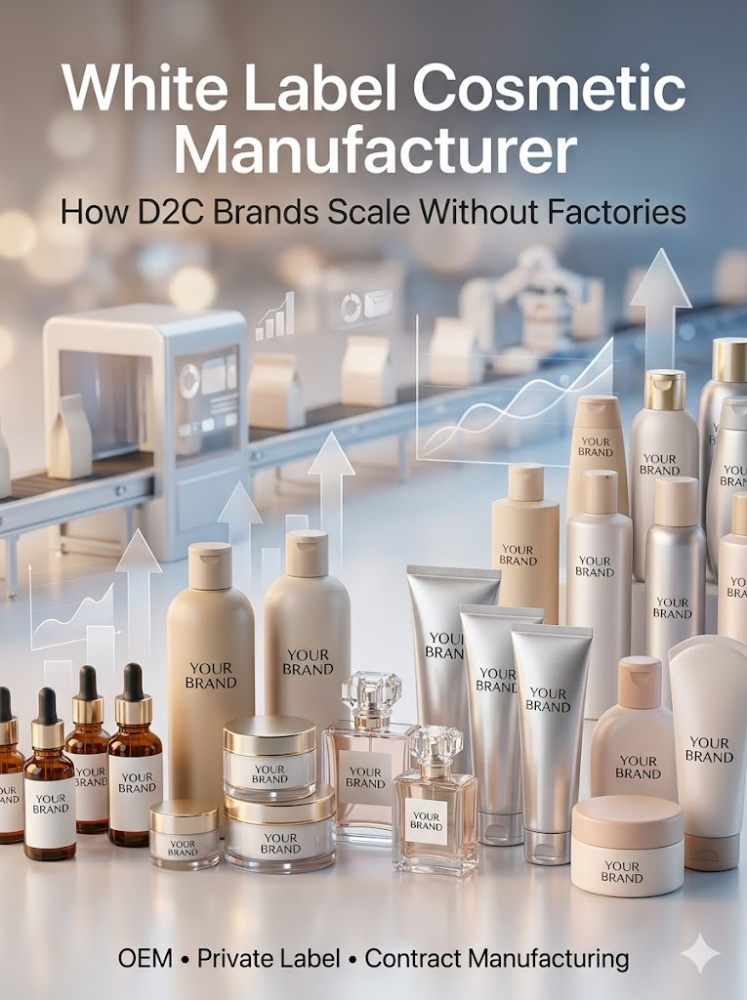
Discover how white-label cosmetic manufacturers help D2C brands launch and scale without investing in factories. Learn the difference between OEM, private label, and contract manufacturing models with real industry insights. Explore how modern cosmetic manufacturing ecosystems reduce costs, speed up production, and support long-term brand growth.
Why Beverage Brands Are Choosing Contract Manufacturing Instead of Building Factories
Introduction (Industry Reality Hook)
The beverage industry looks glamorous from the outside—colourful bottles, trendy labels, and fast-moving retail shelves. But behind every successful drink brand, there is a far less visible reality: manufacturing complexity.
Most founders enter the beverage space thinking the biggest challenge is product idea or branding. In reality, the hardest part is production infrastructure—machines, compliance, manpower, quality control, and continuous scaling.
Setting up a beverage factory today can cost anywhere from several crores to even higher, depending on automation level, certifications, and capacity. On top of that, regulatory approvals, FSSAI compliance, water treatment systems, and packaging infrastructure slow everything down.
This is why a major structural shift is happening in the FMCG ecosystem.
Instead of building factories, modern beverage brands are partnering with contract manufacturers and focusing entirely on branding, distribution, and marketing.
In simple terms:
Factories are becoming infrastructure providers, not brand owners.
And this shift is reshaping how the entire beverage industry works.
Quick Summary (Featured Snippet Ready)
Beverage brands choose contract manufacturing because it eliminates heavy factory investment, reduces operational complexity, ensures faster product launch, and allows scalable production with lower financial risk while focusing on branding and sales.
Market Overview: Why This Shift is Accelerating
The global beverage market is evolving rapidly. Functional drinks, herbal juices, protein beverages, energy drinks, and nutraceutical beverages are growing much faster than traditional soft drinks.
However, the manufacturing side has become more complex:
- Strict food safety regulations (FSSAI, ISO, GMP)
- Advanced packaging requirements
- Short product life cycles
- High competition and fast trend changes
- Demand for multiple SKUs (flavours, variants, sizes)
In this environment, owning a factory is no longer a competitive advantage—it is an operational burden for many startups.
This is where contract manufacturing becomes structurally important.
What is Beverage Contract Manufacturing?
Beverage contract manufacturing is a business model where a third-party manufacturer produces drinks for a brand under its own label.
The brand focuses on:
- Product concept
- Branding
- Marketing
- Distribution
- Customer acquisition
The manufacturer handles:
- Production
- Formulation support
- Quality testing
- Packaging execution
- Compliance documentation
- Bulk scaling
In real-world FMCG terms, this model separates “brand building” from “manufacturing execution.”
That separation is what allows fast scaling.
How Beverage Contract Manufacturing Works (End-to-End Process)
1. Product Ideation Phase
The brand defines:
- Type of beverage (energy drink, herbal juice, protein drink)
- Target audience (gym users, wellness consumers, youth segment)
- Price positioning
2. Formulation Development
Manufacturers either:
- Provide ready formulations (white label)
- Or create custom formulations (OEM model)
This step is critical because stability, taste, and shelf-life are determined here.
3. Sample Testing Phase
Samples are tested for:
- Taste consistency
- Nutritional accuracy
- Shelf stability
- Packaging compatibility
Many startups underestimate this stage, but this is where most product failures are prevented.
4. Packaging Development
This includes:
- Bottle design
- Label compliance
- Nutritional declarations
- Branding layout
Packaging is not just visual—it is regulatory.
5. Compliance Approval
Manufacturers ensure:
- FSSAI compliance
- Ingredient approvals
- Safety documentation
- Batch coding and traceability
Without this, products cannot legally enter the market.
6. Bulk Production
Once approved:
- Large-scale production begins
- Automated filling and sealing lines are used
- Quality control checks are applied in batches
7. Distribution Support
Some manufacturers also help with:
- Warehousing
- Logistics coordination
- Export documentation
Why Beverage Brands Prefer Contract Manufacturing
1. Lower Capital Risk
Building a factory requires:
- Land acquisition
- Machinery investment
- Installation cost
- Utilities setup
- Skilled staff hiring
Contract manufacturing removes all of this upfront burden.
Brands can enter the market with a fraction of the cost.
2. Faster Market Entry
Time-to-market is critical in FMCG.
- Factory setup: 12–24 months
- Contract manufacturing: 30–90 days
In a trend-driven market, speed determines survival.
3. Scalability Without Infrastructure Stress
When demand increases:
- Factory owners must expand capacity
- Contract brands simply increase order volume
This flexibility is a major advantage.
4. Reduced Compliance Burden
Manufacturing requires strict compliance with:
- Food safety laws
- Hygiene standards
- Documentation audits
Manufacturers already handle this system.
5. Focus on Brand Growth
Instead of worrying about machines and production downtime, brands focus on:
- Influencer marketing
- Retail expansion
- D2C sales funnels
- Export strategy
This shift is crucial for modern FMCG success.
When Should Brands Use Contract Manufacturing?
Contract manufacturing is ideal when:
- Launching a new beverage brand
- Testing new product ideas
- Entering FMCG for the first time
- Expanding product line quickly
- Avoiding heavy capital investment
If the goal is speed + scalability, this model is almost mandatory.
Who Should Choose This Model?
- Startup beverage founders
- Wellness drink brands
- Energy drink companies
- Herbal beverage companies
- MLM and direct selling companies
- Export-focused FMCG brands
Comparison Table: Factory vs Contract Manufacturing
| Factor | Own Factory | Contract Manufacturing |
|---|---|---|
| Investment | Very High | Low–Medium |
| Setup Time | 1–2 Years | 1–3 Months |
| Risk Level | High | Low |
| Scalability | Limited | Flexible |
| Compliance Load | High | Handled by Manufacturer |
| Control | Full | Shared |
| Market Entry Speed | Slow | Fast |
Real Industry Challenges (Important Insight)
Even though contract manufacturing simplifies production, it is not risk-free.
Common operational issues include:
- MOQ limitations for startups
- Quality variations between batches
- Dependency on manufacturer timelines
- Packaging delays due to supplier chain issues
- Formula confidentiality concerns
Most brands only understand these issues after scaling begins.
Common Mistakes Brands Make
- Choosing a manufacturer based only on the lowest price
- Ignoring product stability testing
- Not planning SKU expansion early
- Weak packaging compliance understanding
- Overestimating demand before validation
These mistakes often lead to product recalls or market rejection.
Expert Industry Insight (What Most Blogs Don’t Say)
In real FMCG operations, manufacturing is not the bottleneck—decision-making is.
Brands that succeed usually:
- Test multiple small batches first
- Iterate formulations quickly
- Maintain flexible packaging designs
- Keep at least 2 manufacturing backups
This reduces dependency risk significantly.
Why TYMK Matters in This Ecosystem
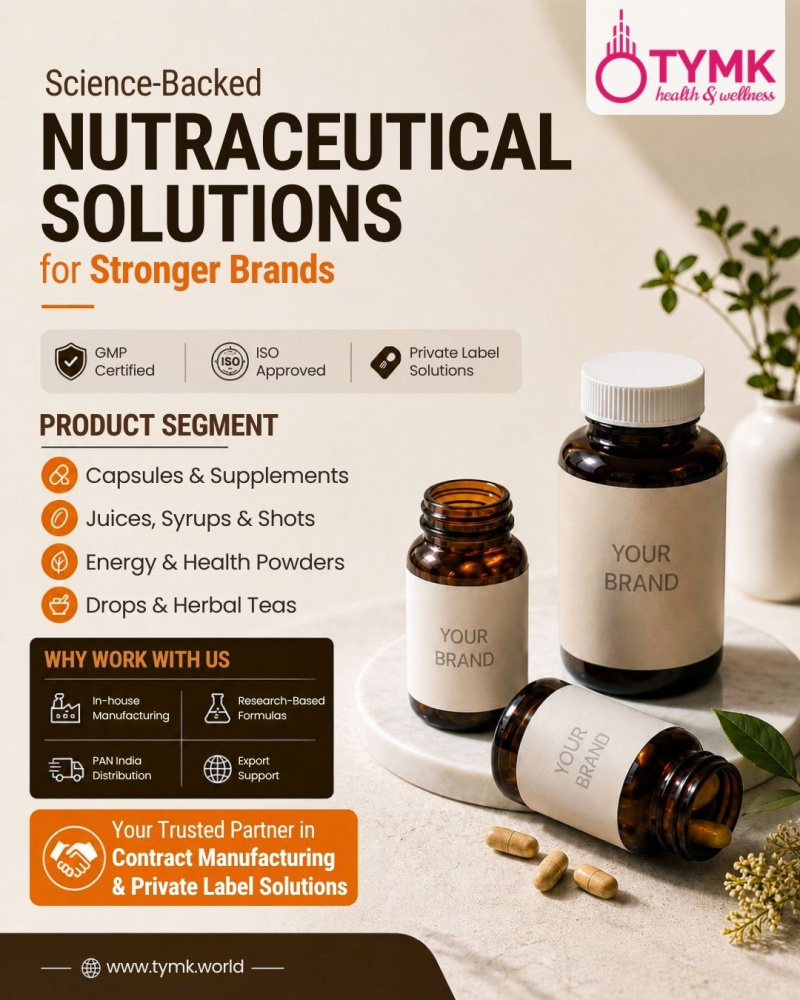
TYMK operates within the modern FMCG manufacturing support ecosystem, focusing on enabling scalable production models for emerging brands.
From an industry perspective, manufacturers like TYMK are not just production units—they function as:
- Product development partners
- Compliance facilitators
- Scaling infrastructure providers
- Private label/OEM enablers
This model allows brands to behave like tech companies: fast iteration, rapid scaling, low fixed infrastructure.
Future Trends in Beverage Manufacturing
The industry is shifting toward:
1. Modular Manufacturing
Shared production facilities used by multiple brands.
2. AI-Based Demand Forecasting
Production aligned with real-time demand signals.
3. Functional Beverage Growth
Immunity drinks, herbal shots, and protein waters are expanding rapidly.
4. Export-Driven Manufacturing
India is becoming a global FMCG production hub.
5. Short Product Lifecycles
Brands are launching and discontinuing products faster than ever.
Featured Snippet
Beverage brands choose contract manufacturing because it eliminates the need for expensive factory setup, reduces operational risk, and enables faster market entry. It allows companies to focus on branding and sales while manufacturers handle production, compliance, and scalability.
FAQs
1. What is beverage contract manufacturing?
It is a system where a third-party manufacturer produces beverages for brands under their label.
2. Is it cheaper than building a factory?
Yes. It significantly reduces upfront investment and operational costs.
3. Can startups use contract manufacturing?
Yes. It is the most common entry method in the FMCG beverage industry.
4. What is the biggest risk?
Dependency on manufacturer quality and timelines.
5. Is branding still controlled by the company?
Yes. Brands fully control marketing, packaging, and distribution.
Conclusion
The beverage industry is moving away from ownership-heavy production models toward flexible, scalable manufacturing ecosystems.
Contract manufacturing is not just a cost-saving approach—it is a structural advantage that allows brands to compete faster in a highly competitive FMCG environment.
Companies that focus on branding and market execution rather than infrastructure ownership are the ones scaling fastest today.
For scalable FMCG manufacturing support, brands often align with partners like TYMK.