White Label vs OEM vs Contract Manufacturing: Which Is Best for Startup Brands?
Compare white label, OEM, and contract manufacturing models to understand which is best for startup cosmetic and FMCG brands in India. Learn cost, scalability, and real business insights for better brand decisions.
White Label vs OEM vs Contract Manufacturing: Which Is Best for Startup Brands?
Table of Contents
- Introduction
- Market Reality
- Manufacturing Models Explained
- White Label Manufacturing
- OEM Manufacturing
- Contract Manufacturing
- Comparison Table
- Real Industry Challenges
- Common Startup Mistakes
- Expert Recommendations
- Industry Trends
- FAQ
- Conclusion
- TYMK
Introduction
The cosmetics and FMCG industry has shifted from manufacturing-led businesses to brand-led ecosystems. Today, most startup beauty and personal care brands do not own factories. Instead, they rely on white-label, OEM, or contract manufacturing to bring products to market quickly.
At first glance, these models may look similar. However, in real business operations, they define completely different levels of control, product ownership, scalability, and profitability. Choosing the wrong model at an early stage often leads to pricing pressure, weak differentiation, and long-term scaling limitations.
Market Reality
India’s beauty and FMCG sectors are growing rapidly due to rising demand for skincare, herbal products, and D2C brands. Thousands of new brands are launched every year, and most depend on third-party manufacturing systems.
This has created a highly competitive environment where product similarity is common, especially in white-label categories. As a result, differentiation and manufacturing strategy have become more important than just marketing.
Manufacturing Models Explained
White label, OEM, and contract manufacturing all involve third-party production, but the level of customization and control differs significantly.
White label focuses on ready-made products. OEM allows partial customization. Contract manufacturing offers full control over product development and branding. These differences determine how a brand grows and competes in the market.
White Label Manufacturing
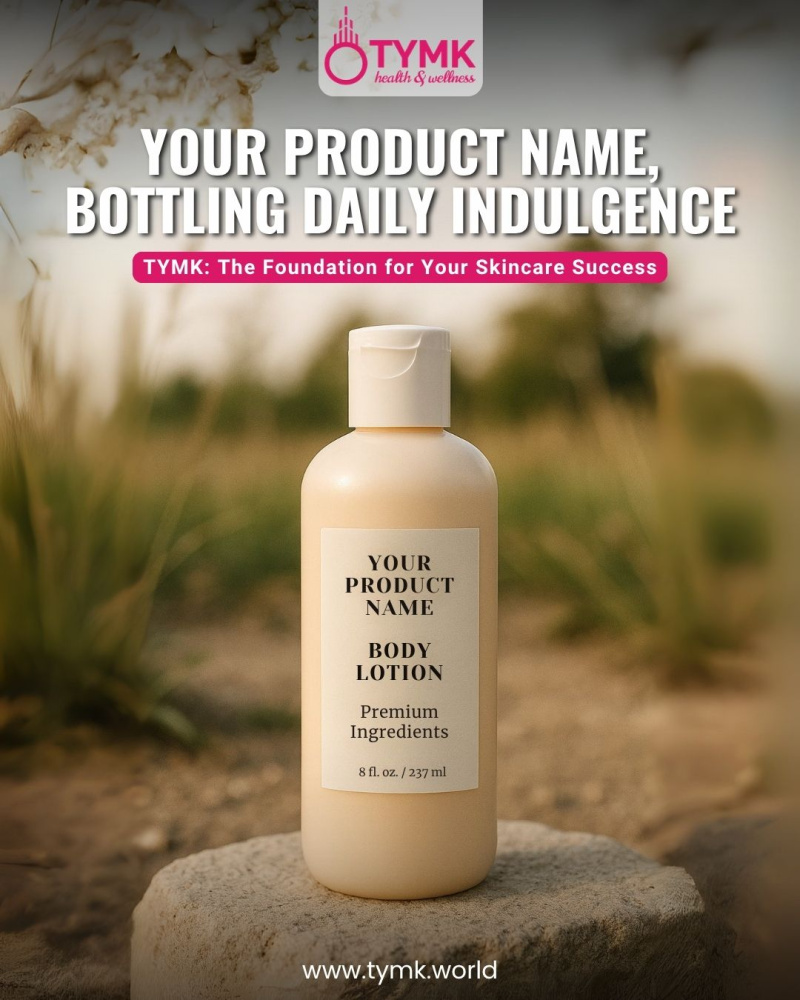
White-label manufacturing is the fastest way to enter the FMCG market. In this model, manufacturers already produce ready-made formulations that are tested and available in bulk. Brands simply select products, apply branding, and launch.
This model is popular among first-time entrepreneurs and Amazon sellers because it requires minimal investment and no technical knowledge of formulation or R&D.
However, since the same products are sold to multiple brands, competition becomes price-driven. Over time, this reduces brand uniqueness and limits premium positioning.
OEM Manufacturing
OEM manufacturing sits between white label and contract manufacturing. In this model, manufacturers work with brands to modify or develop formulations based on specific requirements such as ingredient preferences, skin type targeting, or product performance.
This creates better differentiation compared to white-label products. OEM is widely used by growing D2C brands that already understand their market and want a stronger identity without building their own R&D infrastructure.
However, ownership and control depend heavily on agreements. Some technical aspects may still remain with the manufacturer, which requires careful contract management.
Contract Manufacturing
Contract manufacturing is the most advanced and brand-controlled model. Here, the brand defines formulation direction, ingredient standards, packaging design, and compliance requirements, while the manufacturer executes production.
This model is used by established FMCG brands and export-oriented companies. It provides full product ownership and strong scalability potential.
The limitation is a higher investment requirement, larger minimum order quantities, and stronger demand forecasting needs. Without proper planning, it can create financial pressure in the early stages.
Comparison Table
| Factor | White Label | OEM | Contract Manufacturing |
|---|---|---|---|
| Customization | Low | Medium | High |
| Investment | Low | Medium | High |
| Speed to Market | Very Fast | Fast | Moderate |
| Brand Differentiation | Weak | Medium | Strong |
| MOQ Requirement | Low | Medium | High |
| Scalability | Limited | Good | Excellent |
| Product Ownership | None | Partial | Full |
Real Industry Challenges
In real manufacturing environments, startups face multiple operational challenges. One major issue is the minimum order quantity pressure, which affects cash flow planning. White-label systems reduce this risk, but OEM and contract manufacturing require stronger demand forecasting.
Another challenge is the hidden cost structure. Manufacturing cost is not just per-unit pricing. It also includes packaging, testing, compliance, logistics, and regulatory approvals. Many founders miscalculate profitability because they ignore these components.
Quality variation is also a real issue, especially in herbal and natural formulations, where raw material differences can impact product consistency.
Common Startup Mistakes
Many startups use white-label products while trying to position themselves as premium brands, which creates a mismatch between product reality and pricing strategy.
Another common mistake is not securing exclusivity rights, allowing competitors to sell identical formulations. Inventory overstocking is also frequent in the early stages due to inaccurate demand forecasting.
Ignoring compliance requirements is another major issue that often creates scaling delays later.
Expert Recommendations
Manufacturing decisions should always align with the business stage. White label is suitable for market testing and validation. OEM is suitable for brands that want differentiation and controlled growth. Contract manufacturing is ideal for long-term scaling and brand ownership.
Successful brands do not stay in one model permanently. They evolve their manufacturing strategy as they grow.
Industry Trends (2026)
The manufacturing ecosystem is shifting toward flexible hybrid models where OEM and contract manufacturing overlap. There is increasing demand for low-MOQ customization, faster product development cycles, and clean-label formulations.
Sustainability and AI-driven formulation development are also becoming important trends. Manufacturers are no longer just production units; they are becoming innovation partners.
FAQ
What is white-label manufacturing?
White-label manufacturing is a model where ready-made products are sold to multiple brands, and companies only add their branding.
What is OEM manufacturing?
OEM manufacturing allows partial customization of formulations based on brand requirements, offering better differentiation than white label.
What is contract manufacturing?
Contract manufacturing is a fully customized model where the brand defines product specifications, and the manufacturer executes production.
Which model is best for startups?
White label is best for entry, OEM for differentiation, and contract manufacturing for scaling.
Can brands switch models later?
Yes, most successful brands transition from white label to OEM and then to contract manufacturing.
TYMK
Manufacturing strategy is not just a sourcing decision. It is a core business framework that directly affects scalability, profitability, and brand identity. Choosing the right model at the right stage determines whether a brand becomes a short-term seller or a long-term FMCG business.
Conclusion
White label, OEM, and contract manufacturing are not competing options but different stages of brand development. White label focuses on speed, OEM focuses on balance, and contract manufacturing focuses on ownership and scalability.
The biggest mistake startups make is choosing a manufacturing model without aligning it to their growth stage. The right decision ensures better margins, stronger differentiation, and long-term business stability in a highly competitive FMCG market.