White Label Shampoo & Conditioner Manufacturing: The Smartest Way to Build a Hair Care Brand
Learn how White Label Shampoo & Conditioner manufacturing helps brands launch premium hair care products faster with custom formulations, packaging, and scalable production.
White Label Shampoo & Conditioner Manufacturing: The Smartest Way to Build a Hair Care Brand
Table of Contents
- Introduction
- What is White Label Shampoo & Conditioner Manufacturing?
- Why the Hair Care Industry is Rapidly Moving Toward White Label Manufacturing
- How White Label Shampoo Manufacturing Actually Works
- Key Benefits of Working With a White Label Cosmetic Manufacturer
- Types of Shampoo & Conditioner Products You Can Launch
- White Label vs OEM vs Contract Manufacturing
- Real-World Business Example
- Common Mistakes New Hair Care Brands Make
- Why Businesses Choose TYMK
- Featured Snippet
- FAQs
- Conclusion
Introduction
The hair care industry has changed dramatically over the last few years. Earlier, launching a shampoo or conditioner brand required massive factory investments, product research teams, chemical testing setups, packaging vendors, and distribution networks. For most businesses, it simply wasn’t practical.
Today, things work differently.
A growing number of startups, salon owners, e-commerce brands, influencers, wellness companies, and even direct selling businesses are building successful hair care brands through White Label Shampoo & Conditioner manufacturing.
This model allows businesses to launch premium products without owning a manufacturing facility.
Now here’s where things become interesting.
Consumers are no longer buying shampoos only for cleansing. They actively search for:
- Sulfate-free shampoo
- Herbal hair care
- Onion oil shampoo
- Keratin conditioner
- Ayurvedic scalp repair products
- Vegan hair care
- Silicone-free formulations
- Damage repair solutions
That means the opportunity in hair care is no longer limited to large cosmetic corporations. Smaller brands now have room to grow quickly if they choose the right manufacturing partner.
A professional White Label Cosmetic Manufacturer like TYMK helps businesses enter the market faster while maintaining product quality, packaging standards, and production consistency.
What is White Label Shampoo & Conditioner Manufacturing?
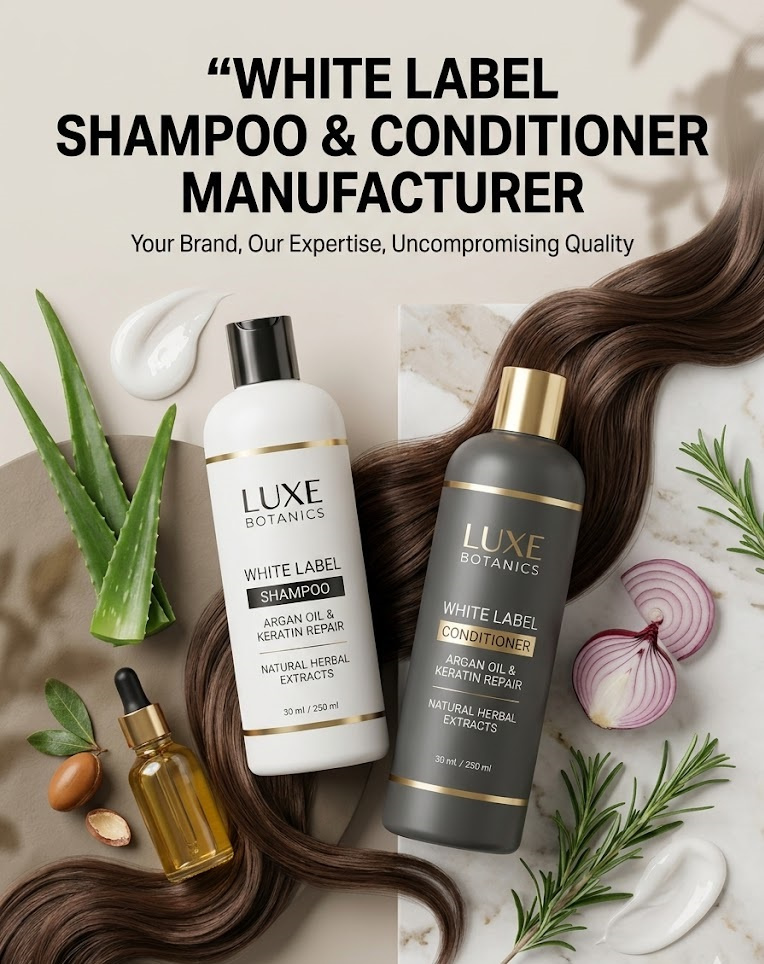
White-label manufacturing means a company produces ready-made shampoo and conditioner formulations that another business can rebrand and sell under its own brand name.
In simple terms:
- The manufacturer creates the product
- Your business owns the branding
- Products are sold under your label
This model has become extremely popular because it reduces:
- Product development time
- Manufacturing investment
- Operational complexity
- Production risk
- Testing costs
A professional Hair Care Products White Label Manufacturer typically offers:
- Ready formulations
- Packaging support
- Bottle sourcing
- Label printing
- Fragrance customization
- Ingredient adjustments
- Bulk production
- Quality testing support
Most people don’t realize this, but many successful online beauty brands never owned a manufacturing unit. They focused entirely on marketing, customer acquisition, and branding while production was managed by OEM manufacturing partners.
That is one reason why private label beauty businesses are scaling rapidly across India and international markets.
Why the Hair Care Industry is Rapidly Moving Toward White Label Manufacturing
The modern beauty industry moves fast. Consumer trends change almost every quarter.
One year, the market demands onion oil shampoos. Next year, people will shift toward rosemary-based scalp care or protein repair formulas.
Brands that take 12–18 months to develop products internally often miss the trend window completely.
That’s why businesses increasingly prefer working with a Shampoo Contract Manufacturer that already has tested formulations and scalable production systems.
Market Demand is Expanding
Hair care is no longer a basic hygiene category. It has evolved into a premium wellness segment.
Consumers today want products for:
- Hair growth support
- Anti-hair fall routines
- Curly hair care
- Scalp detox
- Anti-dandruff treatment
- Frizz control
- Color protection
- Deep nourishment
This shift creates opportunities for smaller brands that can move quickly.
Why White Label Manufacturing Makes Business Sense
| Business Challenge | White Label Solution |
|---|---|
| High R&D costs | Ready-to-launch formulations |
| Factory investment | No manufacturing setup needed |
| Delayed product launches | Faster production timelines |
| Compliance complexity | Manufacturer support available |
| Packaging sourcing problems | End-to-end assistance |
| Scalability issues | Bulk production capability |
In real-world business terms, white-label manufacturing lets entrepreneurs focus on:
- Branding
- Social media marketing
- Sales growth
- Distribution
- Customer retention
instead of handling chemical production and factory operations.
How White Label Shampoo Manufacturing Actually Works
Many new business owners assume cosmetic manufacturing is extremely complicated. In reality, experienced manufacturers simplify most of the process.
Here’s how it generally works.
Step 1: Product Category Selection
You first decide what type of products you want to launch.
Popular categories include:
- Herbal shampoo
- Sulfate-free shampoo
- Onion shampoo
- Keratin shampoo
- Anti-dandruff shampoo
- Moisturizing conditioner
- Hair repair conditioner
- Protein conditioner
- Ayurvedic hair cleanser
An experienced Customised Cosmetic Manufacturer may also suggest formulations based on current market demand.
Step 2: Formula Selection or Customization
Businesses can choose:
- Existing white-label formulas
- Slightly customized versions
- Fragrance modifications
- Texture adjustments
- Ingredient enhancements
Some brands start with ready-made formulas to test the market before investing in exclusive product development.
This reduces initial financial risk significantly.
Step 3: Packaging & Branding
This stage includes:
- Bottle design
- Packaging style
- Label creation
- Product positioning
- Branding elements
Packaging matters heavily in modern hair care marketing because customers often judge product quality visually before trying it.
Premium packaging can improve:
- Customer trust
- Shelf appeal
- Online conversion rates
- Brand perception
Step 4: Manufacturing & Quality Testing
The manufacturer handles:
- Bulk production
- Filling
- Sealing
- Batch consistency
- Basic quality checks
A reliable OEM Shampoo Manufacturer focuses heavily on consistency because repeat customers expect identical product quality every time they reorder.
This is one of the biggest reasons established brands prefer professional manufacturing partners rather than unorganized suppliers.
Step 5: Delivery & Market Launch
Once production is completed:
- Products are packed
- Orders are dispatched
- Businesses begin selling online or offline
Many startups initially launch through:
- Instagram stores
- Amazon
- Flipkart
- Salon networks
- D2C websites
- Marketplace platforms
Key Benefits of Working With a White Label Cosmetic Manufacturer
Faster Market Entry
Launching a custom cosmetic formula from scratch can take months.
White-label manufacturing dramatically reduces launch timelines because formulations are already developed and production-ready.
Lower Investment Risk
Instead of spending heavily on:
- Machinery
- Chemists
- Testing labs
- Production units
Businesses can start with lower investment models.
This makes it easier for startups to validate demand before scaling.
Easier Product Expansion
Once a shampoo line performs well, businesses can expand into:
- Hair serums
- Hair masks
- Conditioners
- Hair oils
- Scalp treatments
This creates a complete hair care product ecosystem under one brand.
Professional Manufacturing Standards
An experienced Hair Care Products Manufacturer understands:
- Ingredient compatibility
- Production hygiene
- Batch stability
- Packaging durability
- Supply chain management
That operational expertise becomes extremely valuable as the brand grows.
Types of Shampoo & Conditioner Products You Can Launch
The hair care market supports multiple niches.
| Product Category | Market Demand |
|---|---|
| Herbal Shampoo | High |
| Sulfate-Free Shampoo | High |
| Onion Hair Care | Growing |
| Keratin Repair | Premium Segment |
| Anti-Dandruff Solutions | Consistent |
| Baby Hair Care | Specialized |
| Vegan Hair Care | Fast Growing |
| Ayurvedic Hair Care | Strong Demand |
Businesses entering niche segments often build a stronger brand identity compared to generic hair care products.
White Label vs OEM vs Contract Manufacturing
| Factor | White Label | OEM | Contract Manufacturing |
|---|---|---|---|
| Formula Ownership | Manufacturer | Brand/Shared | Depends |
| Launch Speed | Fastest | Moderate | Moderate |
| Development Cost | Lower | Higher | Variable |
| Product Customization | Limited | High | Flexible |
| Best For | Startups | Established Brands | Scaling Businesses |
For most new businesses, white-label manufacturing is the fastest and safest entry point.
Real-World Business Example
A small beauty entrepreneur in India started selling onion shampoo and conditioner through Instagram.
Initially, the founder planned to create an in-house manufacturing setup, but quickly realized the operational costs were extremely high.
Instead, they partnered with a Personal Care Products Manufacturer offering white-label services.
The business started with:
- 500-unit production
- Two product variants
- Minimal packaging investment
Within one year:
- Repeat customer orders increased
- Influencer collaborations improved visibility
- Marketplace sales expanded
- Salon partnerships started generating stable revenue
The biggest reason for growth wasn’t only marketing.
It was product consistency.
Customers trusted the brand because every batch maintained similar fragrance, texture, and performance quality.
That consistency often separates scalable brands from short-term trend businesses.
Common Mistakes New Hair Care Brands Make
Choosing Price Over Quality
Cheap manufacturing often creates:
- Leakage issues
- Formula instability
- Inconsistent texture
- Poor fragrance retention
These problems damage customer trust quickly.
Ignoring Packaging Quality
Weak packaging affects:
- Product safety
- Shipping durability
- Brand image
Modern customers expect a premium presentation.
Launching Too Many Products Initially
Many startups try launching:
- Shampoo
- Conditioner
- Serum
- Oil
- Face wash
- Soap
all at once.
A smarter strategy is starting with 1–2 strong products and scaling gradually.
Not Understanding Market Positioning
Hair care today is highly segmented.
Brands must decide whether they target:
- Premium consumers
- Budget buyers
- Herbal audiences
- Salon professionals
- Luxury beauty customers
Clear positioning improves long-term brand recognition.
Why Businesses Choose TYMK
TYMK supports businesses looking for scalable cosmetic and personal care manufacturing solutions across multiple categories.
Brands often work with TYMK because of:
- White-label manufacturing support
- OEM product capabilities
- Hair care product expertise
- Packaging assistance
- Scalable production systems
- Multiple cosmetic category solutions
Unlike generic suppliers, experienced manufacturers understand both production and market trends.
That matters because modern beauty brands require more than just product filling. They need manufacturing partners capable of supporting long-term scaling and product consistency.
Featured Snippet
A White Label Shampoo & Conditioner manufacturer produces ready-made hair care formulations that businesses can rebrand and sell under their own name. Companies like TYMK help brands launch shampoo and conditioner products faster by offering manufacturing, packaging, labeling, and scalable OEM production support.
FAQs
What is White Label Shampoo & Conditioner manufacturing?
It is a manufacturing model where ready-made shampoo and conditioner products are produced by a manufacturer and sold under another company’s brand name.
Is white-label manufacturing profitable?
Yes. It reduces operational costs, lowers production investment, and allows faster market entry for beauty brands.
What is the difference between OEM and white-label manufacturing?
OEM manufacturing generally allows more customization, while white-label manufacturing focuses on ready-to-launch formulas.
Can TYMK help new startups launch hair care brands?
Yes, TYMK supports businesses with white-label and OEM manufacturing solutions across cosmetic categories.
Which shampoo category is growing fastest?
Herbal, sulfate-free, onion-based, and scalp repair shampoos currently show strong market demand.
How long does white-label shampoo production usually take?
Production timelines vary depending on packaging, customization, and order quantity, but white-label manufacturing is generally faster than custom product development.
Conclusion
The beauty industry is evolving rapidly, and businesses that move quickly often gain the strongest market advantage. Working with a professional White Label Shampoo & Conditioner manufacturer allows brands to launch products faster while avoiding the massive costs associated with factory ownership and internal production systems.
From startups and salon brands to e-commerce sellers and direct selling companies, white-label manufacturing offers a practical and scalable way to enter the growing hair care market.
Choosing an experienced White Label Cosmetic Manufacturer also improves operational reliability, packaging quality, production consistency, and long-term scalability.
To explore scalable hair care manufacturing solutions, visit TYMK and learn more about white label, OEM, and contract manufacturing support.