Toothpaste Third-Party Manufacturer – How It Really Works in the FMCG Industry
This blog explains how toothpaste third-party manufacturing works, its benefits, process steps, and who should use it. It helps brands understand how to launch toothpaste products without setting up production units.
Toothpaste Third-Party Manufacturer – How It Really Works in the FMCG Industry
Understand toothpaste third-party manufacturing, how it works, the benefits, and why brands use it to launch faster in the FMCG oral care market.
Introduction
Most people think starting a toothpaste brand is just about having a formula and a logo. In reality, that’s only a small part of the story. Production, compliance, machinery setup, and batch stability are where most new brands struggle.
This is exactly where a Toothpaste Third Party Manufacturer becomes practical.
Instead of building everything from scratch, brands plug into an already running manufacturing system. It sounds simple, but it changes the entire business structure—cost drops, speed increases, and risk reduces almost immediately.
In today’s FMCG market, this model is not optional anymore for small and mid-size players. It’s the default entry strategy.
What is Toothpaste Third Party, Manufacturer?
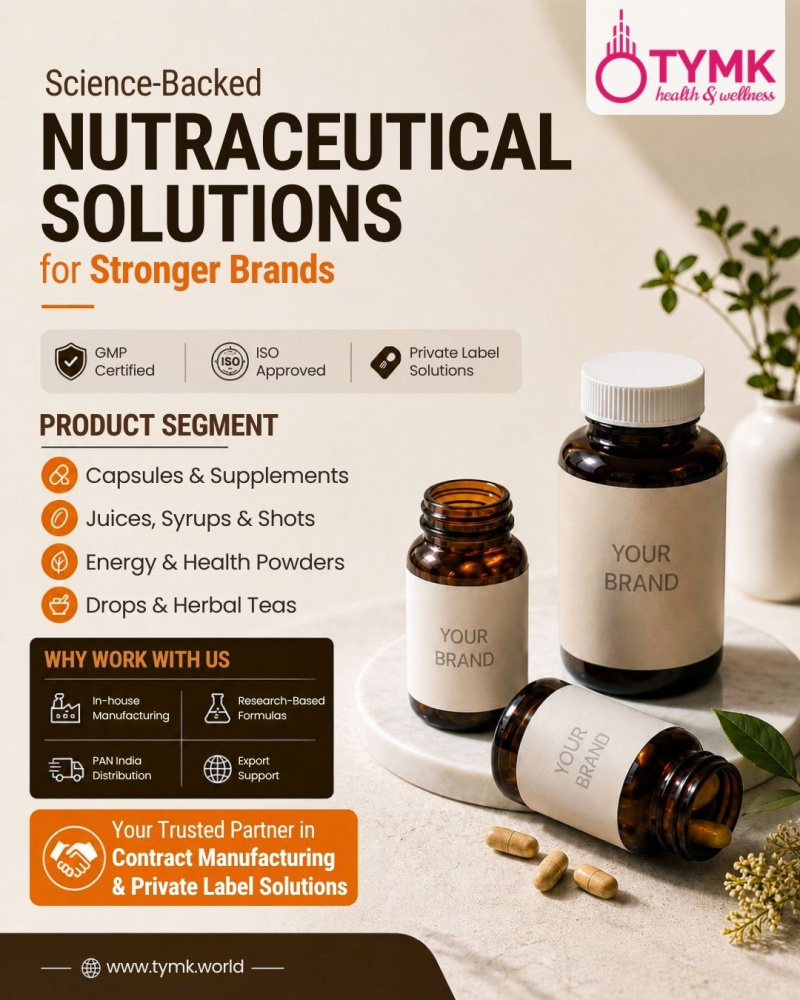
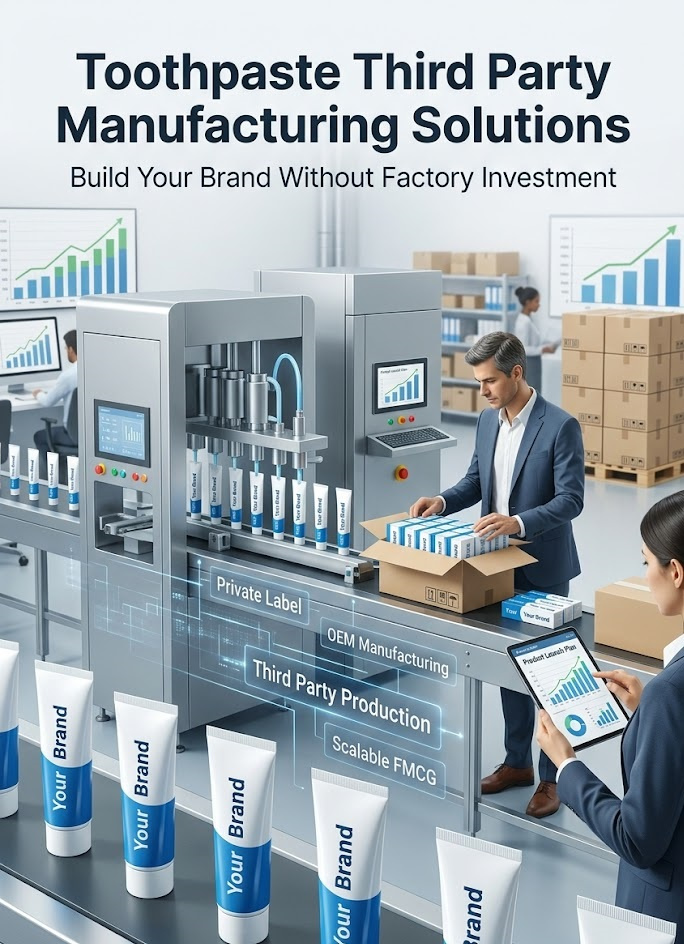
A toothpaste third-party manufacturer is basically a production partner. They manufacture toothpaste for your brand while you handle branding, packaging direction, and sales.
You don’t own the factory. You don’t manage machines or production teams. You just own the product identity.
In real terms, it works like this:
they produce → you brand → market sells.
Nothing more complicated than that, but execution is where value is created.
Why this model is becoming standard in FMCG
If you look at the oral care industry today, most new brands don’t manufacture themselves. There are reasons behind it, not just convenience.
- Setting up a toothpaste plant requires a heavy investment
- Regulatory approvals take time and experience
- Formulation stability is not easy for beginners
- Production mistakes can destroy brand trust early
So instead of learning everything the hard way, brands use existing manufacturing ecosystems.
That shift is why third-party manufacturing is growing so fast.
How the process usually works (real workflow view)
It doesn’t start with production immediately. There’s a sequence most companies follow:
First, you decide the product direction—herbal, whitening, charcoal, fluoride, or something custom.
Then, sample development begins. This is where most brands actually realize that what they want is slightly different from what they initially thought.
After that, testing and stability checks happen. This part is not visible to customers, but it matters a lot for shelf life and consistency.
Once approval is done, bulk manufacturing starts, followed by packaging and dispatch.
It’s a loop, not a one-time event. Good manufacturers keep refining batches based on feedback.
When does this model make sense?
Not every situation needs third-party manufacturing, but most new brands do.
It works best when:
- You want to launch quickly
- You don’t want to invest in machinery
- You are testing a new FMCG idea
- You want to expand the product range without risk
If the goal is speed + flexibility, this model fits naturally.
Who actually uses it in the market?
This is more common than people assume.
- small FMCG startups
- Ayurveda oral care brands
- MLM and network marketing companies
- online sellers on Amazon/Flipkart
- Regional distributors building private labels
Most of them don’t talk about manufacturing, but rely heavily on it.
Choosing between manufacturing models
| Model | Investment | Speed | Control | Risk |
|---|---|---|---|---|
| Own factory | Very high | Slow | Full | High |
| Third party | Low | Fast | Medium | Low |
| White label | Very low | Very fast | Low | Very low |
For most new entrants, third-party manufacturing sits in the middle zone—balanced and scalable.
Industry context (why brands depend on this model)
In the broader personal care ecosystem, manufacturing networks are shared across categories like skincare, oral care, and herbal products.
For example, brands working with systems like Face Serum Private Label Manufacturer usually follow the same logic—outsourcing production while focusing on branding and distribution.
This separation of production and branding is what allows FMCG markets to scale so quickly today.
Featured Snippet (direct answer style)
A third-party toothpaste manufacturer produces toothpaste for brands using their own facility. The brand owns marketing and sales, while manufacturing, quality control, and packaging are handled by the production partner. It helps brands launch faster without building factories.
FAQs
What exactly does a third-party toothpaste manufacturer do?
They handle production, formulation, and packaging while the brand handles marketing and sales.
Is it cheaper than owning a factory?
Yes, because it removes machinery, labor, and compliance investment.
Can I customize the toothpaste formula?
Yes, most manufacturers allow semi-custom or fully custom formulations.
Is it suitable for new brands?
Yes, it is commonly used by startups and new FMCG companies.
What is the biggest advantage?
Speed of launch without heavy capital investment.
Conclusion
Toothpaste third-party manufacturing is less about outsourcing and more about structuring a business in a practical way. It removes infrastructure pressure and allows brands to focus on growth, distribution, and positioning.
In FMCG terms, it’s not just an option—it’s how most new toothpaste brands actually enter the market today.