Toothpaste Contract Manufacturer Explained for Growing Brands
A practical guide explaining how toothpaste contract manufacturing works, why brands use it, and how to choose the right manufacturing partner for growth.
Toothpaste Contract Manufacturer Explained for Growing Brands
This article breaks down toothpaste contract manufacturing in a practical way—what it is, how it works, and why so many modern oral care brands depend on it to grow faster.
Introduction
Starting a toothpaste brand sounds simple until production enters the picture. That’s usually where most new ideas slow down.
You don’t just need a formula. You need machinery, approvals, raw material sourcing, stability testing, and consistent quality control. That’s a lot for a new brand to handle.
So instead of building everything from scratch, many companies work with a toothpaste contract manufacturer and let them handle production while the brand focuses on selling and positioning.
It’s not really a trend anymore. It’s how most small and mid-sized oral care brands actually operate today.
What is a Toothpaste Contract Manufacturer?
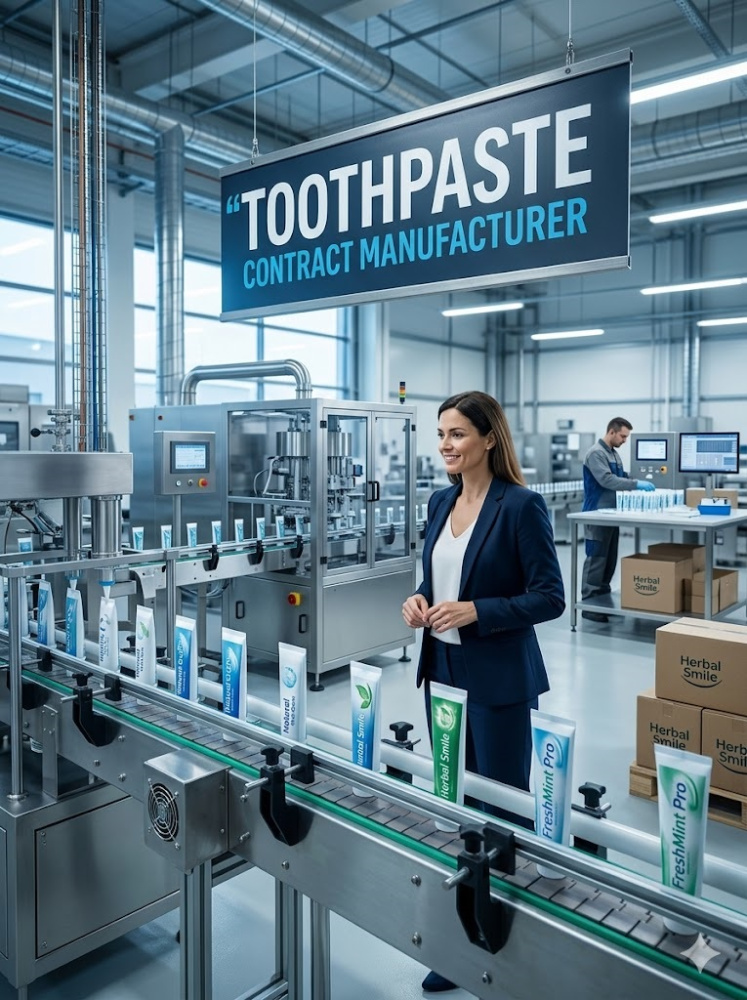
A toothpaste contract manufacturer is basically a production partner. They manufacture toothpaste for other companies under their brand name.
You bring the concept. They handle the factory side.
Their responsibilities usually include:
- Developing or sourcing toothpaste formulas
- Managing production batches
- Running quality and safety checks
- Filling tubes and packaging
- Handling compliance requirements
So instead of building infrastructure, you use an existing system that’s already working.
Why Brands Rely on This Model
The main reason is not just cost, although that matters.
The bigger reason is speed and simplicity.
Setting up manufacturing takes time—sometimes months or even years. For a new brand, that delay can kill momentum.
Contract manufacturers already have systems, machines, and approvals in place. That means a brand can go from idea to product in a much shorter time.
There’s also another side to it. Mistakes in formulation or compliance can be expensive. Working with experienced manufacturers reduces that risk significantly.
How the Process Works in Reality
It usually starts with a basic decision—what type of toothpaste is needed.
Herbal, whitening, sensitive care, or something custom.
Then the manufacturer suggests formulations or develops one based on the brief.
Samples are made. This stage often takes a few rounds because texture, taste, and feel matter more than people expect.
Once the formula is approved, branding comes into play—tube design, labeling, packaging style.
After that, production begins in batches. Each batch is tested before it moves out.
From the outside, it looks complex, but for brands, it feels more like coordination than manufacturing.
When This Model Actually Makes Sense
Not every business needs contract manufacturing, but in a few situations, it becomes almost necessary.
If you want to launch quickly, it helps a lot.
If you’re testing a new product idea, it reduces risk.
If you already have customers or distributors but no production setup, it fills the gap.
In most real cases, it’s chosen because building a factory is not practical at the early stage.
Who Uses Toothpaste Contract Manufacturing
This system is used across different types of businesses, not just startups.
- Small oral care brands entering the market
- Herbal and Ayurvedic companies expanding product lines
- MLM and direct selling businesses
- Export-focused cosmetic suppliers
- Private label distributors
They all share one thing—they prefer focusing on sales rather than production.
Simple Comparison Table
| Model | Investment | Speed | Control | Risk |
|---|---|---|---|---|
| Own Manufacturing | Very High | Slow | Full | High |
| Contract Manufacturing | Medium | Fast | Moderate | Low |
| White Label | Low | Very Fast | Low | Very Low |
Contract manufacturing usually sits in the middle. Not too rigid, not too limited.
Real-World Example
A small wellness brand wanted to launch a herbal toothpaste, but had no production setup at all.
Instead of delaying for a year to build infrastructure, they partnered with a contract manufacturer.
They tested a few samples, selected one formula, and launched in the market within weeks.
What made the difference wasn’t the idea—it was execution speed and availability of manufacturing support.
Brand Trust Perspective
Working with a contract manufacturer is not just outsourcing. It’s more about using an already refined system.
Experienced manufacturers—like those operating in cosmetic ecosystems similar to Face Serum Private Label Manufacturer-type setups—already follow tested production and compliance workflows.
That reduces uncertainty and helps brands stay consistent once they start scaling.
Featured Snippet (Direct Answer)
A toothpaste contract manufacturer is a third-party company that produces toothpaste for brands under OEM or private label arrangements, handling formulation, production, packaging, and compliance without the brand needing its own factory.
FAQs
What does a toothpaste contract manufacturer do?
It produces toothpaste for brands using its own manufacturing facility.
Is it expensive to use contract manufacturing?
Generally no. It is far more cost-efficient than setting up a factory.
Can formulas be customized?
Yes, most manufacturers allow partial or full customization.
Why do brands prefer this model?
Because it saves time, reduces cost, and simplifies operations.
How long does production usually take?
Roughly 30 to 60 days, depending on complexity.
Conclusion
Toothpaste contract manufacturing is less about outsourcing and more about building faster without infrastructure.
For most new brands, it removes the biggest barrier—production setup—and allows them to focus on market growth.
In practical terms, it’s one of the most efficient ways to enter the oral care industry today.