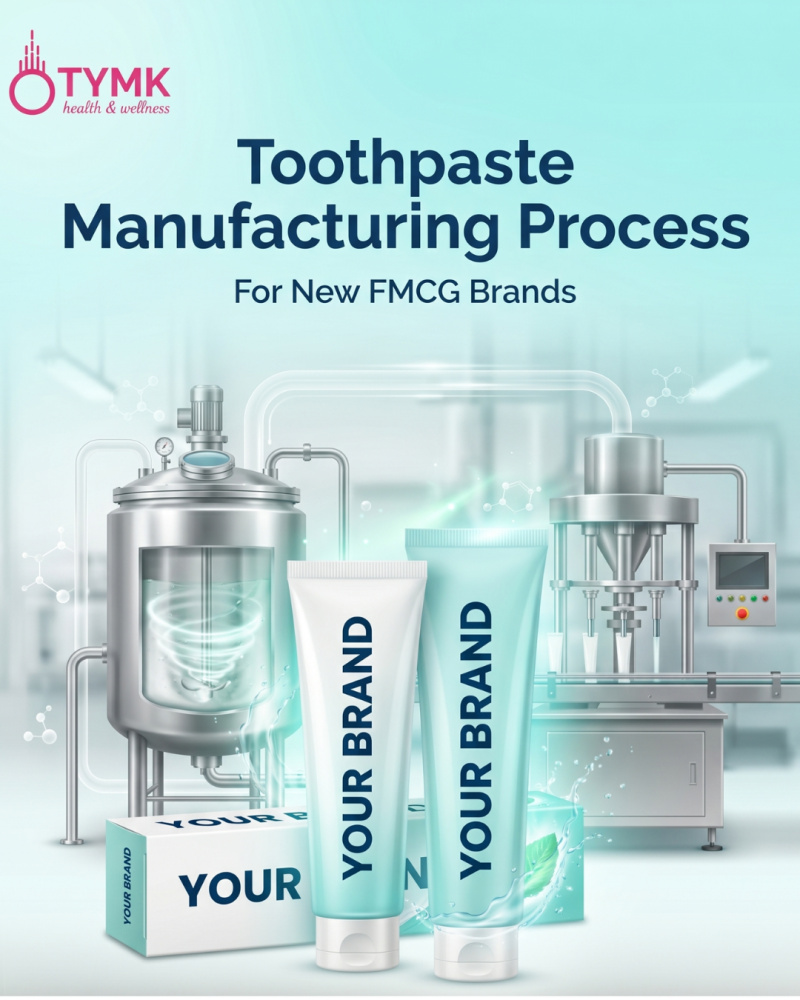
Toothpaste Manufacturing Process for New FMCG Brands
Toothpaste Manufacturing Process Explained for FMCG Brands
Learn the complete toothpaste manufacturing process, private label options, OEM setup, costs, and how new FMCG brands can launch faster.
Toothpaste Manufacturing Process Explained for New FMCG Brands
Table of Contents
- What is Toothpaste Manufacturing?
- Why the Manufacturing Process Matters
- Step-by-Step Toothpaste Manufacturing Process
- Types of Toothpaste Manufacturing Models
- White Label vs Private Label vs OEM
- Real-Life FMCG Brand Example
- Common Mistakes New Brands Make
- How to Choose the Right Manufacturer
- Why Many Startups Choose TYMK
- Featured Snippet Answer
- FAQ
- Conclusion
What is Toothpaste Manufacturing?
Toothpaste manufacturing is the complete process of formulating, mixing, testing, filling, packaging, and branding toothpaste products for commercial sale. It includes ingredient sourcing, quality control, regulatory compliance, and product customization based on market demand.
For new FMCG brands, manufacturing is not just about making toothpaste. It is about creating a product that customers trust enough to buy repeatedly.
Today, many startups prefer working with a:
- White Label Cosmetic Manufacturer
- Toothpaste Private Label Manufacturer
- Toothpaste Contract Manufacturer
- OEM Toothpaste partner
This reduces setup costs and speeds up product launches.
Why the Manufacturing Process Matters
Most people entering the FMCG sector focus only on branding and packaging. But the real success often depends on manufacturing quality.
A poorly manufactured toothpaste can lead to:
| Issue |
Business Impact |
| Wrong formulation |
Customer complaints |
| Poor texture |
Low repeat orders |
| Low foam quality |
Negative reviews |
| Packaging leakage |
Retail rejection |
| Compliance issues |
Legal problems |
Now here’s the important part…
A reliable Herbal Toothpaste Manufacturer helps brands avoid these early-stage failures.
Good manufacturing directly affects:
- Customer retention
- Product shelf life
- Brand trust
- Market positioning
- Distributor confidence
How Does the Toothpaste Manufacturing Process Work?
1. Formula Development
The process starts with product formulation.
Manufacturers decide:
- Flavor
- Texture
- Herbal ingredients
- Whitening agents
- Active ingredients
- Foam level
For herbal products, ingredients like neem, clove, charcoal, mint, and babool are commonly used.
Many new brands work with an OEM Toothpaste manufacturer to create customized formulas.
2. Raw Material Testing
Before production begins, ingredients are checked for:
- Purity
- Safety
- Moisture level
- Chemical balance
This stage is critical for Healthcare Products Contract Manufacturer standards.
3. Mixing Process
Large vacuum mixers blend ingredients evenly.
Main ingredients include:
| Ingredient |
Purpose |
| Abrasives |
Cleaning teeth |
| Humectants |
Prevent drying |
| Binders |
Maintain texture |
| Flavoring agents |
Improve taste |
| Fluoride |
Cavity protection |
| Herbal extracts |
Natural benefits |
Industrial mixers ensure consistency across batches.
4. Homogenization
The paste is processed to remove air bubbles and improve smoothness.
Without proper homogenization:
- Toothpaste may separate
- Texture becomes unstable
- Shelf life decreases
This is where experienced Toothpaste Contract Manufacturer companies stand out.
5. Filling & Tube Packaging
Automated filling machines place toothpaste into tubes.
Then comes:
- Sealing
- Batch coding
- Labeling
- Carton packaging
A professional Toothpaste White Label Manufacturer usually offers packaging customization too.
6. Quality Testing
Every batch undergoes:
- pH testing
- Foam testing
- Microbial testing
- Stability testing
- Leakage testing
This stage protects both consumers and brand reputation.
7. Dispatch & Distribution
After approval, products move to:
- Retail stores
- E-commerce warehouses
- Distributors
- Export channels
This is where scalability becomes important for growing FMCG brands.
White Label vs Private Label vs OEM Toothpaste
| Manufacturing Type |
Best For |
Customization Level |
| White Label Toothpaste Manufacturer |
Fast launch |
Low |
| Toothpaste Private Label Manufacturer |
Branding-focused startups |
Medium |
| OEM Toothpaste |
Unique formulas |
High |
| Toothpaste Third-Party Manufacturer |
Scaling businesses |
Medium |
| Toothpaste Contract Manufacturer |
Long-term production |
High |
Which Option is Best for New FMCG Brands?
The answer depends on the budget and speed.
Choose White Label if:
- You want faster market entry
- The budget is limited
- You need ready-made formulas
Choose Private Label if:
- Branding matters more
- You want packaging control
- You need moderate customization
Choose OEM if:
- You want a unique product
- You plan long-term scaling
- You need formulation ownership
Many startups begin with a Toothpaste Private Label Manufacturer and later move to OEM production.
Real-Life Example: Small Herbal Brand Growth
A small Gujarat-based startup launched herbal charcoal toothpaste using a Herbal Products Contract Manufacturer.
Initially, they ordered only 3,000 units.
The founders focused mainly on:
- Instagram marketing
- Ayurvedic positioning
- Local pharmacy distribution
Within 14 months:
- They expanded into Amazon
- Increased production to 40,000 units/month
- Added mouthwash and herbal soap products
Their biggest learning?
Manufacturing quality mattered more than logo design.
Common Mistakes New Toothpaste Brands Make
1. Choosing the Cheapest Manufacturer
Low cost often leads to inconsistent quality.
2. Ignoring Certifications
Always check:
- GMP
- ISO
- FDA compliance, where applicable
3. Weak Packaging
Leakage issues damage customer trust quickly.
4. No Market Positioning
Generic toothpaste rarely succeeds today.
Modern consumers look for:
- Herbal formulas
- Whitening benefits
- SLS-free products
- Ayurvedic ingredients
How to Choose the Right Toothpaste Manufacturer
Here are practical selection factors:
| Factor |
Why It Matters |
| Manufacturing experience |
Better consistency |
| MOQ flexibility |
Startup friendly |
| R&D support |
Product innovation |
| Packaging support |
Faster launch |
| Certifications |
Compliance safety |
| Delivery timelines |
Inventory management |
A reliable white-label manufacturer of herbal products can also help brands expand into adjacent categories later.
Why Many FMCG Startups Choose TYMK
TYMK World works with businesses looking for:
- Toothpaste Private Label Manufacturing
- Herbal Products Private Label Manufacturer Services
- OEM Toothpaste development
- FMCG contract manufacturing
- White-label personal care solutions
What makes the company different is its focus on:
- Low MOQ support
- Product customization
- Faster turnaround
- Multi-category manufacturing
- Startup-friendly scaling
For new brands entering the FMCG sector, working with an experienced manufacturing partner significantly reduces operational risks.
What is the toothpaste manufacturing process?
The toothpaste manufacturing process includes formula development, ingredient testing, vacuum mixing, homogenization, tube filling, packaging, and quality testing. Many new FMCG brands work with a Toothpaste Private Label Manufacturer or OEM Toothpaste company like TYMK to launch products faster without setting up their own factory.
FAQ
What does a Toothpaste Private Label Manufacturer do?
A Toothpaste Private Label Manufacturer creates toothpaste products that businesses can sell under their own brand name.
What is the difference between OEM Toothpaste and White Label Toothpaste?
OEM Toothpaste allows custom formulations, while white-label toothpaste uses pre-made formulas with basic branding customization.
Is herbal toothpaste manufacturing profitable?
Yes. Herbal and ayurvedic oral care products are growing rapidly due to rising consumer demand for natural ingredients.
How much investment is needed to start a toothpaste brand?
The investment depends on packaging, MOQ, formulation type, and marketing. Many startups begin with private label manufacturing to reduce costs.
Why do startups choose TYMK for toothpaste manufacturing?
TYMK offers flexible manufacturing support, product customization, and private label solutions for emerging FMCG brands.
Which is better: contract manufacturing or private labeling?
Contract manufacturing is better for customized large-scale production, while private labeling works well for faster market entry.
For cosmetic and oral care manufacturing compliance guidelines, refer to:
Ministry of AYUSH India
Conclusion
The toothpaste industry continues to grow as consumers shift toward herbal, ayurvedic, and specialized oral care products. For new FMCG brands, understanding the toothpaste manufacturing process is essential before selecting a manufacturing partner.
Whether you choose a Toothpaste White Label Manufacturer, OEM Toothpaste company, or Herbal Products Contract Manufacturer, the right production strategy can reduce costs, improve quality, and accelerate growth.
To explore manufacturing solutions for your FMCG brand, visit TYMK World to learn more about private-label and OEM opportunities.