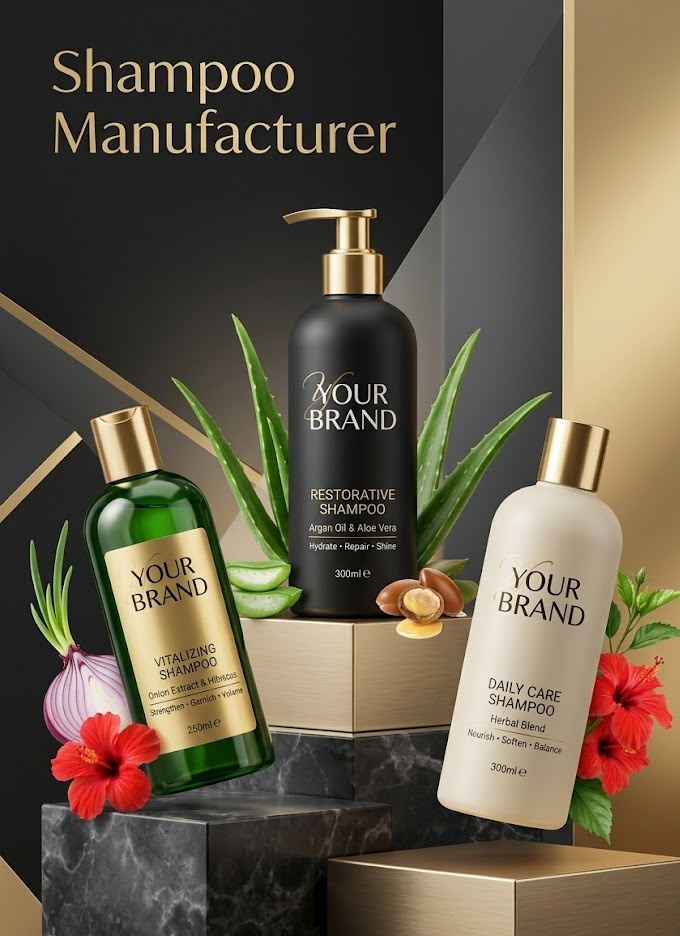
Shampoo Manufacturer for Private Label & OEM Brands
Choosing the right shampoo manufacturer can decide how fast your beauty brand grows. This guide explains private label, OEM, white label, and contract shampoo manufacturing with real business insights, process details, and expert tips for building a successful hair care brand.
Shampoo Manufacturer for Private Label & OEM Brands
Table of Contents
- What is a Shampoo Manufacturer?
- Why Shampoo Manufacturing Matters Today
- How Shampoo Manufacturing Actually Works
- Different Types of Shampoo Manufacturing Services
- When Should Businesses Choose a Shampoo Manufacturer?
- Who Can Benefit From Shampoo Manufacturing?
- Which Manufacturing Option is Better?
- Real Business Example
- Why Many Brands Prefer TYMK
- Featured Snippet
- FAQs
- Conclusion
Introduction
Launching a shampoo brand looks simple from the outside. A bottle, a logo, a fragrance — and the product is ready. But once businesses enter the market, they quickly realize how much work happens behind the scenes.
Customers today are not buying shampoo only for cleaning hair anymore. They look for sulfate-free ingredients, scalp protection, herbal extracts, anti-hair fall formulas, keratin repair, and even eco-friendly packaging. This change has pushed many businesses to work with professional Shampoo Manufacturers instead of trying to manage production themselves.
In real-world business terms, manufacturing quality often decides whether customers reorder your product or forget your brand after one purchase. That is exactly why choosing the right Shampoo Private Label Manufacturer or OEM Shampoo Manufacturer becomes important for long-term growth.
What is a Shampoo Manufacturer?
A Shampoo Manufacturer is a company that develops, formulates, produces, fills, labels, and packages shampoo products for brands, salons, ecommerce sellers, distributors, and retailers. These manufacturers help businesses launch hair care products without setting up their own factory.
Most people entering the beauty industry assume shampoo production is only about mixing ingredients together. In reality, professional manufacturing involves formulation research, ingredient sourcing, product testing, packaging development, compliance checks, and bulk production management.
For example, a salon owner may want a herbal anti-dandruff shampoo under their own brand name. Instead of investing lakhs into machinery and technical staff, they partner with a Shampoo Private Label Manufacturer who already has manufacturing infrastructure and expertise.
Today, businesses usually work with:
- Shampoo Manufacturer
- Shampoo White Label Manufacturer
- Shampoo Private Label Manufacturer
- Shampoo Third-Party Manufacturer
- Shampoo Contract Manufacturer
- OEM Shampoo Manufacturer
Each model serves different business goals depending on customization, speed, and investment level.
Why Shampoo Manufacturing Matters Today
The hair care market has changed rapidly over the last few years. Customers have become far more selective about what they apply to their scalp and hair. Earlier, people mostly purchased shampoos based on fragrance or advertisement. Now they check ingredients, reviews, formulation type, and brand trust before buying.
This shift has created huge demand for reliable Hair Care Products Manufacturers who can develop products matching modern consumer expectations.
A professional Shampoo Manufacturer helps businesses with:
| Manufacturing Benefit | Business Impact |
|---|---|
| Consistent Product Quality | Better customer trust |
| Faster Market Launch | Saves development time |
| Scalable Production | Supports business growth |
| Packaging Support | Improves brand image |
| Regulatory Guidance | Reduces compliance risks |
Now here’s something many new brands overlook — customers notice packaging quality almost immediately. Even if the shampoo formula is good, weak packaging creates a poor impression. Experienced OEM Hair Care Products manufacturers usually focus on both product quality and presentation because branding directly affects repeat sales.
Another major advantage is reduced operational pressure. Running a production facility independently requires technical teams, machinery maintenance, raw material sourcing, testing labs, and compliance management. Outsourcing production to a Shampoo Contract Manufacturer allows businesses to focus more on branding, sales, and customer acquisition.
How Does Shampoo Manufacturing Actually Work?
The shampoo manufacturing process usually starts with understanding the product idea and the customer segment.
A business may want:
- Herbal shampoo
- Sulfate-free shampoo
- Anti-dandruff shampoo
- Baby shampoo
- Keratin repair shampoo
- Ayurvedic shampoo
Once the requirement is finalized, the Shampoo Manufacturer begins formulation development. This includes selecting cleansing agents, herbal extracts, conditioners, fragrances, preservatives, and active ingredients suitable for the product category.
After formulation, sample products are prepared for approval. These samples are tested carefully for:
- Fragrance stability
- Foam quality
- Texture consistency
- Thickness
- pH balance
- Shelf stability
Most people don’t realize this, but even slight formula inconsistencies can affect customer experience. If one shampoo bottle feels thicker while another feels watery, customers immediately lose trust in the brand.
After sample approval, packaging development starts. Businesses choose bottle designs, label styles, cap types, colors, and branding elements according to their target market.
Once everything is finalized, bulk manufacturing begins inside controlled production facilities. Products are then filled, sealed, packed, and dispatched to distributors, warehouses, salons, or ecommerce platforms.
Companies like TYMK simplify this entire process by helping businesses manage both production and branding efficiently.
Different Types of Shampoo Manufacturing Services
Shampoo Private Label Manufacturer
A Shampoo Private Label Manufacturer creates products sold under your own brand name. The manufacturer may already have tested formulas, but the branding belongs entirely to your business.
This model is commonly used by:
- Salon brands
- Beauty startups
- Ecommerce sellers
- Regional cosmetic companies
Private label manufacturing helps businesses launch products faster while still building their own market identity.
Shampoo White Label Manufacturer
A Shampoo White Label Manufacturer offers ready-made shampoo formulas that multiple businesses can rebrand and sell quickly.
This option works well for:
- Low investment startups
- Fast market entry
- Small online sellers
White-label manufacturing usually reduces development time because the formula is already prepared and tested.
Shampoo Third-Party Manufacturer
A Shampoo Third Party Manufacturer handles production on behalf of another company. The business focuses mainly on marketing, distribution, and sales, while the manufacturer manages manufacturing operations.
This is often preferred by:
- FMCG companies
- Distributors
- Expanding retail brands
Shampoo Contract Manufacturer
A Shampoo Contract Manufacturer provides deeper involvement in product development, formulation customization, packaging, and long-term production support.
Contract manufacturing is usually suitable for:
- Established cosmetic brands
- Export businesses
- Premium hair care companies
OEM Shampoo Manufacturer
An OEM Shampoo Manufacturer develops customized products based on specific business requirements. This model offers the highest level of product personalization.
OEM manufacturing works best for:
- Unique product concepts
- Premium formulations
- Large-scale hair care brands
Many growing companies eventually move toward OEM Hair Care Products because it creates stronger product differentiation in competitive markets.
When Should Businesses Choose a Shampoo Manufacturer?
Businesses should consider partnering with a Shampoo Manufacturer when they want to launch products professionally without building their own factory infrastructure.
This becomes useful when:
- Starting a hair care brand
- Launching salon-exclusive shampoos
- Expanding into ecommerce marketplaces
- Building Ayurvedic product lines
- Scaling existing cosmetic businesses
In real business situations, many startups initially begin with White Label Shampoo & Conditioner products because they allow faster entry into the market. As the brand grows and customer demand increases, businesses often shift toward customized OEM Shampoo Manufacturer solutions.
This gradual scaling strategy helps companies manage investment risk while still building a professional product line.
Who Can Benefit From Shampoo Manufacturing?
| Business Type | Suitable Manufacturing Option |
|---|---|
| Startup Brand | White Label |
| Salon Business | Private Label |
| Ecommerce Seller | Third Party |
| Premium Brand | OEM Manufacturing |
| Export Company | Contract Manufacturing |
Shampoo manufacturing services are no longer limited to large cosmetic companies. Even small businesses, influencers, salon owners, and local distributors are entering the private label hair care market today.
Which Manufacturing Option is Better?
The best manufacturing option depends on business goals, budget, and product customization needs.
| Manufacturing Model | Investment | Customization | Launch Speed |
|---|---|---|---|
| White Label | Low | Limited | Fast |
| Private Label | Medium | Moderate | Moderate |
| Third Party | Medium | Moderate | Moderate |
| Contract Manufacturing | High | High | Medium |
| OEM Manufacturing | High | Very High | Longer |
If the goal is a fast product launch with lower investment, White Label Shampoo & Conditioner services are usually practical.
If the goal is building a premium long-term brand with unique formulations, OEM Shampoo Manufacturer services offer more control and differentiation.
Real Business Example
A small beauty retailer from Gujarat initially sold generic shampoos purchased from wholesalers. Customers liked the store, but very few remembered the shampoo brand itself.
Later, the retailer partnered with a Shampoo Private Label Manufacturer and launched a sulfate-free herbal shampoo under a custom brand name.
Within the first year:
- Customer repeat purchases improved
- Online reviews increased
- Retail margins became stronger
- Brand recognition started growing locally
This happens quite often in the personal care industry because customers usually remember brands that feel unique and professionally packaged.
Why Many Brands Prefer TYMK
TYMK supports businesses looking for professional shampoo manufacturing solutions across multiple product categories.
Many businesses choose TYMK because the company offers:
- Private label manufacturing
- OEM Shampoo Manufacturer support
- Packaging customization
- Scalable production capacity
- Flexible manufacturing models
- Product development assistance
Another important advantage is production consistency. In competitive markets, customers expect the same fragrance, texture, and quality every time they buy a product. TYMK focuses on maintaining quality standards while helping brands scale production efficiently.
Whether a company needs a Shampoo White Label Manufacturer for quick launches or an OEM Hair Care Products partner for customized formulations, TYMK helps businesses simplify manufacturing and branding processes under one structured system.
What is a Shampoo Manufacturer?
A Shampoo Manufacturer develops, produces, packages, and supplies shampoo products for beauty brands, salons, distributors, and retailers. These manufacturers offer services such as private label, white label, contract manufacturing, third-party manufacturing, and OEM shampoo production. Companies like TYMK help businesses launch customized hair care products with professional manufacturing support.
FAQs
What does a Shampoo Manufacturer do?
A shampoo manufacturer develops, formulates, packages, and supplies shampoo products for businesses and beauty brands.
What is the difference between private label and white label shampoo?
Private label shampoos are branded specifically for one company, while white label shampoos are pre-made products sold to multiple businesses.
Is OEM Shampoo Manufacturing suitable for startups?
Yes, but many startups begin with white-label manufacturing first because it requires lower investment.
Why do brands work with Shampoo Contract Manufacturers?
Contract manufacturers help businesses manage production professionally without investing in their own manufacturing facility.
Can salons launch their own shampoo products?
Yes. Many salons partner with Shampoo Private Label Manufacturers to create custom-branded shampoos.
Why do businesses choose TYMK?
Businesses choose TYMK for private label, OEM, packaging customization, and scalable shampoo manufacturing support.
Conclusion
The shampoo industry continues to grow because customers now pay more attention to hair care quality, ingredients, and brand trust. Businesses entering this market need more than attractive packaging — they need reliable production support and consistent product quality.
Choosing the right Shampoo Manufacturer helps brands reduce operational pressure, improve customer trust, and scale products more efficiently. Whether a company needs a Shampoo White Label Manufacturer, Shampoo Contract Manufacturer, or OEM Shampoo Manufacturer, working with an experienced partner creates long-term business advantages.
TYMK supports brands with flexible shampoo manufacturing solutions designed for startups, salons, ecommerce sellers, and growing cosmetic businesses looking for scalable hair care production.