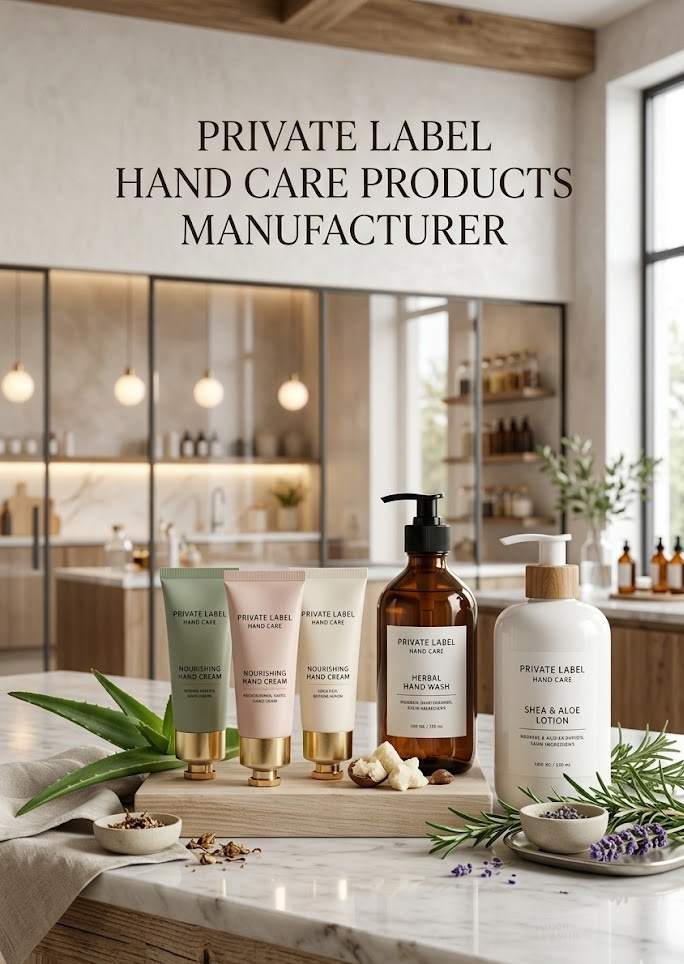
Private Label Hand Care Products Manufacturer: How Modern Brands Build Successful Hand Care Product Lines
Learn how a Private Label Hand Care Products Manufacturer helps businesses launch quality hand creams, lotions, sanitizers, and hand washes with custom branding, flexible production, and faster market entry.
Private Label Hand Care Products Manufacturer: How Modern Brands Build Successful Hand Care Product Lines
Table of Contents
- Introduction
- What is a Private Label Hand Care Products Manufacturer?
- Why the Hand Care Industry is Growing Fast
- Types of Hand Care Products Brands Are Launching
- How Private Label Hand Care Manufacturing Works
- Why Businesses Prefer Private Label Manufacturing
- OEM vs White Label vs Contract Manufacturing
- Important Things to Check Before Choosing a Manufacturer
- Real-World Business Example
- Why Brands Choose TYMK
- Featured Snippet
- FAQs
- Conclusion
Private Label Hand Care Products Manufacturer
The personal care industry is changing rapidly, and one category that has seen major growth in recent years is hand care products. Earlier, businesses mainly focused on skincare, haircare, and cosmetics. But now consumers are paying close attention to hand hygiene, skin hydration, anti-bacterial protection, and premium wellness products designed specifically for hand care.
Because of this shift, the demand for a reliable Private Label Hand Care Products Manufacturer has increased significantly among startups, salons, skincare brands, eCommerce sellers, wellness companies, and even large retail businesses.
What makes this category especially attractive is the combination of daily usage and strong repeat purchases. Consumers use hand creams, sanitizers, hand washes, lotions, and moisturizers regularly, which creates long-term sales opportunities for brands entering the market.
Now here’s the important part — many successful hand care brands today do not own manufacturing factories. Instead, they work with experienced manufacturing partners who already have expertise in formulation, compliance, packaging, testing, and production.
This business model allows brands to focus more on:
- Branding
- Marketing
- Customer acquisition
- Product positioning
- Online growth
- Retail expansion
while the manufacturer handles production operations professionally.
Businesses searching for a white-label cosmetic manufacturer are increasingly expanding into hand care because it is one of the fastest-growing categories within the broader personal care industry.
What is a Private Label Hand Care Products Manufacturer?
A Private Label Hand Care Products Manufacturer develops and manufactures hand care products that businesses sell under their own brand identity. The products are produced by the manufacturer, but the branding, packaging, label design, and market positioning belong to the business purchasing the products.
In simple terms, the manufacturer creates the product, while the brand focuses on selling and scaling it.
This manufacturing model is widely used because it reduces:
- Infrastructure investment
- Manufacturing complexity
- Production risk
- Product development time
- Regulatory challenges
A professional manufacturer usually provides complete support, including:
- Product formulation
- Ingredient sourcing
- Sample development
- Packaging customization
- Label compliance
- Stability testing
- Bulk manufacturing
- Delivery logistics
Many companies entering the cosmetic market assume manufacturing is only possible with huge factory investments. In reality, private label manufacturing allows even small businesses to launch premium-quality hand care products professionally.
This is one reason why the Customised Cosmetic Manufacturer segment is growing rapidly across India and global skincare markets.
Why the Hand Care Industry is Growing Fast
Consumer behavior around hand care products has evolved dramatically.
A few years ago, hand care products were considered basic utility products. Today they are part of lifestyle, skincare, wellness, and hygiene routines. Consumers now expect products that not only clean hands but also improve skin texture, hydration, fragrance experience, and overall comfort.
Several factors are driving this growth.
1. Increased Hygiene Awareness
Consumers are more conscious about hand cleanliness than ever before. This has increased demand for:
- Hand sanitizers
- Anti-bacterial hand washes
- Germ protection products
- Moisturizing hygiene solutions
However, people also realized that excessive washing can damage skin texture. That created strong demand for nourishing hand care formulations.
2. Growth of Herbal and Natural Products
Many buyers now actively search for:
- Aloe vera hand creams
- Ayurvedic hand care products
- Sulfate-free formulations
- Herbal moisturizers
- Natural ingredient-based hand washes
This trend has opened opportunities for businesses working with a Herbal Products Private Label Manufacturer to create naturally positioned product lines.
3. Premium Personal Care Demand
Consumers are no longer purchasing only low-cost hygiene products. They now want:
- Luxury fragrances
- Premium packaging
- Spa-like skincare experience
- Dermatologically tested products
- Long-lasting moisturization
As a result, premium hand care products are performing strongly in both online and offline markets.
4. eCommerce Expansion
Platforms like Amazon, Flipkart, Nykaa, and D2C websites made it easier for niche skincare brands to reach customers directly. A small startup can now compete with larger brands through:
- Strong branding
- Attractive packaging
- Social media marketing
- Influencer promotion
- Specialized formulations
This is why many new entrepreneurs are partnering with a Personal Care Products Manufacturer instead of building production units themselves.
Types of Hand Care Products Brands Are Launching
The hand care segment is much broader than many businesses initially expect.
A professional Hand Care Products Manufacturer can develop multiple categories based on customer demand and target audience positioning.
| Product Category | Market Demand | Popular Audience |
|---|---|---|
| Hand Creams | Very High | Dry skin consumers |
| Herbal Hand Wash | High | Family & wellness buyers |
| Hand Sanitizers | High | Retail & healthcare |
| Moisturizing Lotions | High | Daily skincare users |
| Anti-Aging Hand Cream | Growing | Premium skincare market |
| Spa Hand Care Kits | Growing | Salons & luxury wellness |
| Ayurvedic Hand Care | Fast Growing | Herbal skincare audience |
Many brands today combine:
- herbal ingredients
- modern skincare actives
- premium fragrances
- luxury packaging
to create differentiated products in a competitive market.
How Private Label Hand Care Manufacturing Works
Most businesses entering the market want to understand the actual manufacturing process before selecting a partner.
The process usually involves multiple stages.
Step 1: Product Consultation
The business discusses:
- target audience
- pricing range
- product category
- desired ingredients
- packaging preference
- branding goals
This stage helps the manufacturer understand the product vision clearly.
Step 2: Formula Development
The manufacturer develops product samples based on:
- fragrance preferences
- texture requirements
- herbal ingredients
- active compounds
- skin compatibility goals
For example:
- Shea butter for moisturization
- Aloe vera for soothing
- Vitamin E for nourishment
- Tea tree oil for anti-bacterial properties
Step 3: Product Sampling & Testing
Before mass production, samples are tested for:
- fragrance performance
- stability
- texture consistency
- shelf life
- skin feel
- packaging compatibility
This stage is extremely important because poor formulation stability can damage long-term brand trust.
Step 4: Packaging & Label Design
Packaging directly impacts customer perception.
Manufacturers help businesses customize:
- tubes
- bottles
- jars
- dispensers
- labels
- cartons
Modern consumers judge product quality heavily through packaging presentation.
Step 5: Bulk Manufacturing
Once approvals are completed, bulk production begins under quality-controlled manufacturing conditions.
A reliable Hand Care Products Contract Manufacturer ensures:
- consistent formulation quality
- hygiene standards
- production scalability
- batch consistency
Step 6: Delivery & Distribution
Products are dispatched for:
- online selling
- retail distribution
- export markets
- salon chains
- pharmacy networks
Efficient delivery timelines are critical for businesses planning large product launches.
Why Businesses Prefer Private Label Manufacturing
Private label manufacturing offers several commercial advantages.
Lower Investment Risk
Building a cosmetic manufacturing factory requires:
- machinery investment
- compliance approvals
- technical teams
- research infrastructure
- warehouse systems
Private label manufacturing removes most of these operational burdens.
Faster Product Launch
Instead of spending years building production systems, brands can launch products much faster using existing manufacturing infrastructure.
This helps businesses respond quickly to:
- seasonal demand
- market trends
- viral skincare categories
Easier Product Expansion
A business starting with hand creams can later expand into:
- body lotions
- face serums
- shampoos
- baby care products
- herbal skincare
Many companies gradually build full personal care product lines through the same manufacturing partner.
Better Branding Focus
Manufacturing and branding require different expertise.
Private label manufacturing allows businesses to focus on:
- customer acquisition
- packaging aesthetics
- influencer marketing
- eCommerce growth
- retail partnerships
while experienced manufacturers handle production complexity.
OEM vs White Label vs Contract Manufacturing
Many people confuse these manufacturing models initially.
| Manufacturing Type | Main Purpose | Customization Level |
|---|---|---|
| White Label | Fast product launch | Medium |
| Private Label | Brand identity creation | High |
| OEM Hand Care Products | Fully customized formulations | Very High |
| Contract Manufacturing | Large-scale production support | Flexible |
If a business wants unique formulations developed specifically for its brand positioning, partnering with an OEM Hand Care Products provider is usually the better option.
Businesses looking for quicker market entry often prefer white label manufacturing.
Important Things to Check Before Choosing a Manufacturer
Choosing the wrong manufacturing partner can create serious long-term business problems.
Before finalizing a manufacturer, businesses should evaluate:
Manufacturing Quality Standards
Check whether the company follows:
- GMP standards
- quality testing procedures
- hygiene compliance systems
Customization Capability
A strong manufacturer should support:
- ingredient customization
- fragrance selection
- packaging flexibility
- private branding
Scalability
Many startups grow faster than expected. The manufacturer should be capable of handling increasing production demand without compromising consistency.
Product Category Expertise
Some manufacturers specialize only in basic products, while others handle:
- herbal skincare
- luxury cosmetics
- wellness products
- salon-grade formulations
This expertise matters significantly in product quality.
Real-World Business Example
A small wellness-focused startup initially sold only herbal soaps through Instagram and local exhibitions. Sales were stable but growth remained limited because average order value was low.
After partnering with a Private Label Hand Care Products Manufacturer, the business launched:
- aloe vera hand cream
- lavender hand wash
- herbal sanitizer
- premium moisturizing lotion
Within months, customers started purchasing bundled skincare kits instead of single products.
This increased:
- repeat purchases
- customer retention
- average order value
- brand perception
In real-world business terms, expanding into complementary personal care categories often improves profitability faster than continuously pushing a single product line.
Why Brands Choose TYMK
TYMK supports businesses looking for scalable cosmetic and personal care manufacturing solutions across multiple categories.
The company works with brands seeking:
- customized formulations
- private label manufacturing
- OEM cosmetic development
- herbal product manufacturing
- scalable production support
What makes TYMK different is its ability to support both startup brands and expanding businesses with flexible manufacturing capabilities.
Businesses searching for:
- White Label Cosmetic Manufacturer
- Customised Cosmetic Manufacturer
- Herbal Products Private Label Manufacturer
- Personal Care Products Manufacturer
Often prefer manufacturing partners that can support long-term category expansion instead of just single-product production.
TYMK focuses on helping brands build commercially viable product lines with modern packaging, quality-controlled production, and scalable manufacturing support.
Featured Snippet
A Private Label Hand Care Products Manufacturer develops hand creams, sanitizers, hand washes, and moisturizing products that businesses sell under their own brand name. Companies like TYMK help brands with formulation, packaging, customization, quality testing, and large-scale production, allowing faster market entry without owning manufacturing facilities.
FAQs
What is a Private Label Hand Care Products Manufacturer?
A private label manufacturer creates hand care products that businesses can sell under their own branding and packaging.
Is private label hand care manufacturing profitable?
Yes. Hand care products have high repeat demand because consumers use them daily for hygiene and skincare.
What products can be manufactured under private label?
Products include hand creams, sanitizers, hand washes, moisturizing lotions, spa products, and herbal skincare items.
What is the difference between OEM and white-label manufacturing?
OEM manufacturing involves custom product development, while white label products are pre-developed and rebranded for faster selling.
Why do brands choose TYMK?
TYMK provides customized manufacturing, scalable production, packaging support, and multiple cosmetic product solutions.
Can startups launch hand care brands through private label manufacturing?
Yes. Private label manufacturing allows startups to enter the market with lower investment and faster production timelines.
Conclusion
The hand care industry continues growing as consumers increasingly prioritize hygiene, skincare, and wellness-driven personal care products. Businesses entering this market now have strong opportunities to build scalable and profitable brands through customized manufacturing solutions.
Working with an experienced Private Label Hand Care Products Manufacturer helps reduce operational complexity while improving product quality, branding flexibility, and market speed.
Whether the goal is launching herbal hand washes, premium moisturizers, sanitizers, or luxury skincare collections, the right manufacturing partner plays a major role in long-term brand success.
Businesses looking to expand in the cosmetic and personal care market can explore customized manufacturing solutions through TYMK World to create competitive and growth-focused product lines.