TYMK Blog

Private Label Body Deodorants Products: The Complete Industry Guide for Modern Personal Care Brands

<p>Learn how Private Label Body Deodorant Products manufacturing works, why brands choose white label deodorants, and how to select the right manufacturing partner for long-term growth.</p><h1><br></h1><p><br></p>

26 May 2026 8 mins read

Private Label Body Deodorants Products: The Complete Industry Guide for Modern Personal Care Brands

Table of Contents

No. Sections
1 Introduction
2 Understanding Private Label Body Deodorant Products
3 Why the Deodorant Industry is Growing Rapidly
4 Types of Body Deodorants in Private Label Manufacturing
5 How Private Label Manufacturing Actually Works
6 White Label vs OEM vs Contract Manufacturing
7 Ingredient Trends Reshaping the Industry
8 Packaging Trends in Body Deodorants
9 Common Challenges New Brands Face
10 How Smart Brands Scale Faster
11 Real Business Case Example
12 Why Businesses Choose TYMK
13 Featured Snippet
14 FAQs
15 Conclusion

Introduction

The body deodorant industry has changed dramatically over the last few years. Earlier, deodorants were viewed as simple fragrance products mainly purchased for freshness. Today, customers expect much more from personal care brands. They want skin-friendly formulations, long-lasting performance, herbal ingredients, sustainable packaging, premium fragrances, and even wellness-focused grooming products.

This shift has created enormous opportunities for startups, ecommerce brands, salon chains, wellness companies, and even influencers entering the personal care industry.

But here is where many businesses struggle.

Building a manufacturing facility from scratch is expensive, time-consuming, and operationally complex. Companies need formulation experts, testing laboratories, packaging units, machinery, compliance approvals, sourcing teams, and inventory management systems. For most growing businesses, this becomes a major financial burden before even making the first sale.

That is exactly why Private Label Body Deodorant Products manufacturing has become one of the fastest-growing business models in the cosmetic and personal care industry.

Instead of investing crores into manufacturing infrastructure, brands partner with experienced manufacturers who already have production capabilities, R&D systems, packaging expertise, and compliance processes in place.

In real-world business terms, this allows companies to focus on:

  • Branding
  • Product positioning
  • Marketing
  • Customer acquisition
  • Distribution
  • Ecommerce scaling

while manufacturing is managed professionally behind the scenes.

Most consumers never realize this, but many successful personal care brands across marketplaces and retail shelves do not manufacture products themselves. They operate using White Label Cosmetic Manufacturer, OEM, and contract manufacturing partnerships.

And in today’s fast-moving market, that model often scales much faster.


What is Private Label Body Deodorant Product Manufacturing?

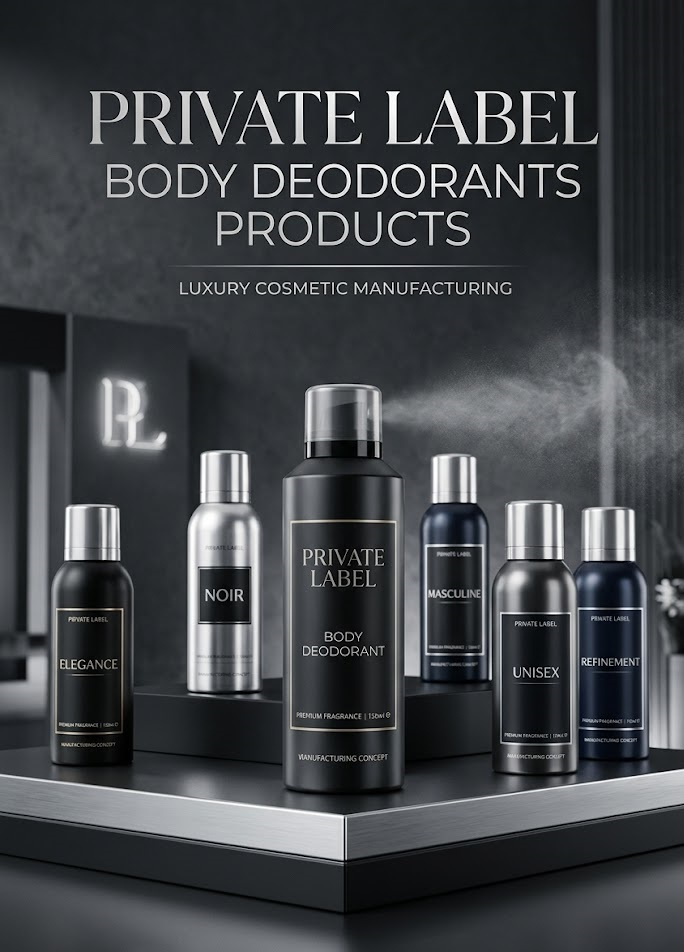
Private Label Body Deodorant Products are deodorants manufactured by a third-party company and sold under another company’s brand name.

The manufacturer handles:

  • Product formulation
  • Ingredient sourcing
  • Testing
  • Production
  • Filling
  • Packaging
  • Labeling
  • Compliance

The business purchasing the products focuses on:

  • Brand identity
  • Sales
  • Advertising
  • Distribution
  • Customer retention

This model helps businesses launch deodorant brands without owning factories or manufacturing equipment.

Common Products Manufactured Under Private Label

Product Category Examples
Body Sprays Daily freshness sprays
Roll-On Deodorants Sweat-control products
Herbal Deodorants Natural ingredient formulations
Premium Fragrance Deodorants Luxury grooming products
Aluminum-Free Deodorants Sensitive skin products
Activated Charcoal Deodorants Detox-focused variants
Unisex Deodorants Gender-neutral grooming
Sports Deodorants Long-lasting activewear products

Now here’s the important part.

Modern customers are no longer buying only based on fragrance. They buy based on:

  • Ingredient transparency
  • Skin compatibility
  • Brand trust
  • Packaging appeal
  • Lifestyle positioning
  • Sustainability

This is why manufacturing quality matters far more today than it did a decade ago.


Why the Deodorant Industry is Growing So Fast

The global grooming and hygiene market continues to expand because personal care has become part of daily lifestyle culture rather than occasional use.

Several trends are driving this growth.

1. Rising Grooming Awareness

Consumers today spend significantly more on:

  • Self-care
  • Personal hygiene
  • Fragrance products
  • Wellness grooming

Younger buyers especially prefer premium-looking personal care products that align with their lifestyle identity.


2. Ecommerce Has Changed Everything

Earlier, launching a deodorant brand required retail distribution networks. Today, a business can launch directly through:

  • Shopify stores
  • Amazon
  • Instagram
  • Flipkart
  • Quick commerce platforms

This has reduced entry barriers dramatically.


3. Demand for Herbal & Clean Beauty Products

Many consumers now actively search for:

  • Paraben-free deodorants
  • Alcohol-free formulations
  • Herbal products
  • Vegan products
  • Cruelty-free products

This demand has created strong opportunities for Herbal Products Private Label Manufacturer businesses.


4. Influencer-Led Personal Care Brands

Creators and influencers increasingly launch their own grooming products because:

  • Audience trust already exists
  • Branding becomes easier
  • Personal care products offer strong repeat purchases

Private label manufacturing makes this model scalable.


Types of Body Deodorants in Private Label Manufacturing

Not all deodorants serve the same market segment. Different customer groups prefer different formats.

Spray Deodorants

These remain highly popular due to:

  • Convenience
  • Instant freshness
  • Strong fragrance throw
  • Wide consumer familiarity

They work well for mass-market brands.


Roll-On Deodorants

Roll-ons appeal to:

  • Office-going consumers
  • Gym users
  • Minimalist grooming buyers

These products often emphasize sweat control and skin comfort.


Herbal Deodorants

Herbal formulations are growing rapidly because customers increasingly prefer natural products.

Popular ingredients include:

  • Neem
  • Aloe vera
  • Tea tree
  • Charcoal
  • Basil
  • Sandalwood

This category aligns strongly with Ayurvedic Products White Label Manufacturer demand.


Premium Luxury Deodorants

Premium deodorants focus heavily on:

  • Sophisticated fragrances
  • Premium packaging
  • Long-lasting performance
  • Luxury branding

Margins in this category are often significantly higher.


How Private Label Manufacturing Actually Works

Most first-time business owners assume manufacturing is extremely complicated.

In reality, experienced manufacturers simplify the process into manageable stages.

Step 1: Product Selection

Businesses first choose:

  • Product category
  • Fragrance direction
  • Ingredient preferences
  • Product positioning

For example:

  • Sports deodorant
  • Herbal deodorant
  • Luxury body spray
  • Youth-focused fragrance

Step 2: Formula Selection or Customization

Businesses can either:

  • Choose ready-made formulas
  • Customize formulations
  • Develop completely new products

OEM Body Deodorants manufacturing becomes useful here for unique branding.


Step 3: Packaging Development

Packaging strongly influences customer perception.

Manufacturers help with:

  • Bottle selection
  • Spray systems
  • Label printing
  • Outer box packaging
  • Design compatibility

In ecommerce, packaging quality directly impacts conversion rates.


Step 4: Sampling & Testing

Before mass production:

  • Samples are tested
  • Fragrance stability is checked
  • Leakage testing is performed
  • Skin compatibility is evaluated

This stage prevents large-scale quality problems later.


Step 5: Production & Filling

After approvals:

  • Bulk manufacturing begins
  • Filling processes start
  • Packaging assembly is completed
  • Batch testing is performed

Professional manufacturers maintain consistency across production cycles.


Step 6: Delivery & Distribution

Products are then prepared for:

  • Retail distribution
  • Ecommerce fulfillment
  • Export shipping
  • Warehouse stocking

White Label vs OEM vs Contract Manufacturing

Many businesses confuse these manufacturing models.

Here’s a practical comparison.

Model Best For Advantages Limitations
White Label Cosmetic Manufacturer Fast launches Lower investment Less uniqueness
Private Label Branding flexibility Better customization Moderate MOQ
OEM Body Deodorants Unique products Strong brand identity Higher development time
Contract Manufacturing Large-scale businesses Full operational outsourcing Higher production complexity

In real-world business situations:

  • Startups often choose white label
  • Scaling brands choose private label
  • Established brands choose OEM

Ingredient Trends Reshaping the Industry

Consumers now read ingredient labels carefully.

That single shift has changed deodorant manufacturing strategies globally.

Trending Ingredients

Ingredient Consumer Appeal
Activated Charcoal Detox positioning
Aloe Vera Skin soothing
Tea Tree Oil Antibacterial appeal
Sandalwood Premium herbal identity
Vitamin E Skin nourishment
Essential Oils Natural fragrance positioning

Manufacturers able to innovate with trending ingredients often help brands scale faster.


Packaging Trends in Body Deodorants

Packaging now functions as both branding and marketing.

Consumers judge products within seconds based on:

  • Bottle aesthetics
  • Color psychology
  • Typography
  • Premium appearance

Popular Packaging Styles

  • Matte finish bottles
  • Metallic spray cans
  • Eco-friendly packaging
  • Minimalist luxury packaging
  • Transparent modern containers

Most people underestimate how much packaging impacts repeat purchases.


Common Challenges New Brands Face

Even good products fail without proper planning.

Frequent Mistakes

Choosing Only Based on Low Pricing

Cheap manufacturing often creates:

  • Leakage issues
  • Fragrance inconsistency
  • Poor packaging
  • Customer complaints

Ignoring Product Positioning

Brands must clearly define:

  • Target audience
  • Fragrance personality
  • Pricing category
  • Brand identity

Weak Packaging Design

In crowded marketplaces, weak packaging reduces conversions immediately.


Poor Manufacturing Partner Selection

An inexperienced manufacturer can delay production, create inconsistent quality, and damage brand reputation.


How Smart Brands Scale Faster

Successful deodorant brands usually follow similar growth patterns.

Stage 1: Start with a few products

Instead of launching 25 SKUs, smart brands begin with:

  • 2–3 hero products
  • Strong branding
  • Clear positioning

Stage 2: Build Social Proof

They focus heavily on:

  • Reviews
  • Influencer marketing
  • User-generated content
  • Reels and short videos

Stage 3: Expand Product Categories

Once deodorants succeed, brands expand into:

  • Perfumes
  • Face care
  • Hair care
  • Skincare
  • Grooming kits

This is why many brands later work with Hair Care Products Manufacturer and Face Care Products White Label Manufacturer partners, too.


Real Business Case Example

A startup grooming brand launched with only three deodorant variants targeted toward college students.

Instead of spending heavily on manufacturing infrastructure, the founders partnered with a white-label cosmetic manufacturer and invested their budget into:

  • Influencer collaborations
  • Viral Instagram reels
  • Student ambassador programs
  • Ecommerce advertising

Within the first year:

  • Monthly repeat orders increased steadily
  • Their products expanded into gym chains
  • Marketplace sales improved
  • They launched perfumes and skincare products

What actually drove growth was not just fragrance quality.

It was:

  • Consistent packaging
  • Fast product availability
  • Reliable manufacturing
  • Strong branding

That combination allowed them to scale faster than competitors, trying to manage manufacturing internally.


Why Businesses Choose TYMK

TYMK World supports businesses looking for scalable cosmetic and personal care manufacturing solutions across multiple categories.

Why TYMK Stands Out

Wide Product Category Coverage

TYMK supports:

  • Personal care products
  • Body deodorants
  • Hair care products
  • Baby care products
  • Herbal products
  • Cosmetic products

Flexible Manufacturing Models

Businesses can choose:

  • White label manufacturing
  • OEM manufacturing
  • Contract manufacturing
  • Customized cosmetic manufacturing

Scalable Business Support

TYMK works with:

  • Startups
  • Ecommerce brands
  • Export businesses
  • Retail chains
  • MLM companies

This flexibility becomes extremely valuable as businesses scale.


Focus on Product Quality

Reliable manufacturing includes:

  • Ingredient sourcing
  • Quality testing
  • Packaging consistency
  • Product stability checks

Long-term brand success depends heavily on these factors.


What are Private Label Body Deodorant Products?

Private Label Body Deodorants Products are deodorants manufactured by third-party companies and sold under another brand’s name. Manufacturers like TYMK help businesses create customized deodorant sprays, herbal deodorants, roll-ons, and personal care products with branding, packaging, and scalable production support.


FAQs

What is Private Label Body Deodorants Products manufacturing?

It is a manufacturing model where a third-party manufacturer produces deodorants that businesses sell under their own brand name.

Is white-label deodorant manufacturing profitable?

Yes. It reduces infrastructure costs and allows businesses to focus more on branding, marketing, and customer acquisition.

How do OEM deodorant products differ from white-label products?

OEM products are custom-developed, while white-label products use pre-developed formulations with custom branding.

Can startups launch deodorant brands with low investment?

Yes. Many startups begin with private label manufacturing because it removes the need for expensive production facilities.

Why are herbal deodorants becoming popular?

Consumers increasingly prefer natural ingredients, skin-friendly formulations, and clean beauty products.

How important is packaging in deodorant sales?

Packaging strongly influences customer perception, shelf appeal, and ecommerce conversion rates.


For cosmetic manufacturing standards and compliance information:
Bureau of Indian Standards (BIS)


Conclusion

The deodorant industry continues evolving as consumers demand better formulations, cleaner ingredients, stronger branding, and premium product experiences.

Private Label Body Deodorants Product manufacturing allows businesses to enter this market faster while avoiding the operational burden of building manufacturing infrastructure from scratch.

Whether you are a startup brand, an ecommerce business, a wellness company, or an expanding personal care brand, choosing the right manufacturing partner directly affects product quality, customer trust, and long-term growth.

Businesses exploring White Label Cosmetic Manufacturer and Private Label Body Deodorant solutions can access scalable manufacturing opportunities through TYMK World for customized product development, packaging, and brand expansion.


Recent Posts

call to +918128153295
sent message to whatsapp
contact now