Private Label Baby Care Products: The Fastest Growing Opportunity in the Baby Care Industry
The baby care industry is evolving rapidly as parents become more conscious about ingredients, product safety, and trusted brands. This detailed guide explains how Private Label Baby Care Products work, why businesses are shifting toward private label manufacturing, and how brands can successfully launch premium baby care ranges with the right manufacturing partner like TYMK.
Private Label Baby Care Products: The Fastest Growing Opportunity in the Baby Care Industry
Introduction
The baby care market has changed dramatically over the last few years. Earlier, parents mostly purchased products from large, established brands because they trusted only well-known companies for baby safety. But today, things are very different. Consumers now actively search for cleaner ingredients, herbal formulations, sulfate-free products, and safer skincare solutions for babies.
This shift has opened massive opportunities for startups, ecommerce brands, pharmacies, wellness companies, and entrepreneurs who want to launch their own baby care product lines. However, manufacturing baby care products from scratch is expensive, time-consuming, and operationally difficult. Setting up formulation labs, sourcing ingredients, arranging packaging, handling compliance, and maintaining production quality requires serious investment and technical expertise.
That is exactly why the demand for Private Label Baby Care Products has increased so rapidly.
Instead of building factories, brands now partner with experienced White Label Cosmetic Manufacturer companies that already understand product formulation, manufacturing systems, packaging standards, and market trends. This allows businesses to focus more on branding, customer acquisition, ecommerce growth, and product positioning instead of struggling with manufacturing complexity.
Most people entering the cosmetic and personal care industry don’t realize this initially, but product manufacturing and brand-building are completely different skills. The businesses scaling fastest today are usually the ones focusing on marketing, positioning, customer trust, and distribution while experienced manufacturers manage production operations in the background.
And now here’s the important part — baby care is not just another cosmetic category. Parents are extremely careful when choosing products for babies. They read ingredient labels, compare reviews, search for dermatologically tested products, and often prefer herbal or gentle formulations over aggressive chemical-based products.
Because of this, businesses working with trusted manufacturers gain a major advantage in the market.
Table of Contents
| No. | Sections |
|---|---|
| 1 | What Are Private Label Baby Care Products? |
| 2 | Why the Baby Care Industry Is Growing Rapidly |
| 3 | How Private Label Manufacturing Actually Works |
| 4 | Difference Between White Label, OEM & Contract Manufacturing |
| 5 | Popular Baby Care Products You Can Launch |
| 6 | Why Startups Prefer Private Label Manufacturing |
| 7 | Real-World Business Example |
| 8 | How to Choose the Right Manufacturer |
| 9 | Why Many Businesses Work With TYMK |
| 10 | Industry Trends Shaping Baby Care Products |
| 11 | Featured Snippet |
| 12 | FAQs |
| 13 | Conclusion |
What Are Private Label Baby Care Products?
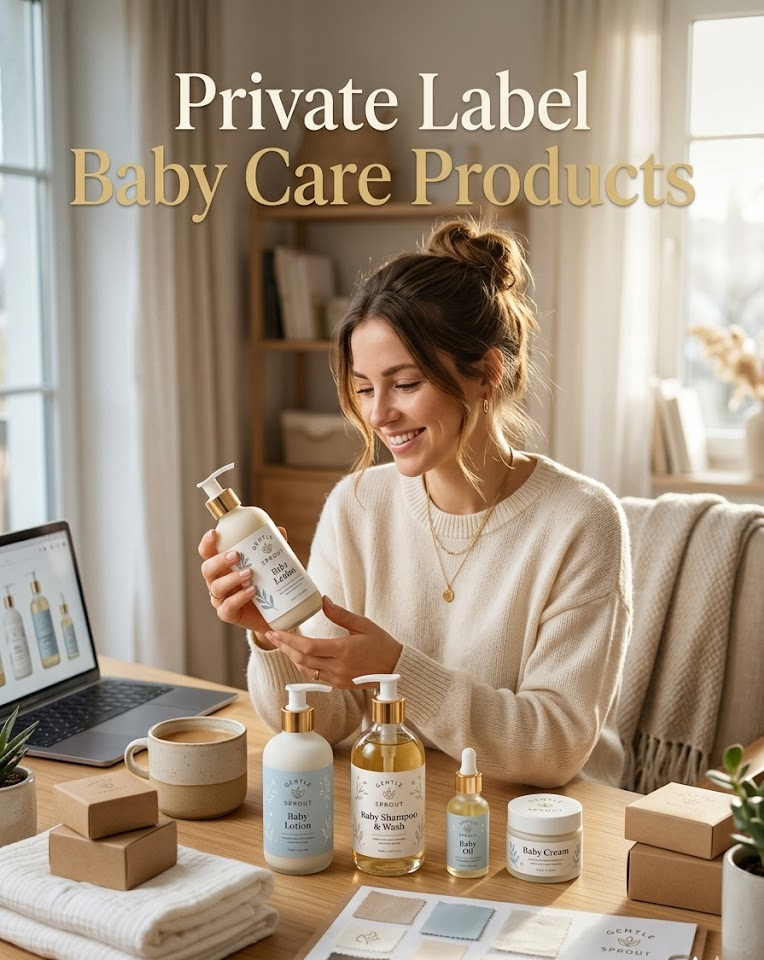
Private Label Baby Care Products are products manufactured by a third-party manufacturer but sold under another company’s brand name. Instead of manufacturing products internally, businesses collaborate with specialized manufacturers that already have production capabilities, ingredient sourcing systems, packaging networks, and formulation expertise.
A Baby Care Products Private Label Manufacturer generally handles:
- Product formulation
- Manufacturing
- Ingredient sourcing
- Packaging support
- Product filling
- Labeling
- Quality control
- Bulk production
The brand itself focuses mainly on:
- Brand identity
- Marketing
- Ecommerce sales
- Distribution
- Customer growth
- Social media promotion
This business model has become extremely popular because it significantly reduces startup costs and accelerates product launches.
For example, if someone wants to launch a baby lotion brand today, they no longer need to build a production plant. They can simply partner with a Customised Cosmetic Manufacturer that already produces baby skincare products and customize packaging, fragrance, ingredients, and branding according to market positioning.
This is why private label manufacturing is now considered one of the most efficient ways to enter the personal care industry.
Why the Baby Care Industry Is Growing Rapidly
The demand for baby care products continues to rise because consumer behavior has evolved significantly. Modern parents are more informed, more research-driven, and far more selective than previous generations.
Today’s consumers actively search for:
- Gentle baby formulations
- Herbal ingredients
- Ayurvedic baby care products
- Sulfate-free shampoos
- Paraben-free lotions
- Dermatologically tested products
- Natural oils and creams
This shift has created strong opportunities for:
- Baby Care Products White Label Manufacturer
- Herbal Products White Label Manufacturer
- Ayurvedic Products White Label Manufacturer
- OEM Baby Care Products
- Personal Care Products White Label Manufacturer
Another major factor driving growth is ecommerce. Earlier, launching a consumer brand required retail distribution and large-scale investment. Today, businesses can launch products directly through:
- Amazon
- Flipkart
- Shopify stores
- Quick commerce platforms
- Parenting communities
As a result, even small businesses can now compete in the baby care industry if they have good branding and quality manufacturing support.
In real-world terms, many growing D2C brands today started with only two or three products manufactured through private labeling before eventually expanding into full product ranges.
How Private Label Manufacturing Actually Works
Many new entrepreneurs think product manufacturing is complicated, but experienced manufacturers simplify the entire process.
Here’s how the process usually works:
| Step | Manufacturing Process |
|---|---|
| 1 | Product category selection |
| 2 | Formula discussion |
| 3 | Ingredient and fragrance approval |
| 4 | Packaging selection |
| 5 | Branding and label design |
| 6 | Sample testing |
| 7 | Bulk manufacturing |
| 8 | Quality inspection |
| 9 | Product dispatch |
A professional Baby Care Products Contract Manufacturer manages these operations systematically to ensure production consistency and safety compliance.
Some manufacturers also provide:
- MOQ flexibility
- Packaging sourcing
- Product customization
- Export documentation
- Barcode support
- Regulatory guidance
This becomes highly beneficial for startups that lack technical manufacturing knowledge.
Difference Between White Label, OEM & Contract Manufacturing
A lot of people confuse white label manufacturing, OEM manufacturing, and contract manufacturing. But each model serves different business goals.
| Manufacturing Type | Best For | Main Advantage |
|---|---|---|
| White Label | Fast product launch | Ready-made products |
| Private Label | Brand customization | Better branding flexibility |
| OEM Manufacturing | Unique formulations | Product exclusivity |
| Contract Manufacturing | Large-scale production | Scalable operations |
For example:
- A White Label Cosmetic Manufacturer may offer ready-made baby lotion formulas.
- An OEM Baby Care Products manufacturer may develop completely customized baby skincare formulations specifically for your brand.
If speed is the priority, white labeling works well.
If long-term brand differentiation matters more, OEM manufacturing usually offers stronger advantages.
Popular Baby Care Products You Can Launch
One of the biggest advantages of private labeling is product expansion flexibility. Brands can launch a single product initially and later scale into multiple categories.
Most Popular Baby Care Products
| Product Category | Demand Level |
|---|---|
| Baby Lotion | Very High |
| Baby Shampoo | High |
| Baby Oil | High |
| Baby Cream | High |
| Baby Soap | Medium-High |
| Baby Powder | Medium |
| Baby Wipes | Very High |
| Rash Cream | High |
Manufacturers often also support related categories like:
- Skin Care Products White Label Manufacturer
- Hair Care Products Manufacturer
- OEM Skincare Products
- Face Care Products White Label Manufacturer
- OEM Hair Care Products
This helps brands create larger personal care ecosystems over time.
Why Startups Prefer Private Label Manufacturing
The biggest reason startups choose private labeling is simple: lower risk.
Building a manufacturing unit involves:
- Machinery costs
- Factory setup
- Product testing
- Technical teams
- Compliance approvals
- Inventory management
- Production planning
That investment is often unrealistic for early-stage brands.
Private labeling allows businesses to:
- Launch faster
- Test product demand
- Build customer trust
- Focus on branding
- Reduce operational complexity
- Scale gradually
Most successful ecommerce beauty and baby care brands actually begin with outsourced manufacturing models before building larger operations later.
Now here’s something many people overlook — customers usually care more about product quality, branding, and trust than who physically manufactured the product.
That is why smart branding combined with quality manufacturing can outperform larger competitors.
Real-World Business Example
A startup skincare entrepreneur in Bengaluru initially planned to build a complete manufacturing setup for baby care products. After researching machinery costs, packaging systems, ingredient sourcing, compliance, and labor management, they realized the investment would be extremely high for an early-stage business.
Instead, they partnered with a Baby Care Products Third Party Manufacturer and launched:
- Baby lotion
- Baby shampoo
- Baby cream
within just a few months.
Because the manufacturer handled production operations, the founders focused heavily on:
- Social media marketing
- Influencer collaborations
- Parenting communities
- Amazon optimization
- Customer reviews
Within the first year, the business expanded into additional product categories and significantly improved repeat customer sales.
This is becoming increasingly common across the personal care industry.
How to Choose the Right Manufacturer
Choosing the right manufacturing partner is one of the most important decisions for any baby care brand.
A good manufacturer should provide:
- Consistent product quality
- Ingredient transparency
- Manufacturing expertise
- Product customization
- Reliable packaging support
- Scalable production capacity
Before finalizing a manufacturer, businesses should evaluate:
- Experience in baby care manufacturing
- Product testing standards
- MOQ requirements
- Turnaround times
- Packaging quality
- Product customization flexibility
The right partnership can directly influence customer retention and long-term brand growth.
Why Many Businesses Work With TYMK
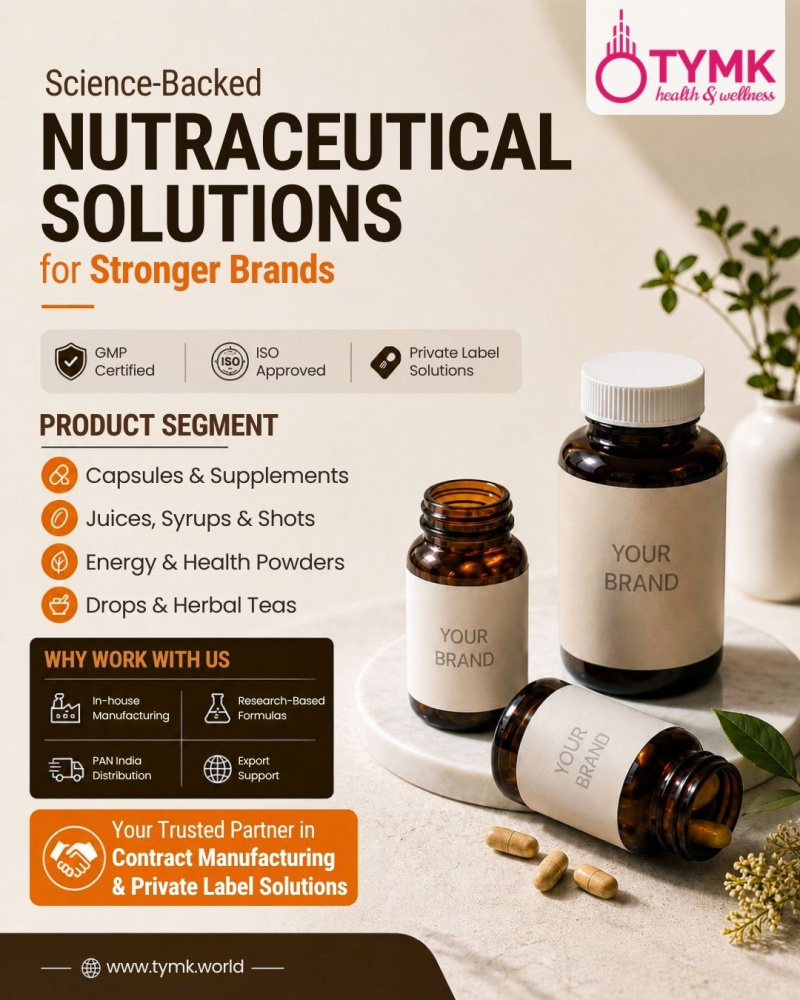
TYMK World works with brands across multiple personal care and cosmetic manufacturing categories, including baby care, skincare, hair care, nutraceuticals, herbal products, and personal care products.
One reason businesses prefer TYMK is broader manufacturing support. Instead of offering only one product category, they support complete brand development across multiple segments.
Their manufacturing support includes:
- Product customization
- Packaging assistance
- Multi-category manufacturing
- Scalable production solutions
- Industry-focused product development
For startups, especially, this flexibility matters because brands often expand into new product categories once customer demand grows.
A company starting with baby lotion today may later launch:
- Baby shampoo
- Hair care products
- Face care products
- Herbal skincare
- Personal care ranges
Working with a manufacturer that supports broader category expansion simplifies future growth significantly.
Industry Trends Shaping Baby Care Products
Several important trends are currently shaping the industry.
Fast-Growing Trends
| Trend | Market Impact |
|---|---|
| Herbal formulations | Very High |
| Sustainable packaging | High |
| Sensitive skin products | Very High |
| Sulfate-free formulations | High |
| Ayurvedic baby care | Growing rapidly |
| Premium baby skincare | High demand |
Consumers are increasingly willing to spend more for products that appear safer, cleaner, and more transparent.
This is why manufacturers are offering:
- Herbal Products Contract Manufacturer
- OEM Herbal Products
- Personal Care Products Manufacturer
- Healthcare Products White Label Manufacturer
are seeing rising market demand.
Featured Snippet
Private Label Baby Care Products are baby care items manufactured by third-party companies and sold under your own brand name. These products help businesses launch baby lotions, shampoos, creams, oils, and wipes without setting up manufacturing facilities. Companies like TYMK support formulation, packaging, and production for faster market entry.
FAQs
What are Private Label Baby Care Products?
Private Label Baby Care Products are products manufactured by a third-party company but sold under your own branding and packaging.
Is the private label baby care business profitable?
Yes. The baby care industry is growing rapidly because parents increasingly prefer premium, herbal, and safer baby care products.
What is the difference between OEM and white-label manufacturing?
White-label products are ready-made formulations sold under different brands, while OEM manufacturing allows customized formulations and product development.
How do I start a baby care brand?
You can start by choosing product categories, selecting a manufacturer, finalizing packaging, and building your ecommerce or retail distribution strategy.
Why do brands choose TYMK?
TYMK supports brands with product manufacturing, packaging assistance, customization, and scalable production across multiple product categories.
Are herbal baby care products in demand?
Yes. Herbal and Ayurvedic baby care products are becoming increasingly popular because consumers prefer gentler ingredient-based formulations.
Conclusion
The baby care industry is evolving quickly, and private labeling has become one of the most practical ways for businesses to enter the market without massive investment.
Instead of spending years building manufacturing infrastructure, brands can partner with experienced manufacturers and focus on what actually drives growth — branding, customer trust, ecommerce expansion, and product positioning.
Whether you are planning to launch baby lotions, shampoos, oils, creams, or complete skincare ranges, choosing the right manufacturing partner plays a major role in long-term success.
Explore manufacturing opportunities and scalable product solutions with TYMK World Official Website.