TYMK Blog

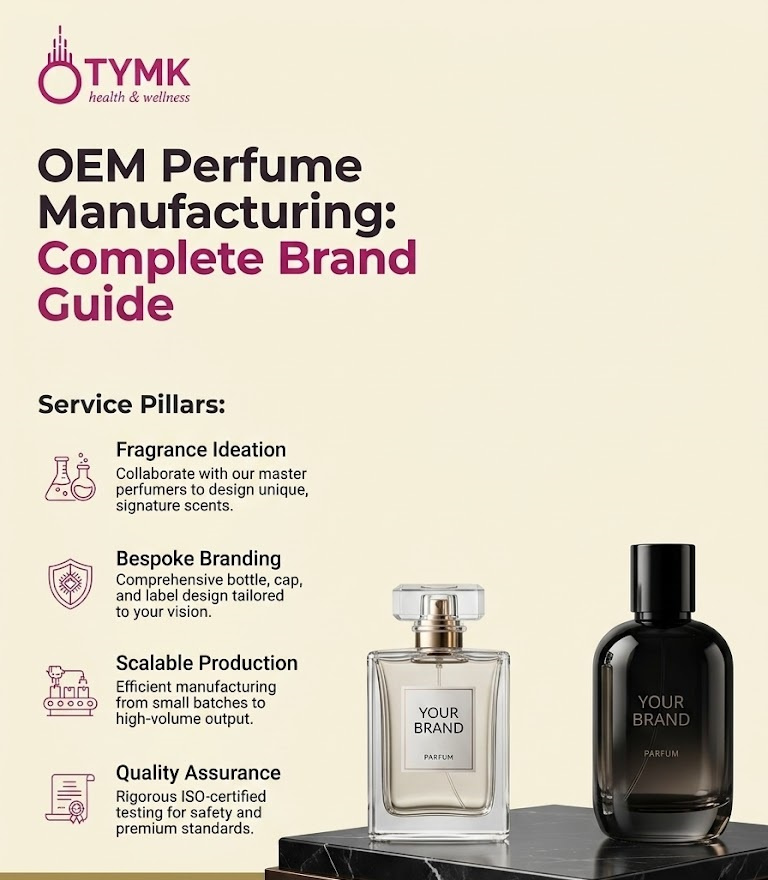
OEM Perfume Manufacturing: Complete Brand Guide

<p>OEM perfume manufacturing helps brands create and launch fragrances without owning a factory, offering fast production, customization, and scalable business growth opportunities.</p><p><br></p>

15 May 2026 4 mins read

OEM Perfume Manufacturing: Complete Brand Guide:


OEM perfume manufacturing explained with process, benefits, and real brand insights for building fragrance businesses from scratch.


Introduction

Most people assume perfume brands start with a factory, lab, and large investment.

That’s not how most modern fragrance businesses actually begin.

In reality, a large number of emerging brands today rely on OEM perfume manufacturing, where production is handled externally while the brand focuses on identity, scent direction, and marketing.

It’s not just a cost-saving model anymore—it has become the standard entry point for fragrance startups, MLM networks, and private label beauty businesses.


What OEM Perfume Actually Means

OEM perfume simply means you are not manufacturing the fragrance yourself.

Instead, a manufacturer develops and produces the perfume based on your idea, positioning, and target market.

You control:

  • Brand name
  • Bottle design
  • Fragrance direction
  • Market positioning

The manufacturer handles:

  • Formula development
  • Production
  • Filling and packaging

In many cases, this overlaps with private label and contract manufacturing systems, especially in cosmetics and personal care industries.


Why This Model Is Growing Fast

If you look at how fragrance businesses scale today, speed matters more than infrastructure.

OEM models solve a very real problem: you don’t need to build a factory to enter the market.

That changes everything.

Brands can:

  • Launch faster without setup delays
  • Test multiple fragrance variants
  • Adjust products based on customer feedback
  • Avoid heavy upfront manufacturing costs

Most importantly, it allows founders to focus on branding instead of production complexity.


How the Process Usually Works

Although it sounds technical, the workflow is fairly straightforward in practice.

It usually starts with a basic idea—something like “fresh citrus masculine fragrance” or “soft floral everyday scent.”

From there:

  • The manufacturer prepares sample formulations
  • You test and refine the scent
  • Packaging direction is finalized
  • Bulk production begins after approval
  • Final products are delivered under your brand name

What surprises most new founders is how collaborative the process actually is. You’re not just ordering a product—you’re shaping it.


When OEM Perfume Makes Sense

Not every business needs OEM manufacturing, but it becomes useful in specific situations.

It fits best when:

  • You are testing a fragrance business idea
  • You want to enter the market quickly
  • You don’t want to invest in manufacturing units
  • You are building a D2C or MLM brand structure
  • You plan to scale SKUs gradually

It is especially common in beauty startups that begin small and expand once demand is proven.


Who Typically Uses It

You’ll find OEM perfume models used by:

  • New fragrance entrepreneurs
  • MLM and direct selling companies
  • Cosmetic distributors
  • Influencer-led beauty brands
  • Export-focused private label companies

It also connects closely with broader categories like OEM skincare, haircare, and herbal product manufacturing.


Choosing Between OEM and Other Models

There’s often confusion between OEM, private label, and contract manufacturing.

The difference is not just technical—it affects how much control you have.

OEM sits in the middle:

  • More control than private label
  • Faster than full contract manufacturing
  • More flexible for customization than ready-made products

That balance is why most new fragrance brands start here.


Brand Perspective (TYMK)

A structured manufacturing partner makes a noticeable difference when you’re scaling beyond early experiments.

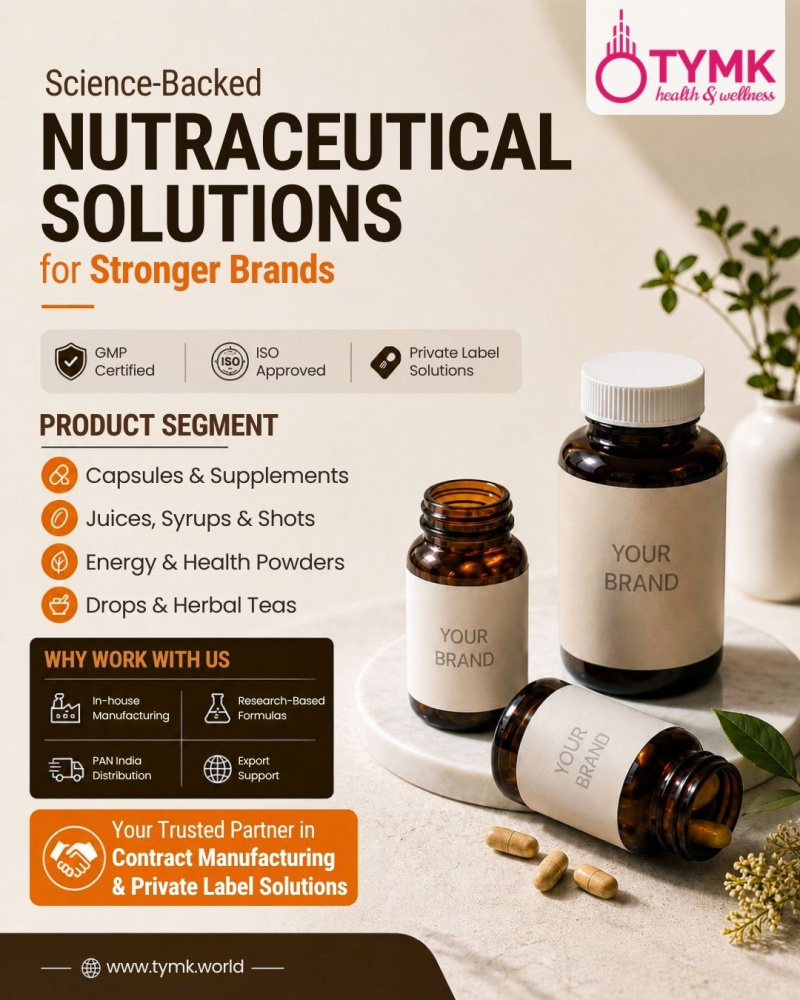
Platforms like TYMK World work in this space by supporting brands across fragrance and personal care categories with end-to-end OEM and private label solutions.

The real value isn’t just production—it’s reducing friction between idea and shelf-ready product.


OEM perfume manufacturing is a system where a third-party manufacturer produces fragrances under a brand’s identity. It allows businesses to launch perfumes without owning production facilities, reducing cost, time, and operational complexity while enabling scalable brand growth.


FAQs

What is OEM perfume manufacturing?

It is a process where a manufacturer creates perfume products under your brand name based on your requirements.

Is OEM perfume profitable?

Yes, profitability depends on branding, pricing strategy, and market positioning rather than manufacturing itself.

How is OEM different from private label?

OEM allows more formulation control, while private label usually uses pre-developed products.

Who should use OEM perfume manufacturing?

Startups, MLM companies, and fragrance brands are looking for fast market entry.

Can small businesses start with OEM perfume?


Yes, many small brands begin with OEM before scaling production.


Real Example (Industry Scenario)

A small fragrance brand entering the Indian market started with only two OEM-developed perfumes.

Instead of investing in production infrastructure, they focused entirely on branding and digital marketing.

Within a year:

  • Expanded to multiple fragrance variants
  • Entered retail partnerships
  • Built repeat customer demand through online channels

The manufacturing side stayed constant—the growth came from positioning and execution.


Final Thought

OEM perfume manufacturing is less about production and more about entry strategy.

For most new fragrance brands, it removes the biggest barrier: infrastructure.

What remains is execution—how well the brand understands its audience and positions its product in a crowded market.


Recent Posts

call to +918128153295
sent message to whatsapp
contact now