How to Launch a Private Label Toothpaste Brand in India (2026 Guide)
Planning to launch a toothpaste brand in India? Learn how private label toothpaste manufacturing works, costs, branding, and OEM production.
Table of Contents
| No. |
Topic |
| 1 |
Introduction |
| 2 |
Understanding Private Label Toothpaste Manufacturing |
| 3 |
Why Smaller Toothpaste Brands Are Growing |
| 4 |
Different Manufacturing Models Explained |
| 5 |
How the Launch Process Actually Works |
| 6 |
Common Mistakes New Brands Make |
| 7 |
Real Business Example |
| 8 |
Choosing the Right Manufacturing Partner |
| 9 |
Why Businesses Work With TYMK |
| 10 |
Featured Snippet Questions |
| 11 |
FAQs |
| 12 |
Conclusion |
Introduction
A surprising number of toothpaste brands in India don’t own factories.
Most customers never think about that part. They assume every brand they see in stores manufactures its own products. In reality, many growing oral care companies work with third-party manufacturers behind the scenes.
That’s especially common now because the market has changed a lot.
Consumers are experimenting more than before. Some prefer charcoal toothpaste. Others look for neem, clove, ayurvedic ingredients, or fluoride-free formulas. A few only buy products that feel “natural,” even if they cost slightly more.
Because of this shift, smaller brands are getting opportunities that simply didn’t exist earlier.
But launching a toothpaste brand still comes with challenges. Packaging matters. Product consistency matters even more. And manufacturing delays can quietly destroy momentum before a brand properly enters the market.
This is why choosing the right Toothpaste Private Label Manufacturer becomes one of the biggest decisions in the process.
Companies like TYMK World work with businesses that want to launch oral care products without setting up their own manufacturing infrastructure.
Understanding Private Label Toothpaste Manufacturing
Private label manufacturing is actually simpler than many people expect.
A manufacturer creates the toothpaste product, while another company sells it under its own brand identity.
So instead of building a factory, purchasing machinery, hiring formulation experts, and handling production internally, the business focuses on things like:
- Brand positioning
- Packaging
- Marketing
- Distribution
- Sales growth
The manufacturing company manages production, testing, filling, and packaging.
This model works particularly well for:
- Startup brands
- Online sellers
- Ayurvedic companies
- Wellness businesses
- Pharmacy chains
- MLM companies
A good Toothpaste Private Label Manufacturer usually offers both ready-made and customized formulations, depending on business requirements.
What is a Toothpaste Private Label Manufacturer?
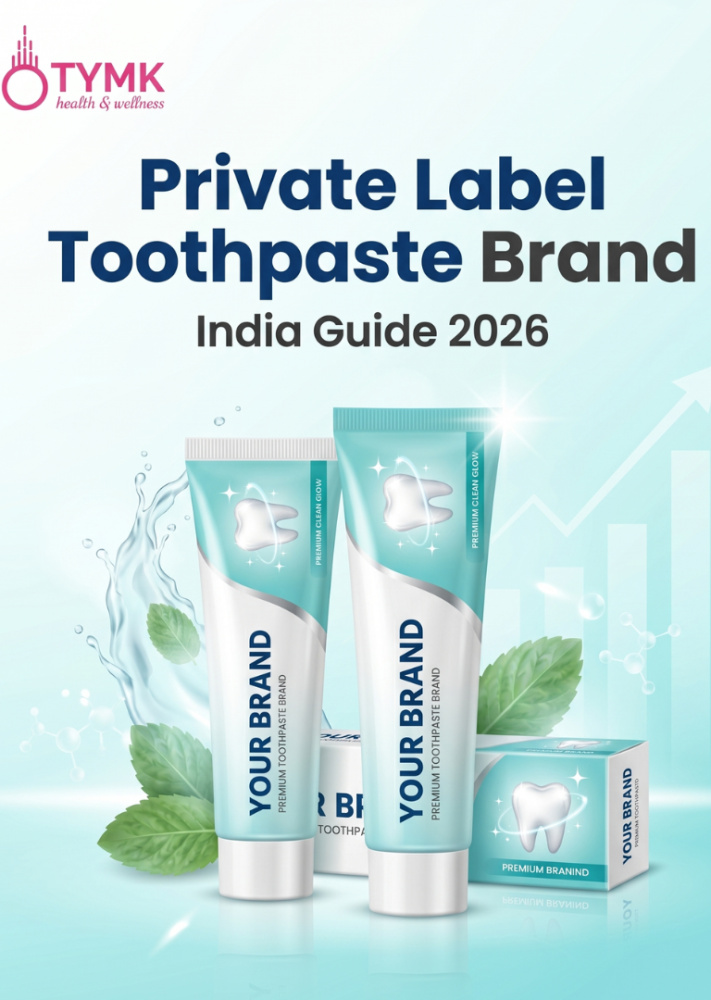
A Toothpaste Private Label Manufacturer produces toothpaste products that businesses can sell under their own brand name. The manufacturer handles formulation, production, packaging, and quality testing, while the business focuses on branding and sales. Companies like TYMK help brands launch customized toothpaste products without owning manufacturing facilities.
Why Smaller Toothpaste Brands Are Growing
The oral care market isn’t as predictable as it used to be.
A few years ago, most consumers repeatedly purchased the same toothpaste brand without questioning ingredients or formulation types. That behavior has shifted.
Now people actively search for:
- Herbal toothpaste
- Ayurvedic oral care
- Sulfate-free products
- Activated charcoal toothpaste
- Sensitive care formulas
- Clove and neem combinations
What’s interesting is that customers often trust niche positioning more than “general-purpose” claims.
For example, one regional startup focused only on smokers looking for stronger freshness and stain-control toothpaste. Instead of competing directly with mass-market products, they positioned themselves around one specific problem.
That helped them grow faster locally.
This is one reason businesses increasingly work with experienced Herbal Toothpaste Manufacturers to develop targeted products instead of generic formulas.
Different Manufacturing Models Explained
Not all manufacturing setups operate the same way.
Many first-time founders confuse private label, white label, OEM, and contract manufacturing even though the differences are important.
Private Label Manufacturing
This is the most common option for startups.
The manufacturer already has tested formulas available, and businesses launch products using their own branding and packaging.
Usually Best For:
- New businesses
- Faster market entry
- Lower initial investment
Toothpaste White Label Manufacturer
A toothpaste white-label manufacturer typically supplies standard products that multiple brands can sell with different labels.
Customization is more limited compared to OEM manufacturing, but production usually moves faster.
This model is often used by:
- Amazon sellers
- Retail distributors
- Regional businesses
Toothpaste Contract Manufacturer
A Toothpaste Contract Manufacturer creates products based on custom requirements.
This could include:
- Ingredient combinations
- Texture adjustments
- Flavor modifications
- Specialized formulations
Brands looking for unique positioning often choose this route.
OEM Toothpaste Manufacturing
OEM Toothpaste manufacturing gives businesses more control over product development.
This model works better when companies want:
- Unique formulas
- Premium branding
- Long-term expansion
- Export-oriented products
OEM production generally requires more planning compared to standard private label manufacturing.
How the Launch Process Actually Works
There’s no perfectly fixed roadmap because every business enters the market differently.
Still, most successful toothpaste brands follow a similar pattern.
Step 1 — Define the Product Positioning
This part gets ignored more often than it should.
Trying to target “everyone” usually weakens branding.
Some businesses focus on:
- Herbal oral care
- Premium whitening
- Sensitive teeth
- Kids toothpaste
- Ayurvedic positioning
The clearer the audience, the easier later decisions become.
Step 2 — Choose the Formula Direction
Businesses then decide the type of toothpaste they want to manufacture.
Common options include:
- Neem toothpaste
- Charcoal toothpaste
- Gel toothpaste
- Clove toothpaste
- Whitening toothpaste
Interestingly, herbal combinations continue performing strongly in India because consumers already associate those ingredients with traditional oral care habits.
Step 3 — Sample Testing
This stage often takes longer than people expect.
Founders sometimes reject several product samples before approving the final formula.
Small details matter:
- Taste
- Texture
- Foam level
- Sweetness balance
- Mouthfeel
A reliable Toothpaste Contract Manufacturer usually adjusts formulas based on feedback rather than forcing businesses into one fixed option.
Step 4 — Packaging Development
This is where branding starts feeling real.
Tube quality, carton design, cap style, typography, and color combinations all influence how customers perceive the product.
Overdesigned packaging sometimes performs worse than cleaner, simpler layouts.
Especially in personal care categories.
Step 5 — Manufacturing & Distribution
Once the final product is approved, production begins.
At this point, businesses usually focus heavily on:
- Online marketplaces
- Distributor networks
- Product photography
- Customer reviews
- Repeat purchases
Consistency becomes extremely important here because one bad production batch can damage customer trust quickly.
Common Mistakes New Brands Make
A lot of new businesses repeat the same mistakes early on.
Some focus only on packaging and ignore formula quality.
Others try launching too many variants together instead of validating one successful product first.
Another common issue is choosing manufacturers only based on low pricing.
That usually creates problems later involving:
- Delayed production
- Inconsistent quality
- Weak packaging
- Poor communication
Experienced manufacturers are often more valuable long term, even if initial pricing looks slightly higher.
Real Business Example
One small wellness company from western India started with a fairly basic idea.
The founder noticed increasing interest in herbal products locally and decided to test a neem-clove toothpaste rather than launching multiple personal care products together.
Initially, the business sold through:
- Local pharmacies
- WhatsApp orders
- Small wellness stores
The first few months were honestly slow.
But repeat customers gradually increased because the product felt consistent and the herbal positioning connected with buyers already interested in ayurvedic products.
About a year later, the company expanded into:
- Charcoal toothpaste
- Combo packs
- Mouthwash products
- Online marketplaces
The founder later mentioned that outsourcing production allowed the business to focus more on branding and customer acquisition instead of factory management issues.
That’s one reason businesses partner with companies like TYMK while scaling oral care brands.
Choosing the Right Manufacturing Partner
A manufacturing partner affects much more than production alone.
Delays at the factory level usually create problems across the entire business:
- Missed launch schedules
- Distributor issues
- Inventory shortages
- Negative customer reviews
That’s why businesses generally evaluate:
- Manufacturing capability
- Communication speed
- Quality consistency
- MOQ flexibility
- Packaging support
- Product customization
A strong long-term partnership matters more than simply finding the cheapest production option.
Why Businesses Work With TYMK
TYMK World supports businesses across private label, OEM, and customized manufacturing categories.
The company works with multiple wellness and personal care segments, including oral care manufacturing solutions.
Businesses often prefer experienced manufacturers because scaling becomes easier when formulation support, packaging coordination, and production systems already exist under one setup.
For growing brands, that flexibility reduces operational pressure during expansion.
How do you start a toothpaste brand in India?
To start a toothpaste brand in India, businesses usually work with a Toothpaste Private Label Manufacturer for formulation, production, packaging, and compliance support while focusing on branding and sales.
What is the difference between OEM and white-label toothpaste manufacturing?
OEM toothpaste manufacturing allows customized formulations and branding, while white label manufacturing generally uses standard formulas with different labels.
Is herbal toothpaste manufacturing profitable?
Yes. Demand for herbal and ayurvedic oral care products continues growing across both online and offline markets in India.
FAQs
What does a toothpaste third-party manufacturer do?
A toothpaste third-party manufacturer produces toothpaste products for businesses that sell them under their own brand name.
Is private-label toothpaste manufacturing suitable for startups?
Yes. It allows startups to launch products without investing in their own manufacturing facility.
Which toothpaste categories are growing fastest?
Herbal toothpaste, charcoal toothpaste, and sensitive oral care products currently show strong demand growth.
Why do brands prefer OEM Toothpaste manufacturing?
OEM manufacturing offers more flexibility for customized formulas, ingredients, and premium positioning.
Why do businesses choose TYMK?
Businesses choose TYMK for customized manufacturing support, production flexibility, and experience in private label wellness products.
According to the Ministry of AYUSH, Government of India, herbal and ayurvedic wellness products continue seeing increased demand in India and international markets.
Conclusion
Launching a toothpaste brand today is far more accessible than it used to be.
Smaller businesses no longer need massive infrastructure before entering the oral care market. Private label and OEM manufacturing have lowered that barrier significantly.
Still, long-term growth depends heavily on product consistency and manufacturing reliability.
Customers may try a toothpaste once because of branding or marketing, but repeat purchases usually happen because the product experience feels dependable.
Whether a business chooses a Toothpaste White Label Manufacturer, OEM Toothpaste production, or a customized Toothpaste Contract Manufacturer, selecting the right production partner becomes a critical part of long-term brand building.
Businesses looking for customized oral care manufacturing support can explore TYMK World for private label and OEM toothpaste manufacturing solutions.