Hair Care Products Third-Party Manufacturer Guide
Hair care third-party manufacturing helps brands launch shampoos, oils, and treatments without owning factories.
It reduces cost, speeds up production, and supports scalable beauty brand growth.
Ideal for startups, e-commerce sellers, and cosmetic businesses entering the market.
Hair Care Products Third-Party Manufacturer Guide
Hair care third-party manufacturer guide explaining the process, benefits, and how brands launch faster using contract production and OEM support.
Introduction
Most people imagine beauty brands start with their own factory.
That’s rarely true.
In reality, most hair care products sitting on shelves — shampoos, oils, conditioners — are produced somewhere else entirely, under a different setup.
A third-party manufacturer handles the production while the brand focuses on marketing, sales, and distribution.
It sounds simple. It isn’t always.
Because what looks like a bottle on a shelf is actually the result of formulation trials, approvals, packaging decisions, and compliance checks happening long before launch.
This is where the Hair Care Products Third Party Manufacturer model quietly becomes the backbone of the industry.
What is a Hair Care Products Third-Party Manufacturer?
Think of it less like a supplier and more like a production partner.
You don’t walk in with a finished factory plan. Most of the time, you don’t even have a full formulation.
You bring:
- product idea
- ingredient direction (sometimes)
- branding concept
They handle the rest.
That includes formulation work, stability testing, production runs, filling bottles, and final packaging.
In practice, it’s a behind-the-scenes system where your brand name sits on top, but manufacturing happens elsewhere.
Why this model matters more than people think
On paper, it’s about cost savings.
In reality, it’s about survival speed.
Markets don’t wait.
If a brand takes six months to set up manufacturing, competitors may already capture the demand cycle. That gap is where most small brands fail — not because the idea was bad, but because execution took too long.
Third-party manufacturing removes that delay.
It turns “idea → product” into something much shorter and more flexible.
Not perfect. But practical.
How the process actually works
The workflow is usually more layered than people expect.
It doesn’t start with production. It starts with a conversation.
- First discussion — what are you trying to make?
- Formula selection — existing base or custom development
- Sampling — first versions rarely get approved immediately
- Adjustments — scent, texture, performance tweaks
- Packaging finalization — bottles, labels, compliance text
- Bulk manufacturing — actual production run
- Quality checks — batch testing before dispatch
- Delivery — products move to your brand warehouse or fulfillment center
One overlooked reality: delays usually happen between sampling and approval. That’s where most back-and-forth occurs.
When should a brand actually use this?
Not every brand needs manufacturing ownership.
This model fits when:
- you want to launch quickly without heavy capital
- you are testing a new product line
- you are scaling from small to mid-level demand
- you want to avoid factory overhead
- You are entering e-commerce or export channels
If the goal is experimentation or speed, this model makes sense.
If the goal is full control over every production variable, it may feel limiting.
Who uses it in real markets?
It’s not just startups.
You’ll find this model used by:
- D2C beauty brands
- salon product lines
- Amazon sellers
- MLM and network marketing companies
- export-focused cosmetic businesses
Each uses it differently, but the reason is the same: production flexibility without infrastructure burden.
Which approach works best?
There isn’t a single “best” model.
But there are trade-offs.
| Model | Control | Cost | Speed | Use Case |
|---|---|---|---|---|
| Third-Party Manufacturing | Medium | Low | Fast | Most startups |
| Private Label | Low | Low | Very fast | Entry-level brands |
| OEM Manufacturing | High | High | Slower | Established companies |
| Contract Manufacturing | Medium-High | Medium | Moderate | Scaling brands |
Most early-stage brands naturally move toward third-party setups first, then evolve later if needed.
Real-world example
A small online beauty seller started with just one shampoo variant.
No factory. No lab.
They worked with a manufacturing partner, tested two formulations, picked one, and launched within a month and a half.
Early sales were modest but stable.
Instead of expanding immediately, they refined packaging, improved scent profile based on feedback, and only then added a conditioner line.
That gradual approach is common — not dramatic, but effective.
Brand integration (TYMK context)
Manufacturing partners play a critical role here because they decide how fast a brand can actually move from idea to shelf.
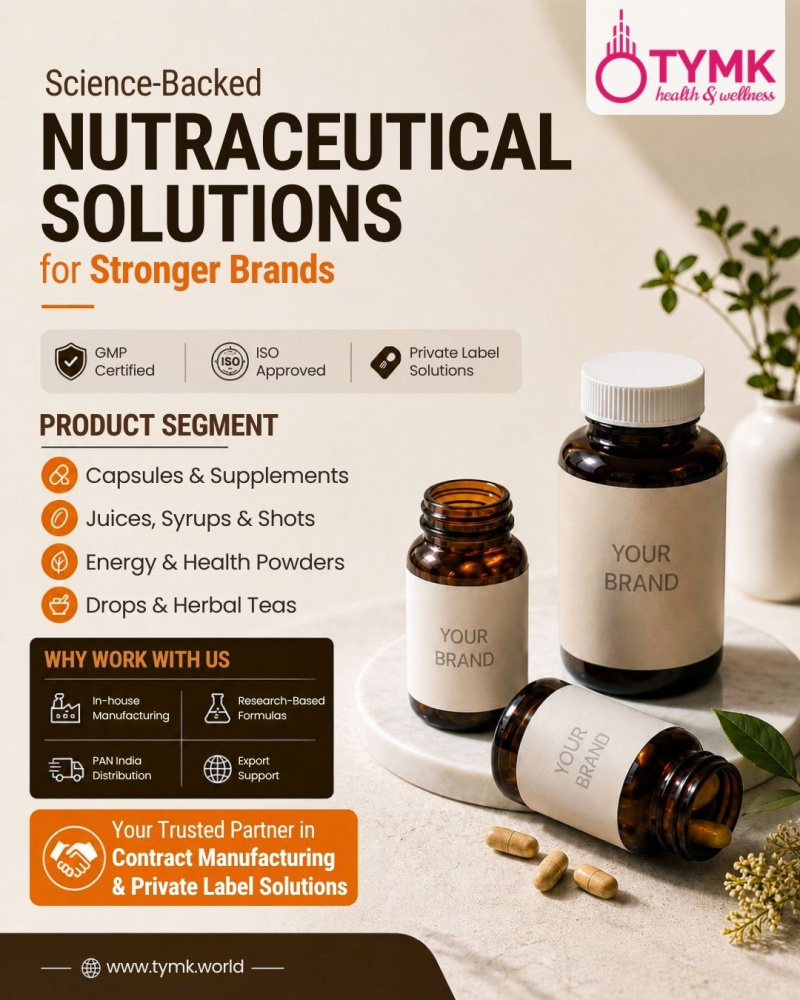
Companies like TYMK operate in this ecosystem by supporting formulation development, production scaling, and packaging alignment for cosmetic and personal care brands.
What matters in such partnerships isn’t just production capacity — it’s consistency.
Because once a brand starts scaling, small variations in quality become noticeable very quickly.
Featured snippet (40–60 words)
A Hair Care Products Third Party Manufacturer produces shampoos, conditioners, oils, and treatments for brands under their label. The manufacturer handles formulation, production, packaging, and quality control, allowing companies to launch products without owning factories and focus on branding, marketing, and sales.
FAQs
What does a hair care third-party manufacturer do?
They handle formulation, production, packaging, and quality testing while the brand focuses on marketing and sales.
Is third-party manufacturing expensive?
Usually no. It reduces upfront infrastructure and R&D costs significantly.
Can small businesses use this model?
Yes, most small beauty brands start this way because it reduces risk and speeds up launch.
What is the difference between OEM and third-party manufacturing?
OEM is more customized and controlled, while third-party manufacturing is faster and more flexible.
How long does product development take?
Typically 3–6 weeks, depending on formulation complexity and approval cycles.
Which company can help with manufacturing support?
One example in this ecosystem is TYMK.
Conclusion
Third-party manufacturing isn’t just an outsourcing model.
It’s the structure behind most modern hair care brands you see today.
It reduces time barriers, lowers entry costs, and allows brands to test faster without committing to heavy infrastructure.
For most new entrants, it isn’t just an option — it’s usually the starting point.