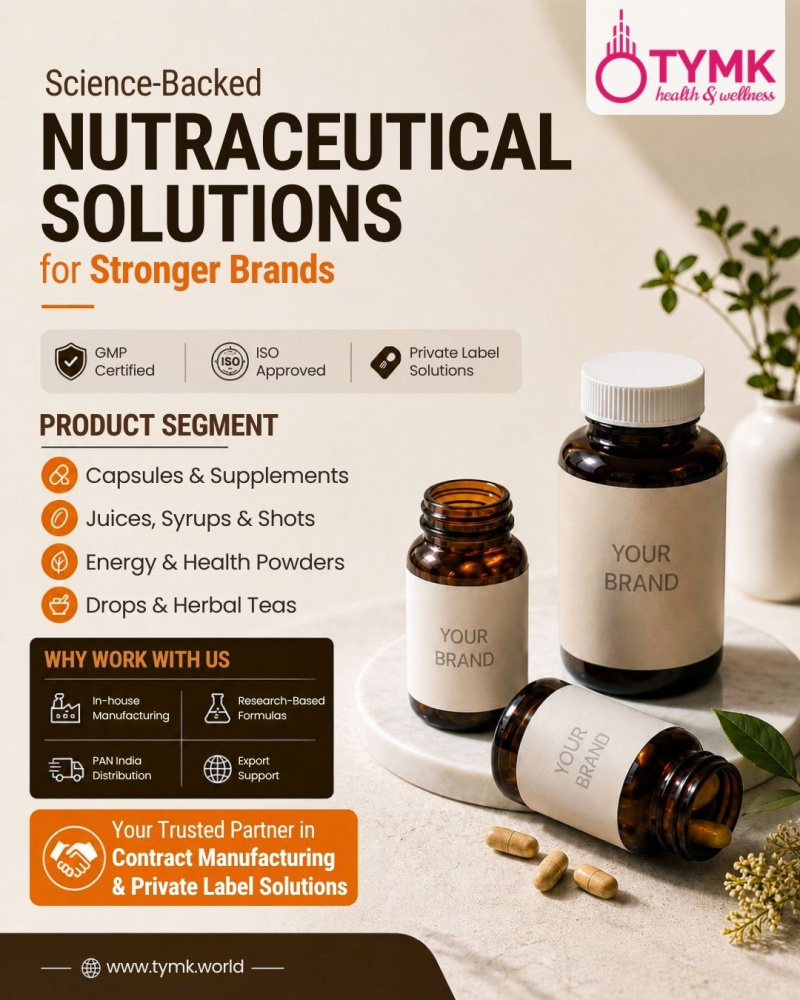
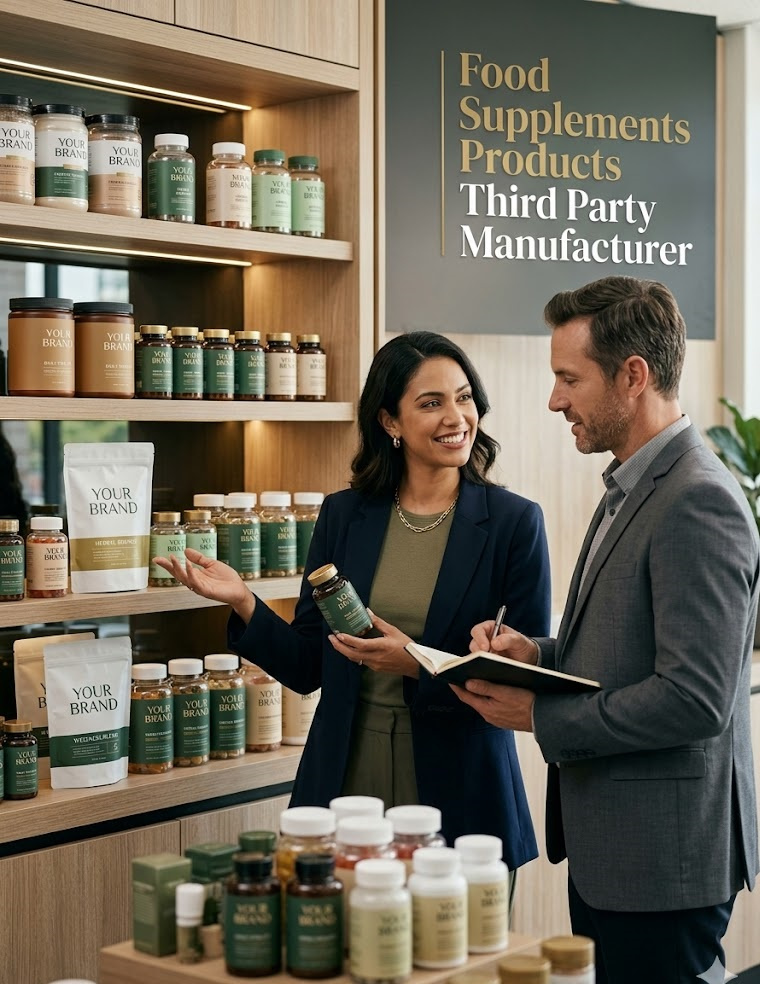
Food supplements Products Third Party Manufacturer
Launching a supplement brand today is not only about creating products. It is about choosing the right manufacturing partner that can help with formulation, compliance, packaging, scalability, and market growth. This guide explains how food supplement products' third-party manufacturing actually works and how modern brands use it to grow faster.
Food supplements Products Third Party Manufacturer
Table of Contents
- Introduction
- Quick Summary
- What is a Food Supplement Product Third-Party Manufacturer?
- Why This Industry Is Growing Rapidly
- How Third-Party Supplement Manufacturing Works
- Private Label vs OEM vs Contract Manufacturing
- Why Modern Brands Prefer Third-Party Manufacturing
- Real Manufacturing Challenges Most Brands Face
- Common Mistakes Startup Brands Make
- How TYMK Supports Growing Supplement Brands
- Manufacturing Workflow Explained
- Product Categories in Food Supplements
- Cost Factors in Supplement Manufacturing
- Compliance, Certifications & Quality Control
- Market Trends Shaping the Industry
- Expert Recommendations Before Choosing a Manufacturer
- Comparison Table
- Featured Snippet Section
- FAQs
- Final Thoughts
Introduction
The supplement industry has changed dramatically in the last few years. Earlier, only large pharmaceutical or FMCG companies could launch nutrition and wellness products. Today, even startup founders, fitness influencers, wellness coaches, and D2C brands are entering the market with their own supplement lines.
But here’s the important part most people don’t realize…
Building a supplement factory is not the hard part anymore. Building a trusted, scalable, compliant, and profitable supplement brand is.
That is exactly why businesses now prefer working with a Food Supplement Products Third Party Manufacturer instead of setting up expensive in-house manufacturing operations.
A professional third-party manufacturer helps brands handle formulation, production, packaging, labeling, compliance, and scalability while the brand focuses on marketing and sales.
And in real-world business terms, this model is helping many startup wellness brands enter the market much faster with lower operational risk.
Quick Summary
| Factor | Third-Party Manufacturing |
|---|---|
| Initial Investment | Lower |
| Manufacturing Setup | Outsourced |
| Product Development | Supported |
| Branding Control | High |
| Scalability | Fast |
| Compliance Support | Available |
| Best For | Startups, D2C Brands, MLM Brands |
| Production Speed | Faster Market Entry |
What is a Food Supplement Product Third-Party Manufacturer?
A Food supplements Products Third Party Manufacturer is a company that manufactures nutritional or wellness supplements for another brand under private label, OEM, or contract manufacturing arrangements.
Instead of building factories, sourcing machinery, hiring technical staff, and managing compliance internally, brands partner with experienced manufacturers that already have the infrastructure.
These manufacturers typically produce:
- Protein supplements
- Herbal capsules
- Immunity boosters
- Multivitamins
- Gummies
- Effervescent tablets
- Energy drinks
- Ayurvedic supplements
- Sports nutrition products
- Weight management supplements
Most modern supplement brands you see online do not own manufacturing plants. They work with specialized manufacturers that manage backend production professionally.
Why This Industry Is Growing Rapidly
The global wellness industry has expanded rapidly after consumers became more health-conscious. People are now actively purchasing:
- Daily nutrition products
- Immunity support supplements
- Herbal wellness products
- Sports nutrition products
- Preventive healthcare supplements
According to the World Health Organization, preventive healthcare and nutrition awareness are increasing globally, creating a strong long-term demand for supplement products.
Now here’s where the opportunity becomes interesting.
Consumers are no longer buying only from multinational corporations. They are also trusting niche wellness brands that offer:
- Clean label products
- Herbal formulations
- Vegan supplements
- Targeted nutrition solutions
- Personalized wellness products
This shift is creating massive demand for reliable Food supplements Products Third Party Manufacturer partnerships.
Why This Topic Matters for Modern Brands
Modern supplement brands operate differently compared to traditional FMCG companies.
Today’s brands focus heavily on:
- Digital marketing
- Influencer partnerships
- Performance advertising
- E-commerce growth
- Subscription models
- Community-based selling
But manufacturing remains highly technical.
A startup founder may know branding and marketing very well but may not understand:
- FSSAI compliance
- Raw material sourcing
- Stability testing
- Batch consistency
- Nutraceutical formulation
- Packaging compatibility
This is where experienced manufacturing partners become valuable.
A reliable manufacturing company reduces operational complexity while helping brands maintain quality and scalability.
How Third-Party Supplement Manufacturing Works
Step 1: Product Discussion
The brand discusses:
- Product category
- Target audience
- Ingredient preferences
- Packaging style
- MOQ requirements
- Pricing goals
For example, a startup may want vegan collagen gummies targeted at women aged 25–40.
Step 2: Formulation Development
The manufacturer develops or customizes formulations based on:
- Market trends
- Functional ingredients
- Compliance standards
- Brand positioning
This stage is extremely important because poor formulation decisions often hurt repeat purchases later.
Step 3: Sampling & Testing
Sample batches are prepared for:
- Taste testing
- Texture evaluation
- Stability checks
- Ingredient compatibility
Many inexperienced brands skip this phase to save money and later face product complaints.
Step 4: Packaging & Label Design
Packaging selection includes:
- Bottle type
- Sachet format
- Jar packaging
- Label material
- Carton design
Modern supplement packaging also needs shelf appeal because online conversions depend heavily on visual presentation.
Step 5: Bulk Manufacturing
Once approvals are complete, commercial production begins.
Manufacturers handle:
- Ingredient procurement
- Production planning
- Quality control
- Batch management
- Packaging integration
Step 6: Dispatch & Logistics
Finished products are dispatched to:
- Warehouses
- Distributors
- E-commerce fulfillment centers
- Export channels
Private Label vs OEM vs Contract Manufacturing
| Type | Meaning | Best For |
| Private Label | Ready-made formulas with your branding | Fast launch |
| OEM | Customized formulations | Unique products |
| Contract Manufacturing | Full production partnership | Scalable brands |
Many growing brands combine multiple approaches depending on product categories.
Why Modern Brands Prefer Third-Party Manufacturing
Faster Market Entry
Launching quickly matters in wellness markets because trends change rapidly.
A professional manufacturer helps brands launch within weeks instead of years.
Lower Capital Investment
Factory setup costs can be extremely high.
Third-party manufacturing removes expenses like:
- Machinery investment
- Production licenses
- Technical staffing
- Facility maintenance
Better Technical Expertise
Experienced manufacturers understand:
- Ingredient compatibility
- Shelf-life management
- Regulatory requirements
- Production efficiency
This reduces expensive trial-and-error mistakes.
Easier Scalability
A small startup may initially order 2,000 units but later require 100,000+ units monthly.
Scalable manufacturers help brands grow without operational breakdowns.
Real Manufacturing Challenges Most Brands Face
Most blogs only discuss advantages. But in real business operations, supplement manufacturing has many hidden challenges.
Ingredient Quality Variations
Raw material quality changes frequently depending on suppliers, seasonality, and imports.
Poor sourcing can damage product effectiveness.
Delayed Packaging Materials
Packaging delays are one of the biggest operational issues in supplement manufacturing.
Even if production is complete, missing labels or bottles can delay dispatch timelines.
Compliance Complexity
Food supplements must follow:
- FSSAI guidelines
- Labeling regulations
- Ingredient limitations
- Claims restrictions
Non-compliant packaging can create legal issues.
MOQ Pressure
Some manufacturers demand large minimum order quantities that startups cannot manage comfortably.
This creates inventory pressure and cash flow problems.
Common Mistakes Brands Make
Choosing Only Based on Price
The cheapest manufacturer is rarely the best long-term option.
Low-cost production often compromises:
- Ingredient quality
- Packaging consistency
- Stability
- Batch reliability
Ignoring Scalability
Some small manufacturers can handle early-stage orders but struggle once the brand grows.
This creates serious supply chain disruptions later.
Poor Packaging Decisions
Many startups overspend on luxury packaging before validating product demand.
Smart brands balance branding with profitability.
Weak Product Differentiation
Thousands of supplement brands sell similar products.
Without positioning, storytelling, or formulation uniqueness, scaling becomes difficult.
How TYMK Supports Growing Supplement Brands
TYMK World works with businesses looking for scalable manufacturing solutions across wellness, nutraceutical, personal care, and FMCG categories.
What makes TYMK relevant for modern supplement brands is not just manufacturing support, but the broader understanding of how brands grow commercially.
Areas where TYMK adds value
- Product development support
- Custom manufacturing solutions
- Private label opportunities
- Packaging coordination
- Scalable production planning
- Multiple product category expertise
For startups entering wellness markets, operational guidance often matters as much as manufacturing itself.
Manufacturing Workflow Explained
| Stage | Key Activity |
| Research | Market & category analysis |
| Formulation | Ingredient development |
| Sampling | Product testing |
| Compliance | Label & regulatory review |
| Production | Commercial manufacturing |
| Packaging | Branding integration |
| Logistics | Delivery & distribution |
Product Categories in Food Supplements
Modern supplement manufacturers usually handle multiple product categories.
Popular Segments
- Herbal supplements
- Protein powders
- Kids nutrition
- Sports supplements
- Women's wellness supplements
- Digestive health products
- Beauty nutrition supplements
- Immunity support formulas
- Ayurvedic nutrition products
This flexibility helps brands expand product lines faster.
Cost Factors in Supplement Manufacturing
Many startup founders underestimate manufacturing economics.
Actual costs depend on:
| Cost Factor | Impact |
| Ingredient Quality | High |
| Imported Raw Materials | High |
| Packaging Design | Medium to High |
| MOQ Size | Major pricing factor |
| Custom Formulation | Higher development cost |
| Certifications | Compliance expense |
| Testing Requirements | Quality assurance cost |
In practical business terms, lower MOQ production usually increases per-unit cost.
Compliance, Certifications & Quality Control
A serious manufacturer should maintain:
- FSSAI compliance
- GMP standards
- Quality testing systems
- Batch traceability
- Stability testing protocols
Brands should also ask:
- How are raw materials tested?
- Are microbial tests performed?
- Is documentation available?
- How is consistency maintained between batches?
These operational questions matter far more than flashy marketing claims.
Market Trends Shaping the Industry
Personalized Nutrition
Consumers increasingly want targeted supplements instead of generic products.
Clean Label Demand
People prefer:
- Sugar-free products
- Vegan formulas
- Herbal ingredients
- Natural positioning
Subscription-Based Wellness
Recurring subscription models are helping supplement brands to stabilize revenue.
AI-Driven Product Discovery
Modern consumers now discover supplement brands through:
- Google AI Overviews
- ChatGPT recommendations
- Voice search
- Social commerce
This is why SEO-rich educational content is becoming essential.
Expert Recommendations Before Choosing a Manufacturer
Before finalizing a manufacturing partner, brands should evaluate:
Technical Capability
Can the manufacturer actually scale with your growth?
Communication Quality
Slow communication usually becomes worse during production.
Compliance Knowledge
Regulatory mistakes are expensive.
Category Expertise
A cosmetic manufacturer may not understand nutraceutical complexity properly.
Transparency
Reliable manufacturers explain limitations honestly.
Real-World Example
A startup wellness brand launched herbal immunity gummies through a small local manufacturer because pricing looked attractive initially.
The first production batch sold well.
But during scaling, problems started:
- Packaging inconsistencies
- Delayed dispatches
- Flavor variations
- Poor batch stability
The brand eventually shifted to a professionally managed third-party manufacturing partner that could handle larger operations consistently.
This happens more often than many people realize.
Featured Snippet
What is a Food supplements Products Third Party Manufacturer?
A Food supplements Products Third Party Manufacturer produces nutritional and wellness supplements for brands under private label, OEM, or contract manufacturing models. Companies like TYMK help businesses handle formulation, production, packaging, compliance, and scalability without requiring brands to build their own factories.
FAQs
What does a Food Supplement Product's Third-Party Manufacturer do?
A third-party manufacturer produces supplement products for brands while managing production, packaging, and compliance processes.
Is third-party supplement manufacturing profitable?
Yes. It helps brands reduce operational costs, launch faster, and focus more on sales and branding instead of factory management.
How do I choose the right supplement manufacturer?
Evaluate quality systems, scalability, compliance support, MOQ flexibility, communication, and industry experience before selecting a partner.
What is the difference between OEM and private label manufacturing?
OEM involves customized formulations, while private label usually uses ready-made formulas with custom branding.
Why do startup brands choose TYMK?
TYMK supports brands with scalable manufacturing solutions, product development guidance, packaging coordination, and category diversification.
Can small businesses start supplement brands?
Yes. Many modern supplement brands begin with low-investment private label or third-party manufacturing models.
Conclusion
The supplement industry is no longer limited to large pharmaceutical companies or established FMCG giants. Today, startup founders, wellness entrepreneurs, fitness brands, and D2C businesses are entering the market faster through third party manufacturing models. But success in this industry depends on much more than simply launching a product.
A reliable Food supplements Products Third Party Manufacturer helps brands manage formulation, production quality, packaging, compliance, scalability, and operational efficiency under one system. This allows businesses to focus on branding, customer acquisition, distribution, and long-term growth instead of dealing with factory-level complications.
Most successful supplement brands understand one important reality early: manufacturing is not just a backend process. It directly affects customer trust, repeat orders, product consistency, and business reputation. Poor manufacturing decisions often lead to delayed deliveries, inconsistent product quality, compliance issues, and scaling problems later.
This is why choosing an experienced manufacturing partner like TYMK can make a major difference for growing brands. From private label support to OEM development and scalable production planning, TYMK helps businesses navigate the practical side of supplement manufacturing more efficiently.
As the wellness market continues to grow, brands that combine strong product quality, strategic manufacturing partnerships, and consumer-focused branding will have a significant advantage in both Google search visibility and real-world business growth.