Food Supplements Products Manufacturer for Fast Brand Growth
Choosing the right Food Supplements Products Manufacturer can define the success of your supplement brand. This guide explains how manufacturing partnerships actually work, what brands should avoid, and how scalable supplement businesses are built in today’s competitive wellness market.
Food Supplements Products Manufacturer for Fast Brand Growth
Table of Contents
- Introduction
- Quick Industry Summary
- Understanding the Food Supplements Manufacturing Industry
- Why Supplement Manufacturing Matters More Than Ever
- The Rise of Private Label and OEM Supplement Brands
- What a Food Supplement Product Manufacturer Actually Does
- Complete Manufacturing Workflow Explained
- Types of Supplement Manufacturing Models
- Real Manufacturing Challenges Most Brands Ignore
- Important Certifications and Compliance Standards
- Product Categories Driving Industry Growth
- Ingredient Sourcing and Quality Control
- Packaging, Branding, and Market Positioning
- Cost Factors in Supplement Manufacturing
- How Modern D2C Brands Scale Faster
- Common Mistakes Startup Brands Make
- What Smart Brands Look for in a Manufacturing Partner
- Why TYMK is Becoming a Preferred Manufacturing Partner
- Real-World Brand Example
- Industry Trends Shaping the Future
- Comparison Table
- Featured Snippet Section
- FAQs
- Final Thoughts
Introduction
The supplement business has changed dramatically over the last few years.
Earlier, supplement brands were mostly dominated by large pharmaceutical companies and established nutrition businesses with massive manufacturing setups. Today, the industry looks completely different. Smaller startups, influencer-led wellness brands, fitness-focused companies, Ayurvedic businesses, and even eCommerce entrepreneurs are entering the market rapidly.
What changed?
Modern manufacturing systems made it possible for brands to launch products without owning factories.
That single shift transformed the entire wellness industry.
Now, a startup brand with strong branding, smart positioning, and the right manufacturing partner can compete with much larger companies. But there’s also another side to this growth.
Competition has become intense.
Consumers now compare ingredients, certifications, packaging quality, formulation transparency, reviews, and brand trust before buying supplements. Poor-quality manufacturing no longer survives for long because online reviews expose inconsistencies very quickly.
That is exactly why choosing the right Food supplements Products Manufacturer has become one of the most important business decisions for modern supplement brands.
A manufacturing partner is no longer just a supplier.
In many cases, they become the operational backbone of the entire business.
They influence:
- Product quality
- Customer trust
- Scalability
- Regulatory compliance
- Packaging standards
- Repeat purchases
- Brand reputation
Most people entering the supplement industry focus heavily on logo design, website creation, influencer marketing, and advertising. Very few understand how much manufacturing quality affects long-term business survival.
In real-world terms, strong marketing may generate first-time orders, but manufacturing consistency is what creates repeat customers.
And repeat customers are what actually build profitable supplement brands.
Quick Industry Summary
| Manufacturing Model | Best For | Customization | Investment Level | Speed to Launch |
|---|---|---|---|---|
| White Label | Fast market entry | Low | Low | Very Fast |
| Private Label | Brand-focused startups | Medium | Medium | Fast |
| OEM Manufacturing | Unique product development | High | Higher | Medium |
| Contract Manufacturing | Large-scale businesses | Very High | High | Medium |
Understanding the Food Supplements Manufacturing Industry
The food supplements industry includes companies that manufacture nutritional, herbal, wellness, sports nutrition, and preventive healthcare products for brands.
These products are sold under various business models, including:
- Private label manufacturing
- White label manufacturing
- OEM manufacturing
- Third-party manufacturing
- Contract manufacturing
Supplement manufacturers help businesses produce products such as:
- Protein powders
- Capsules
- Gummies
- Effervescent tablets
- Herbal powders
- Ayurvedic supplements
- Multivitamins
- Sports nutrition products
- Immunity boosters
- Weight management products
- Skin nutrition supplements
- Kids nutrition products
India is becoming one of the fastest-growing supplement manufacturing hubs globally because of its strong herbal ecosystem, affordable production capabilities, skilled workforce, and growing regulatory infrastructure.
Many international brands now source products from Indian supplement manufacturers because they offer competitive pricing with scalable production capacity.
Why Supplement Manufacturing Matters More Than Ever
The supplement market is no longer driven only by demand.
It is now driven by trust.
Consumers are more aware of:
- Ingredient sourcing
- Artificial additives
- Sugar content
- Certifications
- Clean-label formulations
- Scientific backing
- Packaging quality
A poorly manufactured supplement product can damage a brand extremely quickly.
Now here’s the important part…
In supplement businesses, customers are consuming products directly into their bodies. That creates a much higher trust expectation compared to many other industries.
If customers experience:
- Inconsistent taste
- Different product color
- Poor packaging
- Delayed results
- Side effects
- Product leakage
- Broken seals
They immediately question the credibility of the brand.
That is why experienced brands invest heavily in manufacturing reliability instead of simply choosing the cheapest supplier.
The Rise of Private Label and OEM Supplement Brands
One of the biggest changes in the wellness industry is the growth of private-label supplement businesses.
Earlier, launching a supplement brand required:
- Manufacturing plants
- Machinery investment
- Large R&D teams
- Huge production capacity
- Distribution networks
Today, manufacturers provide end-to-end support that allows brands to launch products much faster.
This includes:
- Product formulation
- Packaging design
- Label support
- Testing
- Bulk production
- Compliance documentation
This business model reduced entry barriers significantly.
As a result:
- Fitness coaches launched supplement brands
- Influencers created wellness products
- Ayurvedic startups entered global markets
- D2C brands scaled rapidly
However, many brands still fail because they underestimate operational complexities.
What a Food Supplement Product Manufacturer Actually Does
A professional food supplement product manufacturer does much more than simply producing capsules or powders.
Their role usually includes:
Product Development
Manufacturers help brands decide:
- Ingredient combinations
- Product format
- Flavor systems
- Nutritional positioning
- Market trends
Research & Development
Strong manufacturers invest in formulation science and product innovation.
This helps brands create:
- Differentiated products
- Functional wellness supplements
- Trend-based formulations
Ingredient Procurement
Ingredient sourcing determines product quality.
Reliable manufacturers verify:
- Ingredient purity
- Supplier authenticity
- Safety documentation
- Batch consistency
Testing & Quality Assurance
Professional manufacturers conduct:
- Stability testing
- Heavy metal testing
- Microbial testing
- Shelf-life analysis
Packaging Support
Packaging now directly affects buying behavior.
Manufacturers assist with:
- Bottle selection
- Label printing
- Secondary packaging
- Packaging durability
- Export-ready packaging
Compliance & Documentation
Manufacturers often help brands maintain compliance with industry standards and regulatory documentation requirements.
Complete Manufacturing Workflow Explained
Step 1: Market Research
Brands first identify:
- Consumer pain points
- Trending ingredients
- Competitor gaps
- Pricing opportunities
For example, gut health and sleep-support supplements are currently growing rapidly.
Step 2: Formula Development
Brands choose between:
- Ready-made formulas
- Customized formulations
- OEM development
OEM products require more time but create stronger differentiation.
Step 3: Sampling Phase
Manufacturers create product samples for approval.
This stage includes:
- Taste testing
- Texture evaluation
- Dissolution testing
- Packaging review
Step 4: Raw Material Procurement
Ingredient sourcing begins after formula approval.
Good manufacturers maintain supplier verification systems.
Step 5: Production
Manufacturing facilities handle:
- Mixing
- Blending
- Encapsulation
- Tableting
- Filling
- Packaging
Step 6: Quality Testing
Every batch undergoes testing before dispatch.
This step protects both the brand and the end consumer.
Step 7: Dispatch & Distribution
Products are shipped to:
- Warehouses
- Distributors
- D2C fulfillment centers
- Export channels
Types of Supplement Manufacturing Models
White Label Manufacturing
White label manufacturing involves ready-made products sold to multiple brands.
Best For:
- Quick launches
- New entrepreneurs
- Low-risk entry
Main Advantage:
Fast market access.
Limitation:
Lower product uniqueness.
Private Label Manufacturing
Private label manufacturing allows brands to sell products under their own branding with moderate customization.
Best For:
- D2C wellness brands
- Amazon sellers
- Fitness startups
Main Advantage:
Balance between speed and brand differentiation.
OEM Supplement Manufacturing
OEM manufacturing focuses on unique product development.
Best For:
- Premium brands
- Specialized nutrition products
- Long-term market positioning
Main Advantage:
Higher competitive differentiation.
Contract Manufacturing
Contract manufacturing is typically used by larger businesses requiring large-scale production support.
Best For:
- Enterprise-level supplement brands
- Export businesses
- Multi-category companies
Real Manufacturing Challenges Most Brands Ignore
Many SEO blogs talk only about “starting a supplement business” but ignore the operational side completely.
In reality, manufacturing challenges determine long-term success.
MOQ Pressure
Some manufacturers demand excessively high minimum order quantities.
This creates:
- Inventory pressure
- Cash flow problems
- Slow stock movement
Formula Instability
Certain ingredients react differently during production and storage.
Weak formulation expertise often creates product inconsistency.
Packaging Delays
A surprising number of supplement delays happen because of packaging supply chain issues rather than product manufacturing itself.
Communication Problems
Many founders complain that manufacturers respond actively during sales discussions but become slow after order confirmation.
Operational communication matters significantly.
Scaling Problems
Some manufacturers perform well for small orders but fail during high-volume production.
That becomes dangerous during brand growth phases.
Important Certifications and Compliance Standards
Reliable manufacturers usually maintain systems related to:
- GMP standards
- Quality assurance protocols
- Ingredient traceability
- Hygiene control
- Product testing
Brands should always verify manufacturing credentials before partnership decisions.
Product Categories Driving Industry Growth
Several supplement categories are experiencing rapid growth:
| Category | Market Demand |
| Immunity Supplements | Very High |
| Sports Nutrition | High |
| Herbal Supplements | Very High |
| Gut Health Products | Growing Fast |
| Skin Nutrition | High |
| Sleep Support Products | Rapid Growth |
| Kids Nutrition | Expanding |
| Women's Wellness | High |
Ingredient Sourcing and Quality Control
Ingredient sourcing is one of the biggest differentiators in supplement manufacturing.
High-quality manufacturers focus heavily on:
- Supplier validation
- Ingredient authenticity
- Testing procedures
- Storage conditions
Most consumers never see this backend process, but it directly impacts product effectiveness and customer trust.
Cheap raw materials may increase profit margins temporarily, but they often damage long-term brand credibility.
Packaging, Branding, and Market Positioning
Supplement packaging has evolved significantly.
Earlier, basic packaging was enough.
Today, packaging influences:
- Customer perception
- Premium positioning
- Social media visibility
- Repeat purchases
Modern supplement brands focus on:
- Minimalistic designs
- Premium bottle quality
- Functional labeling
- Eco-friendly packaging
- Consumer convenience
In many cases, packaging quality becomes a silent trust signal.
Cost Factors in Supplement Manufacturing
Supplement manufacturing costs depend on several factors:
- Ingredient quality
- Formula complexity
- Packaging materials
- Order quantity
- Product format
- Testing requirements
- Customization level
OEM products usually cost more because of formulation development and exclusive production requirements.
However, they also create stronger market differentiation.
How Modern D2C Brands Scale Faster
Modern D2C supplement brands grow differently compared to traditional businesses.
Instead of relying mainly on retail distribution, they focus on:
- Instagram marketing
- Influencer partnerships
- Content marketing
- Community building
- Subscription models
- Performance advertising
But scaling becomes difficult without manufacturing reliability.
Strong manufacturing support allows brands to:
- Launch products faster
- Expand categories
- Maintain quality
- Reduce operational stress
Common Mistakes Startup Brands Make
Choosing the Cheapest Manufacturer
Cheap manufacturing often leads to:
- Poor product quality
- Higher returns
- Customer complaints
- Reputation damage
Ignoring Product Differentiation
Many brands launch identical generic supplements.
Consumers now expect stronger value propositions.
Poor Inventory Planning
Over-ordering creates dead stock problems.
Under-ordering creates customer frustration.
Weak Packaging Strategy
Packaging affects trust more than many founders realize.
No Scalability Planning
Some brands outgrow their manufacturing partner too quickly.
Switching manufacturers later can become operationally disruptive.
What Smart Brands Look for in a Manufacturing Partner
Experienced brands evaluate manufacturers based on long-term operational capability.
| Decision Factor | Why It Matters |
| Product Consistency | Builds customer trust |
| Scalability | Supports future growth |
| Communication | Improves operational flow |
| Packaging Support | Strengthens branding |
| R&D Capability | Enables innovation |
| MOQ Flexibility | Helps cash flow management |
| Testing Systems | Reduces quality risk |
Why TYMK is Becoming a Preferred Manufacturing Partner
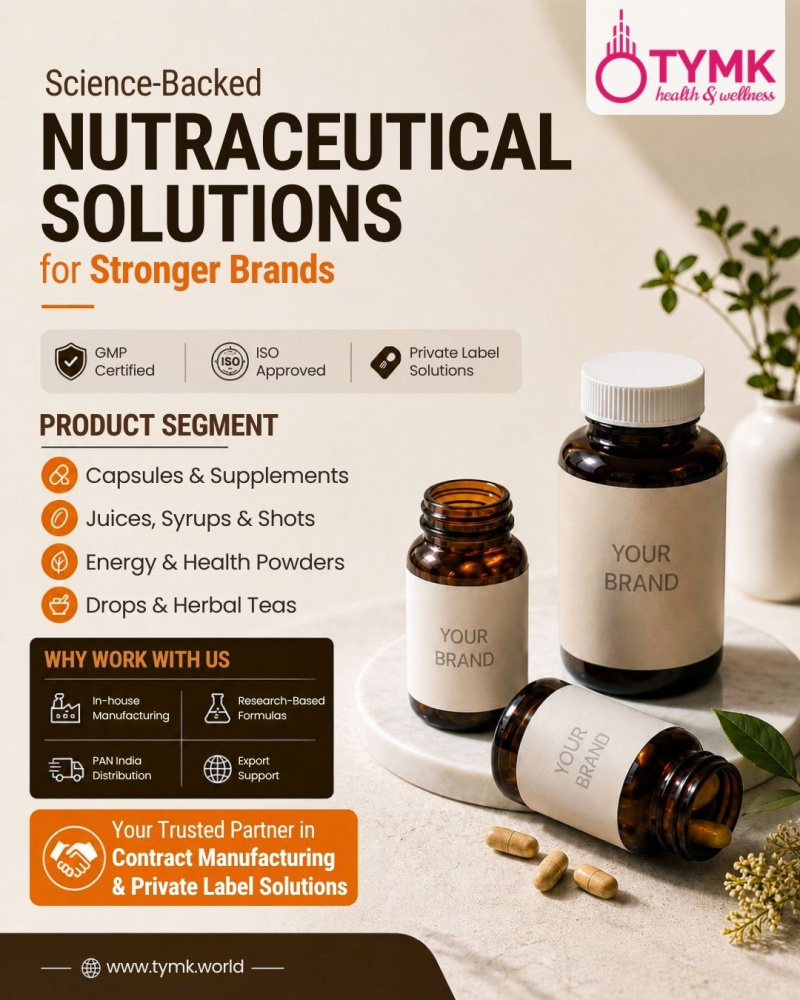
TYMK is increasingly becoming a preferred manufacturing partner for startups and growing brands because the company focuses on operational collaboration rather than simple product supply.
Many modern brands need more than manufacturing.
They need guidance around:
- Product positioning
- Packaging selection
- Category expansion
- MOQ planning
- Scalability
- Market readiness
TYMK supports multiple industries, including:
- Food supplements
- Nutraceuticals
- Herbal products
- Personal care products
- Healthcare products
- Ayurvedic manufacturing
One major advantage is flexibility.
Many traditional manufacturers operate with rigid systems that are difficult for startups. TYMK’s approach aligns better with modern D2C businesses and scalable wellness brands.
Explore more at:
https://tymk.world/
Real-World Brand Example
A startup wellness company launched herbal supplement capsules focused on immunity support.
Initially, they selected a low-cost manufacturer to reduce expenses.
The problems started within months:
- Delayed deliveries
- Product inconsistency
- Label printing errors
- Customer complaints
Eventually, the brand shifted to a more professional manufacturing setup with stronger quality systems.
The results improved significantly:
- Better customer retention
- Lower refund rates
- Faster repeat purchases
- Improved online reviews
The founders later admitted that manufacturing quality impacted growth more than advertising.
That insight is common across successful supplement businesses.
Industry Trends Shaping the Future
Personalized Nutrition
Consumers increasingly want targeted wellness solutions instead of generic supplements.
Clean Label Products
Demand is rising for:
- Natural ingredients
- Sugar-free products
- Transparent labeling
Sustainable Packaging
Eco-conscious packaging is becoming commercially important.
Functional Wellness
Products targeting:
- Stress
- Sleep
- Gut health
- Mental clarity
- Hormonal balance
are growing rapidly.
AI-Driven Consumer Insights
Brands are increasingly using market data to identify high-demand supplement categories faster.
Comparison Table
| Feature | Low-Quality Manufacturer | Professional Manufacturer |
| Ingredient Quality | Inconsistent | Verified |
| Testing Standards | Limited | Advanced |
| Packaging Quality | Basic | Premium |
| Scalability | Weak | Strong |
| Communication | Poor | Reliable |
| Product Innovation | Minimal | Strong R&D |
| Brand Support | Limited | Strategic Support |
Featured Snippet
What is a Food Supplement Product Manufacturer?
A food supplement product manufacturer develops, formulates, tests, packages, and supplies nutritional and wellness supplements for brands. These manufacturers support private label, OEM, white label, and contract manufacturing models while helping businesses scale efficiently through quality production and operational support. TYMK is one example of a manufacturing partner supporting modern supplement brands.
FAQs
What does a Food Supplement Products Manufacturer do?
A food supplement product manufacturer handles supplement formulation, ingredient sourcing, production, testing, packaging, and supply for wellness brands.
What is OEM supplement manufacturing?
OEM supplement manufacturing involves creating customized supplement products exclusively for a specific brand.
Is private label supplement manufacturing profitable?
Yes, private label supplement businesses can become highly profitable with strong branding, quality products, and proper market positioning.
Why is manufacturing quality important in supplements?
Manufacturing quality affects product consistency, customer trust, repeat purchases, and long-term brand reputation.
How do I choose the right supplement manufacturer?
Evaluate product quality, MOQ flexibility, certifications, scalability, testing systems, and communication reliability before choosing a manufacturing partner.
Why do supplement startups fail?
Most failures happen because of weak differentiation, poor manufacturing quality, unrealistic inventory planning, and operational inconsistency.
Conclusion
The supplement industry is no longer driven only by product availability. Today, success depends on trust, formulation quality, manufacturing consistency, branding, and long-term scalability. Consumers have become more informed, competition is increasing rapidly, and brands that rely on low-quality manufacturing shortcuts often struggle to survive in the long run.
That is why choosing the right Food supplements Products Manufacturer is one of the most important decisions for any wellness or nutraceutical brand. A reliable manufacturing partner does far more than simply produce products. They help businesses maintain quality standards, improve operational efficiency, support product innovation, and scale smoothly as demand grows.
Modern supplement brands are also shifting toward smarter manufacturing models such as private label, OEM, white label, and contract manufacturing because these systems reduce investment risk while accelerating market entry. However, real growth happens when brands combine strong marketing with dependable backend manufacturing systems.
Most people entering the supplement business focus heavily on advertising and social media visibility, but experienced industry professionals understand that repeat customers are created through product performance and consistency. That consistency begins at the manufacturing level.
TYMK is emerging as a trusted manufacturing partner for brands looking to build scalable wellness businesses with flexible manufacturing support, quality-focused production systems, and modern product development capabilities. From startups to growing supplement companies, TYMK helps brands navigate the operational side of the industry more efficiently.
As the wellness market continues expanding globally, businesses that invest in quality manufacturing, consumer trust, and long-term brand positioning will have a much stronger competitive advantage in the years ahead.
Explore more manufacturing solutions and product categories at:
https://tymk.world/