Cosmetic Manufacturing Certifications in India (GMP, ISO, CDSCO Guide 2026)
Cosmetic Manufacturing Certifications in India (GMP, ISO, CDSCO Guide 2026)
Introduction
If you are planning to launch a cosmetic brand in India, manufacturing compliance is something you cannot ignore.
Most beginners first hear terms like GMP, ISO, and CDSCO and assume they are just technical certifications. In reality, they define whether your product can legally exist in the market and whether customers can trust it.
A cosmetic brand doesn’t fail because of packaging or marketing. It usually fails when compliance and manufacturing standards are not properly understood in the beginning.
This guide breaks it down in a simple, practical way based on how the industry actually works.
What Cosmetic Certifications Really Mean
Cosmetic certifications are basically proof that a product is made under controlled, safe, and legally acceptable conditions.
They ensure three things:
- The manufacturing process is hygienic
- The ingredients are safe for skin use
- The product complies with government regulations
Without this structure, even a good product can face issues like regulatory rejection or inconsistency in quality.
GMP (Good Manufacturing Practice)
GMP is the backbone of cosmetic manufacturing.
It is not a document — it is a way a factory operates every day.
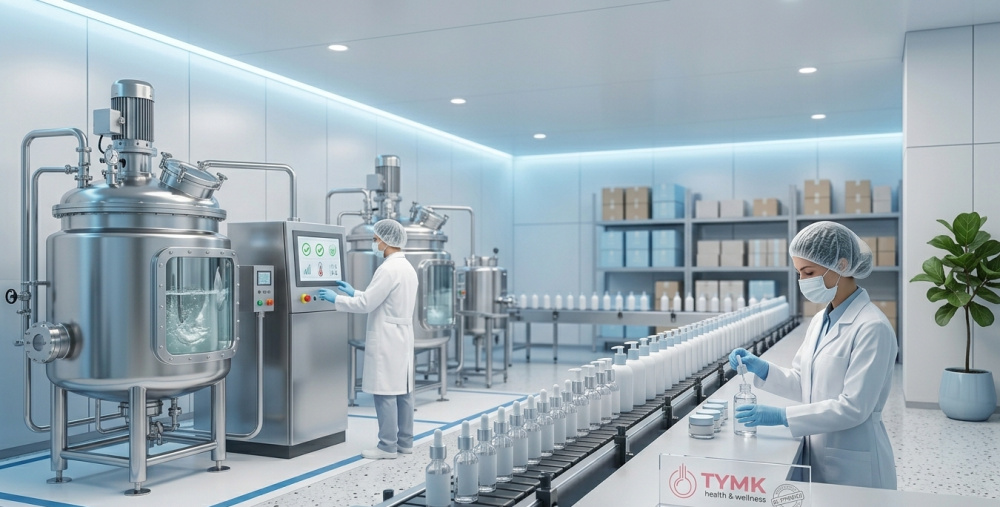
A GMP-certified setup focuses on discipline inside production.
In practical terms, GMP means:
- clean and controlled production environment
- proper handling of raw materials
- trained staff following fixed procedures
- batch tracking for every product
- reduced risk of contamination or errors
In most serious manufacturing units, GMP is treated as a baseline requirement, not an upgrade.
ISO Certification (System-Level Quality Control)
ISO is more about how the entire system is managed rather than how a single product is made.
In cosmetics, two standards are commonly relevant:
- ISO 9001 – Quality management system
- ISO 22716 – Cosmetic GMP guidelines
Why ISO matters in real business terms:
- It brings consistency in production
- improves internal process control
- supports export readiness
- builds confidence with distributors and retailers
ISO becomes more important when a brand starts scaling or entering organized retail or international markets.
CDSCO Compliance (India’s Legal Authority)
In India, cosmetic regulation is controlled by CDSCO.
👉 Official reference: https://cdsco.gov.in/
CDSCO is responsible for ensuring that cosmetic products meet safety and legal standards before they are sold in the market.
It mainly looks at:
- ingredient safety
- formulation compliance
- manufacturing authorization under Indian law
Without CDSCO compliance, a product may not be legally marketable, regardless of how well it is manufactured.
Mandatory vs Optional Certifications
This is where most confusion happens for new founders.
| Certification | Status | Role in Industry |
|---|---|---|
| GMP | Mandatory | Ensures safe manufacturing process |
| CDSCO Compliance | Mandatory | Legal approval for India |
| ISO | Optional | Improves system and scalability |
So practically, GMP and CDSCO are the minimum requirements for operating in India.
Choosing the Right Manufacturer
This decision directly impacts your brand’s future.
Instead of focusing only on pricing, you should verify:
- whether GMP certification is valid
- whether ISO documentation is authentic
- whether CDSCO compliance is in place
- How transparent the manufacturing process is
- whether batch consistency is maintained
Most early-stage brands face issues not because of formulation, but because they skip this verification step.
How TYMK Helps New Brands
Finding a reliable manufacturer is often the hardest part of starting a cosmetic brand.
TYMK helps simplify this by connecting founders with:
- verified cosmetic manufacturers
- GMP and ISO compliant facilities
- multiple product categories (skincare, haircare, herbal, perfumes)
- Reduced risk in supplier selection
This allows founders to focus more on branding and sales instead of struggling with supplier uncertainty.
Practical Insight
In real industry operations, certifications are not just formalities.
They directly affect:
- whether your product gets approved
- How consistent your batches are
- How retailers perceive your brand
- how scalable your business becomes
Brands that treat compliance seriously early usually scale faster and face fewer regulatory issues later.
FAQs
Is GMP mandatory for cosmetics in India?
Yes. It is required for safe and controlled manufacturing.
Is ISO mandatory?
No. It is optional but useful for scaling and quality systems.
What is CDSCO approval?
It is the regulatory approval required to legally manufacture and sell cosmetics in India.
Can I start without certification?
No. Manufacturing and selling cosmetics requires regulatory compliance under Indian law.
Conclusion
Cosmetic certifications are not optional technical terms — they are the operational foundation of the industry.
To simplify:
- GMP ensures manufacturing safety
- CDSCO ensures legal approval
- ISO improves system quality and scalability
If you are serious about building a cosmetic brand in India, starting with certified manufacturing is not just safer — it is the only sustainable approach.
👉 Verified manufacturer access: https://tymk.world/