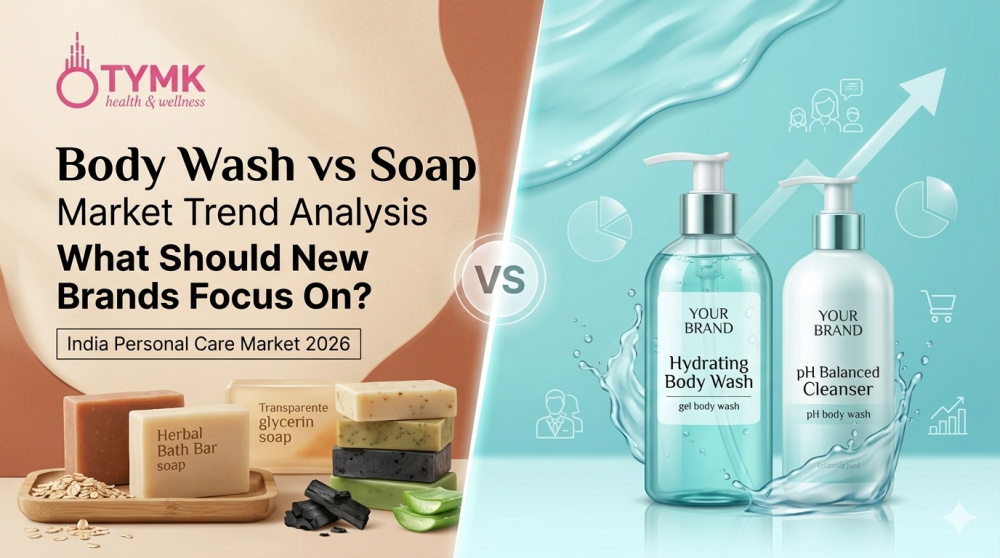
Body Wash vs Soap Market Trend: What Should New Brands Focus On?
Body Wash vs Soap Market Trend: What Should New Brands Focus On?
Explore body wash vs soap market trends, consumer demand, and manufacturing insights for small cosmetic startups entering the skincare industry.
Table of Contents
| No. | Sections |
|---|---|
| 1 | Introduction |
| 2 | What is the Body Wash vs Soap Market Trend? |
| 3 | Why This Trend Matters for Small Cosmetic Startups |
| 4 | Consumer Buying Behaviour in 2026 |
| 5 | Body Wash vs Soap: Market Comparison Table |
| 6 | Which Product is Easier to Launch for New Brands? |
| 7 | Manufacturing Models Explained |
| 8 | Real Brand Case Study |
| 9 | Best Marketing Strategy for Small Cosmetic Startups |
| 10 | Why Brands Choose TYMK |
| 11 | Featured Snippet |
| 12 | FAQs |
| 13 | Conclusion |
Introduction
A few years ago, most small skincare startups in India launched with basic soaps because manufacturing costs were lower and retail acceptance was easy. But the market has changed quickly.
Today, consumers are looking for premium textures, fragrance experiences, sulfate-free formulas, herbal ingredients, and aesthetically packaged products. That shift is pushing many new brands toward body wash instead of traditional soap bars.
Now here’s the important part…
The decision is no longer just about “soap vs body wash.” It is about branding potential, customer retention, repeat purchase rates, and profit margins.
For startups working with a White Label Cosmetic Manufacturer, Customised Cosmetic Manufacturer, or Personal Care Products Manufacturer, understanding this trend can directly impact product success.
What is the Body Wash vs Soap Market Trend?
The body care industry is moving toward experience-driven products.
Traditional soaps are still widely used in mass-market and rural segments. However, urban consumers increasingly prefer body washes because they feel more premium, hygienic, moisturizing, and modern.
Body wash products are also performing better in:
- D2C skincare brands
- Instagram beauty stores
- Premium gifting kits
- Herbal wellness brands
- Ayurvedic body care collections
Many skin care products white-label manufacturer companies are now reporting higher inquiries for body wash development compared to basic soap bars.
At the same time, soap demand remains strong in:
- Ayurvedic categories
- Organic handmade brands
- Budget-friendly retail
- MLM and direct selling products
That’s why many Private Label Manufacturer companies are expanding both soap and body wash production lines.
Why This Trend Matters for Small Cosmetic Startups
Small startups usually have limited marketing budgets.
Choosing the right first product matters because it affects:
| Factor | Soap | Body Wash |
|---|---|---|
| Initial Manufacturing Cost | Lower | Medium |
| Premium Branding Potential | Medium | High |
| Repeat Purchase Rate | Moderate | High |
| Fragrance Experience | Limited | Strong |
| Social Media Appeal | Medium | High |
| Packaging Innovation | Limited | Excellent |
| Profit Margin Potential | Moderate | Higher |
Most people don’t realize this, but packaging alone can influence repeat sales in personal care products.
A matte black body wash bottle with premium fragrance positioning often creates stronger perceived value than a standard soap bar.
This is exactly why many startups now partner with a White Label Cosmetic Manufacturer, OEM Skincare Products supplier, or Face Care Products White Label Manufacturer to launch premium body care ranges quickly.
Consumer Buying Behaviour in 2026
The Indian personal care market is seeing three major shifts:
1. Fragrance-Led Purchasing
Consumers are buying body washes based on:
- Long-lasting fragrance
- Spa-like feel
- Mood-enhancing scents
- Luxury positioning
This is increasing demand for:
- Perfume Private Label Manufacturer
- Perfume White Label Manufacturer
- OEM Perfume
2. Herbal + Sulfate-Free Demand
Modern buyers want:
- Paraben-free products
- Herbal extracts
- Aloe vera formulas
- Ayurvedic ingredients
This is boosting searches for:
- Ayurvedic Products White Label Manufacturer
- Herbal Products White Label Manufacturer
- OEM Herbal Products
3. Multi-Category Brand Expansion
Brands launching body washes often expand into:
- Face serums
- Shampoo
- Baby care
- Colour cosmetics
- Pet care
That is why startups increasingly work with:
- Face Serum Manufacturer
- Shampoo Manufacturer
- Baby Care Products Manufacturer
- Colour Cosmetics Products Manufacturer
- PET Care Products Manufacturer
Body Wash vs Soap: Market Comparison Table
| Feature | Body Wash | Soap |
|---|---|---|
| Consumer Trend | Growing Fast | Stable |
| Urban Demand | Very High | Moderate |
| Premium Branding | Excellent | Moderate |
| D2C Potential | High | Medium |
| Manufacturing Complexity | Medium | Lower |
| Product Variations | Extensive | Limited |
| Influencer Marketing | Strong | Moderate |
| Subscription Model | Better | Lower |
| Customer Retention | High | Medium |
Which Product is Easier to Launch for New Brands?
The answer depends on your target audience.
Choose Soap If:
- Your budget is limited
- You target traditional buyers
- You want herbal positioning
- You sell in local retail markets
- You plan an MLM distribution
In these cases, working with:
- Bath Soap Private Label Manufacturer
- Bath Soap White Label Manufacturer
- Bath Soap Contract Manufacturer
can reduce startup costs.
Choose Body Wash If:
- You want premium positioning
- You target urban consumers
- You focus on Instagram marketing
- You want higher repeat purchases
- You plan D2C growth
This is where:
- Personal Care Products White Label Manufacturer
- OEM Personal Care Products
- Customised Cosmetic Manufacturer
become important.
Manufacturing Models Explained
White Label Manufacturing
A ready-made formula sold under your brand name.
Best for:
- Fast launch
- Low investment
- Beginner brands
Relevant keywords:
- White Label Cosmetic Manufacturer
- Healthcare Products White Label Manufacturer
- Shampoo White Label Manufacturer
Private Label Manufacturing
Custom branding with slight formula personalization.
Best for:
- D2C brands
- Instagram brands
- Boutique skincare startups
Relevant keywords:
- Face Serum Private Label Manufacturer
- Toothpaste Private Label Manufacturer
- Nutraceutical Products Private Label Manufacturer
Contract Manufacturing
Fully customized product development.
Best for:
- Scaling brands
- Unique formulations
- Large distribution plans
Relevant keywords:
- Herbal products Contract Manufacturer
- Perfume Contract Manufacturer
- Food supplements products Contract Manufacturer
Real Brand Case Study
A small startup from Mumbai initially launched handmade soaps through local exhibitions.
Sales were decent, but repeat purchases remained inconsistent.
Later, the founders introduced:
- Charcoal body wash
- Aloe vera shower gel
- Perfume-inspired body cleanser
Within eight months:
- Repeat orders increased
- Instagram engagement improved
- The average order value became higher
Why?
Because body wash created a “premium lifestyle experience” rather than just a cleansing product.
In real-world terms, consumers increasingly buy emotions, fragrance experiences, and aesthetics — not just utility.
Best Marketing Strategy for Small Cosmetic Startups
1. Start with One Hero Product
Avoid launching 20 products initially.
One strong body wash can build:
- Brand identity
- Customer trust
- Social proof
2. Focus on Packaging First
Packaging influences:
- Instagram appeal
- Giftability
- Premium perception
3. Use Trend-Based Ingredients
Popular ingredients include:
- Niacinamide
- Aloe vera
- Tea tree
- Coffee extracts
- Vitamin C
Many OEM Face Care Products and OEM Hair Care Products suppliers now provide trend-ready formulations.
4. Build Multi-Category Expansion
Successful startups eventually expand into:
- Shampoo
- Face serum
- Baby care
- Herbal supplements
- Colour cosmetics
This creates long-term customer retention.
Why Brands Choose TYMK
For startups entering the cosmetic manufacturing space, choosing the right manufacturing partner is critical.
TYMK helps brands with:
- Product development support
- White label manufacturing
- Custom formulation assistance
- Packaging guidance
- Multi-category expansion
Their ecosystem supports categories like:
- Skin care
- Hair care
- Herbal products
- Baby care
- Nutraceuticals
- Personal care products
This becomes especially useful for startups looking for:
- OEM Shampoo Manufacturer
- Healthcare Products Private Label Manufacturer
- Colour Cosmetics Products White Label Manufacturer
- Herbal supplements Products White Label Manufacturer
Learn more at: TYMK World
Featured Snippet
Body wash is becoming more popular than traditional soap among urban consumers because it offers premium fragrance, better packaging appeal, moisturizing benefits, and stronger repeat purchase potential. For new cosmetic startups, body wash often provides better branding opportunities and higher customer retention compared to standard soap products.
FAQs
What is the difference between body wash and soap?
Soap is usually bar-based and focuses on cleansing, while body wash offers a liquid formula with better fragrance experience, moisturizing benefits, and premium branding potential.
Which is better for new cosmetic startups?
Body wash is often better for premium D2C brands, while soap works well for budget-friendly and herbal-focused businesses.
Is white-label cosmetic manufacturing good for beginners?
Yes. Working with a white-label cosmetic manufacturer helps startups launch products faster with lower investment and reduced formulation risk.
Why are herbal body care products growing so fast?
Consumers now prefer natural, sulfate-free, and Ayurvedic formulations, increasing demand for herbal cosmetic categories.
How can TYMK help cosmetic startups?
TYMK supports startups with manufacturing, branding, packaging, and product development across personal care and cosmetic categories.
What is OEM manufacturing in cosmetics?
OEM manufacturing means a manufacturer develops products that another brand sells under its own label. TYMK also supports brands looking for OEM Personal Care Products solutions.
Internal Linking Suggestions
- “How to Create a Moisturizing Body Care Range That Customers Rebuy”
- “Body Lotion Fragrance Trends in India 2026”
- “Skincare Shelf Life, Stability & Testing Explained Simply”
For cosmetic regulations and safety guidelines, refer to:
Bureau of Indian Standards (BIS) Cosmetics Guidelines
Conclusion
The body care industry is evolving rapidly, and startups entering the market need to think beyond basic cleansing products.
Body wash is gaining momentum because it aligns with modern consumer behaviour, premium branding, and repeat purchase psychology. However, soaps still hold strong potential in herbal, Ayurvedic, and mass-market categories.
The best approach is choosing products based on your audience, positioning, and long-term brand strategy.
If you are planning to launch your own cosmetic brand, partnering with the right White Label Cosmetic Manufacturer or Customised Cosmetic Manufacturer can significantly reduce risk and speed up growth.
Explore manufacturing solutions and product categories at TYMK World