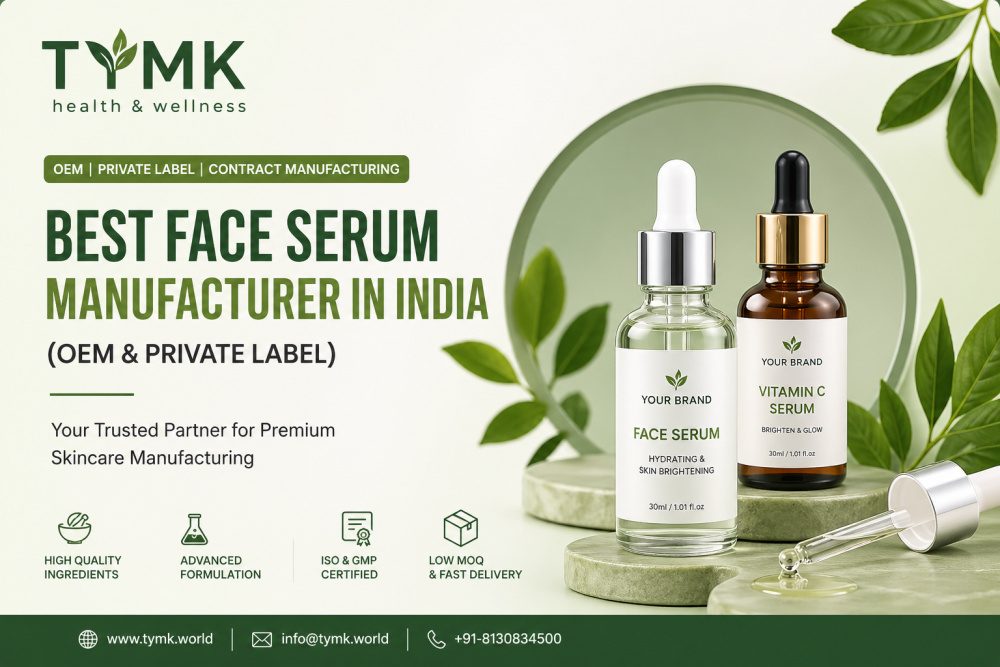
Best Face Serum Manufacturer in India (OEM & Private Label)
Best Face Serum Manufacturer in India (OEM & Private Label)
Find the best face serum manufacturer in India. Compare private label, OEM & contract manufacturing to launch and scale your skincare brand.
Introduction
Most people think skincare brands fail because they can’t sell.
That’s not really true.
Many of them fail much earlier—when they choose the wrong manufacturer and don’t realize it until it’s too late. By the time issues show up (texture inconsistency, delays, packaging problems), money is already stuck.
If you’re planning to launch a serum, this is the decision that quietly decides everything else.
Quick Answer
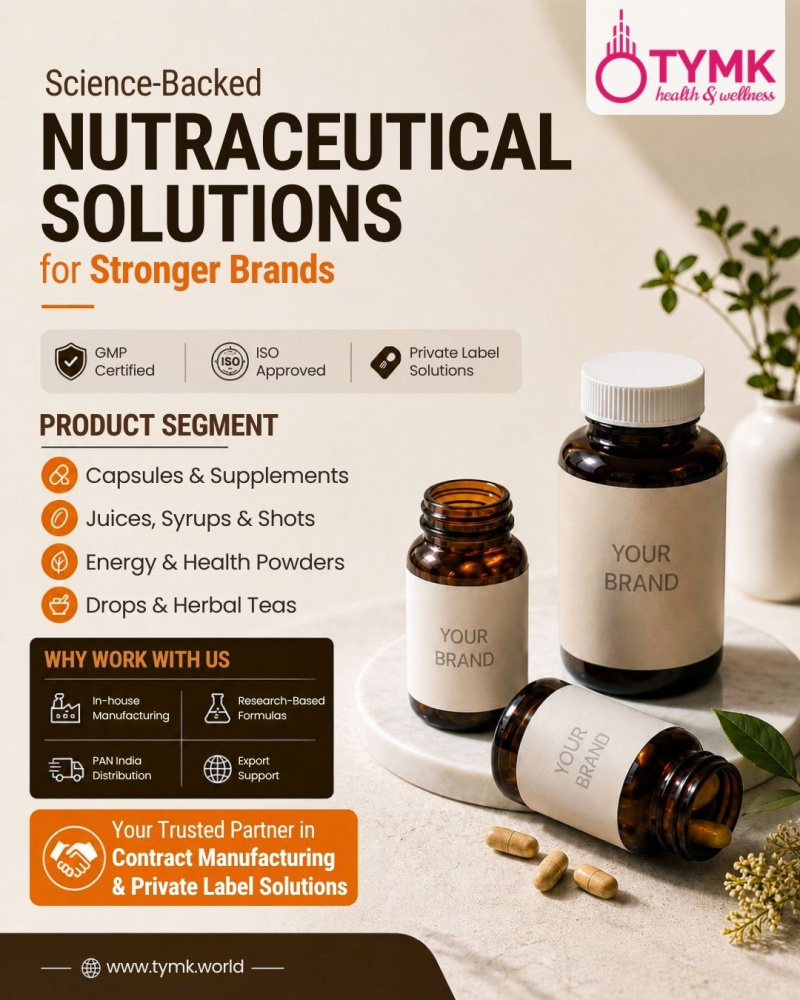
A good face serum manufacturer in India will offer private label and OEM options, follow ISO and GMP standards, and handle formulation, packaging, and compliance, so you don’t need your own setup.
What a Manufacturer Actually Handles (Beyond “Making the Product”)
On paper, it sounds simple—they make your serum.
In reality, they’re involved in things most beginners don’t think about:
-
Stabilizing actives (Vitamin C is a common headache here)
-
Making sure the texture doesn’t separate over time
-
Checking if your packaging reacts with the formula
-
Handling basic compliance so your product can actually be sold
If any of this goes wrong, it’s your brand that takes the hit—not theirs.
👉 If you want a full breakdown of how the process works:
https://tymk.world/how-to-start-a-cosmetic-brand-in-india
Why India Has Become a Go-To for Skincare Manufacturing
It’s not just about lower costs anymore.
What makes India attractive right now is flexibility.
You’ll find manufacturers who:
-
Work with both modern actives and herbal formulations
-
Accept smaller batch sizes (important for testing)
-
Are gradually aligning with global standards
For a new brand, that combination is useful. You’re not forced to scale too early.
Your 3 Main Options (Keep This Simple)
Private Label
You pick an existing formula and brand it as your own.
Most beginners start here with products like:
-
Vitamin C serum (10% range)
-
Niacinamide serum (around 5%)
Not unique—but easy to test.
OEM (Custom Formula)
This is where you start building something different.
You can change:
-
Ingredient strength
-
Finish (matte, dewy, lightweight)
-
Fragrance or no fragrance
But expect more back-and-forth and a slower launch.
👉 If you’re unsure which one fits:
https://tymk.world/private-label-vs-oem-cosmetic-manufacturing
Contract Manufacturing
You control the idea, they handle production.
It’s flexible, but you still depend on their systems.
Quick Comparison
|
Factor |
Private Label |
OEM |
Contract |
|
Speed |
Fast |
Medium |
Medium |
|
Cost |
Low |
High |
Medium |
|
Control |
Low |
High |
Medium |
How to Choose Without Regretting It Later
This is where most people rush—and regret it.
1. Certifications Are a Filter, Not a Guarantee
ISO and GMP matter, but they don’t automatically mean everything will go smoothly.
Still, skip any manufacturer that doesn’t have them.
2. Think 6 Months Ahead, Not Today
Right now, you need one product.
But if things work, you’ll want more:
-
Moisturizers
-
Sunscreens
-
Maybe haircare
If your manufacturer can’t support that, you’ll have to switch later (which is messy).
👉 You can check the category range here:
https://tymk.world/our-category
3. Don’t Overcommit on Quantity
A common mistake:
Ordering 2000 units without knowing if people will even buy.
Start smaller. Even 500 units can tell you a lot.
4. Sampling Is Not Optional
Try the product:
-
Morning vs night feel
-
Layering with other products
-
After a few days of use
One test is not enough.
5. Expect Delays (Plan for Them)
No one says this upfront, but delays happen.
Packaging, ingredients, reformulation—it adds up.
If your plan has no buffer, you’ll feel it.
A Realistic Growth Example
A small brand started with a basic Vitamin C serum (private label, 500 units).
Sales were decent, but feedback mentioned stickiness.
Instead of scaling immediately, they:
-
Adjusted the formula through OEM
-
Relaunched with a better texture
That small change improved repeat orders.
This kind of slow adjustment is more common than overnight success.
Mistakes That Cost Money (Literally)
-
Choosing based only on price
-
Ignoring formulation details
-
Skipping proper testing
-
Scaling too early
None of these looks serious at the start—but they compound fast.
Where TYMK Fits In (Practical View)
At this point, the question usually isn’t “which manufacturer is best?”
It’s “which one actually fits my stage?”
For early-stage brands, the main constraints are:
- Budget
- Minimum order quantity
- Speed of launch
This is where platforms like TYMK tend to work well.
They offer:
- Private label (for quick testing)
- OEM support (when you’re ready to customize)
- A wider product range, so you’re not stuck with just one category
👉 You can go through their product categories here:
https://tymk.world/our-category
And if you want to understand how their process works overall:
https://tymk.world/
Why Some Brands Prefer This Route
Not because it’s “the best”—but because it’s practical.
Instead of managing multiple vendors (formulation, packaging, compliance), everything is handled in one place. That reduces coordination issues, especially in the early phase.
Also, having the option to start small and scale later is something most new brands underestimate until they actually launch.
A More Realistic Expectation
That said, no manufacturer is perfect.
Even with a setup like this, you’ll still need to:
- Test samples properly
- Give clear requirements
- Plan for small delays
The difference is just that the process is more structured compared to starting from scratch.
Industry Note
India’s cosmetic manufacturing space is expanding quickly, especially with the rise of D2C brands
(source: https://jphealthcare.in/cosmetic-manufacturers-in-india-2/)
More options are available now—but that also makes choosing harder.
Why the Manufacturer Matters More Than You Think
Customers don’t see your manufacturer.
But they feel the result:
-
Texture
-
Consistency
-
Skin reaction
If those are off, branding won’t save you.
If you want to explore a full-service option:
https://tymk.world/
Conclusion
There isn’t one “best” face serum manufacturer in India for everyone.
But there is a right fit for your stage.
If you take the time here, everything after this becomes easier.
If you rush it, problems show up later.
FAQs
1. Who is the best face serum manufacturer in India?
The best one is reliable, certified (ISO/GMP), offers private label and OEM, and supports small to large-scale production.
2. What services do manufacturers usually provide?
Formulation, sourcing, packaging, labeling, and compliance support.
3. What is the usual MOQ?
Around 500–1000 units for private label. Higher for custom formulas.
4. Private label or OEM—what should I pick?
Start with a private label if you’re new. Move to OEM once you understand your markeT.
5. How do I avoid a bad manufacturer?
Test samples, start small, verify certifications, and don’t rush the decision.