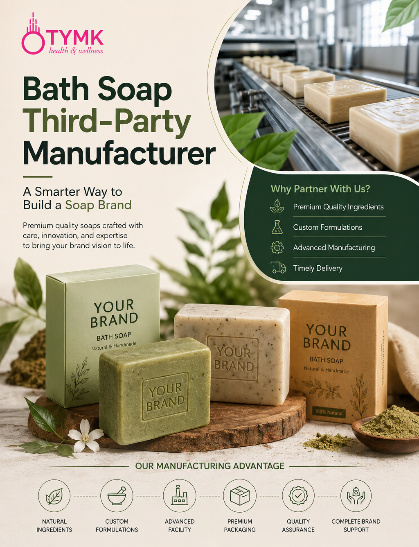
Bath Soap Third-Party Manufacturer: A Smarter Way to Build a Soap Brand
Looking for a Bath Soap Third-Party Manufacturer? Learn how private label soap production works, the benefits, the costs, and how TYMK supports growing brands.
Launching a soap brand looks exciting from the outside. You choose a fragrance, design attractive packaging, create an Instagram page, and start imagining sales coming in.
Then reality hits.
Finding raw materials is difficult. Packaging vendors delay orders. Product consistency becomes unpredictable. Testing requirements feel confusing. And manufacturing equipment alone can cost more than many startups expect.
That’s usually the moment businesses start looking for a reliable Bath Soap Third Party Manufacturer.
In practical terms, third-party manufacturing allows brands to sell soap products without building their own factory. The manufacturing company handles production, while the business focuses on branding, marketing, and customer growth.
This model has quietly become the backbone of many skincare and personal care brands in India, especially smaller D2C businesses trying to scale without huge upfront investment.
And honestly, it makes sense.
Not every brand needs a manufacturing plant. Most simply need dependable production, good formulations, and consistent quality.
Table of Contents
| Sections |
| Understanding Third-Party Soap Manufacturing |
| Why Brands Prefer This Manufacturing Model |
| How the Process Actually Works |
| Different Types of Soap Manufacturing |
| Who Should Consider It |
| What to Check Before Choosing a Manufacturer |
| Why TYMK Stands Out |
| Real Business Example |
| Featured Snippet |
| FAQs |
| Conclusion |
Understanding Third-Party Soap Manufacturing
A Bath Soap Third Party Manufacturer produces soap products for another company that sells them under its own brand name.
The manufacturer handles things like:
- formulation
- production
- testing
- packaging
- labeling
- bulk manufacturing
Meanwhile, the brand focuses on sales and positioning.
A lot of people confuse this with private labeling or OEM production. They’re related, but slightly different.
For example:
| Manufacturing Model |
What It Means |
| White Label |
Ready-made soap with your branding |
| Private Label |
Existing base formula with some customization |
| OEM Bath Soap |
Fully customized formulation |
| Contract Manufacturing |
Long-term manufacturing partnership |
The interesting part is that many successful skincare brands actually started with small third-party manufacturing batches before expanding into full product lines.
Why More Businesses Are Choosing Third-Party Manufacturing
A few years ago, many brands wanted their own factories because it looked more “serious.”
Now the market has shifted.
Most modern businesses prefer flexibility.
Setting up a production unit requires:
| Requirement |
Challenge Level |
| Machinery investment |
Very High |
| Compliance approvals |
Complicated |
| Skilled labor |
Expensive |
| Testing setup |
Technical |
| Raw material sourcing |
Time-consuming |
| Production management |
Ongoing |
That sounds manageable on paper. In reality, even small delays can slow down launches for months.
This matters more than most people think.
Many founders realize they spend more time solving factory issues than actually building the brand.
That’s one major reason why demand for:
- Bath Soap White Label Manufacturer
- Bath Soap Contract Manufacturer
- OEM Bath Soap
- Bath Soap Private Label Manufacturer
has grown rapidly in recent years.
How Does Bath Soap Third-Party Manufacturing Work?
The process itself is fairly straightforward when working with an experienced manufacturer.
Still, this is usually where newer businesses make mistakes.
They rush product decisions without understanding manufacturing limitations.
Here’s how the process generally works.
Step 1: Product Planning
First, the brand decides what type of soap they want to launch.
That could include:
- herbal soap
- charcoal soap
- glycerin soap
- baby soap
- luxury perfume soap
- Ayurvedic bathing bars
At this stage, businesses also decide:
- fragrance
- ingredients
- shape
- packaging style
- target pricing
A premium skincare audience requires very different positioning compared to mass retail products.
Step 2: Formula Selection
Some brands choose ready-made formulations because they want faster market entry.
Others prefer custom product development.
That’s where OEM Bath Soap manufacturing becomes useful.
For example, a business may want:
- sulfate-free soap
- vegan ingredients
- herbal extracts
- luxury fragrances
- organic positioning
Custom formulations usually take more time, but they help create stronger brand differentiation.
Step 3: Sample Approval
This stage is often underestimated.
A soap may look good visually, but still fail in:
- fragrance retention
- foam quality
- skin feel
- hardness
- shelf stability
Experienced manufacturers normally provide samples before bulk production begins.
And honestly, brands should never skip this stage.
Step 4: Manufacturing & Packaging
Once approved, production starts.
Professional manufacturers generally follow quality-control systems for:
- ingredient consistency
- hygiene
- batch testing
- packaging accuracy
This becomes especially important for businesses scaling into e-commerce or retail distribution.
One negative customer review about product inconsistency can damage trust quickly.
Different Types of Soap Products You Can Manufacture
The soap market today is much broader than traditional bathing bars.
Consumer preferences have changed a lot.
People now look for:
- herbal ingredients
- skin-friendly formulations
- natural fragrances
- premium packaging
- chemical-free positioning
Here are some common categories.
| Soap Category |
Market Trend |
| Herbal soaps |
High demand |
| Ayurvedic soaps |
Fast growing |
| Activated charcoal soaps |
Popular online |
| Organic soaps |
Premium segment |
| Baby soaps |
Sensitive skincare market |
| Luxury perfume soaps |
Urban consumer demand |
Many manufacturers offering soap production also work in related categories like:
- skincare
- hair care
- personal care
- herbal wellness products
Who Should Choose a Bath Soap Third Party Manufacturer?
This model works especially well for businesses that want faster scaling without manufacturing headaches.
D2C Brands
Instagram and e-commerce-first skincare brands commonly use third-party production.
It lowers startup risk significantly.
MLM & Network Marketing Businesses
Companies searching for:
- MLM Product Manufacturer
- Network Marketing Product Supplier
- Direct Selling Product Manufacturer
Often expand into personal care categories because repeat purchase rates are strong.
Soap products fit well into these business models.
Retailers Launching Their Own Brands
Many retailers now create in-house soap brands instead of only selling third-party products.
Profit margins are usually better.
Export Businesses
Indian soap manufacturing is highly competitive internationally, especially in the herbal and ayurvedic segments.
That’s why export demand continues growing.
What Should You Check Before Choosing a Manufacturer?
This is usually where long-term success gets decided.
Not all manufacturers offer the same level of consistency.
Before selecting a partner, businesses should check:
Manufacturing Certifications
Look for:
- GMP certification
- ISO standards
- proper hygiene systems
Production Capacity
Can they scale with your brand later?
A manufacturer suitable for 5,000 units may struggle at 100,000 units.
Packaging Quality
A lot of first-time brands overlook this.
Customers often judge product quality from packaging before they even use the soap.
Ingredient Transparency
This becomes especially important in herbal or ayurvedic products.
Consumers today read labels carefully.
Why Many Brands Work With TYMK
TYMK supports businesses looking for scalable manufacturing across personal care, skincare, herbal products, and soap categories.
One reason brands prefer working with experienced manufacturing partners is operational simplicity.
Instead of coordinating separately with:
- formulation labs
- packaging vendors
- production facilities
- compliance teams
They get a more streamlined process.
That reduces delays significantly.
Areas Where TYMK Supports Brands
| Support Area |
Benefit |
| Product customization |
Better brand differentiation |
| Private label manufacturing |
Faster launches |
| Bulk production |
Easier scaling |
| Packaging assistance |
Professional presentation |
| Multiple product categories |
Future expansion opportunities |
Businesses searching for:
- Bath Soap Third Party Manufacturer
- Bath Soap White Label Manufacturer
- Bath Soap Contract Manufacturer
often prioritize manufacturers that can scale with them long term.
Real-World Example
A small skincare startup selling through Instagram initially launched only two herbal soap variants.
The founders originally planned to manufacture products independently.
After calculating:
- machinery costs
- labor
- testing
- compliance
- warehouse setup
They shifted to third-party manufacturing instead.
That decision allowed them to spend more on:
- influencer marketing
- packaging design
- content creation
- customer acquisition
Within a year, they expanded into:
- face serums
- shampoos
- body care
- herbal skincare
That’s a common pattern in the modern skincare industry.
Featured Snippet
A Bath Soap Third Party Manufacturer creates soap products for brands that want to sell under their own label without owning a manufacturing facility. These manufacturers handle formulation, production, packaging, and quality control, helping businesses launch soap brands faster and more cost-effectively. Many growing brands choose TYMK for scalable private label and OEM soap manufacturing solutions.
FAQs
What is a Bath Soap Third Party Manufacturer?
A Bath Soap Third Party Manufacturer produces soap products for businesses that sell under their own branding.
What is the difference between private label and OEM Bath Soap manufacturing?
Private label uses existing formulations with custom branding, while OEM manufacturing involves creating a customized product formula.
Is third-party soap manufacturing profitable?
Yes. It reduces infrastructure costs and allows businesses to focus more on marketing and sales growth.
How long does soap manufacturing take?
Production timelines depend on customization, packaging requirements, and order quantity.
Which businesses usually use third-party soap manufacturing?
D2C brands, MLM companies, retailers, exporters, and skincare startups commonly use this model.
Why do businesses choose TYMK?
Businesses choose TYMK because of scalable manufacturing support, private label solutions, customization flexibility, and multi-category expertise.
For cosmetic safety and compliance standards:
FDA Cosmetics Guidance
Conclusion
Finding the right Bath Soap Third Party Manufacturer is not just about production pricing.
It’s about consistency, scalability, product quality, and long-term business support.
A reliable manufacturing partner helps brands enter the market faster while avoiding many operational challenges that slow new businesses down.
Whether you’re planning a herbal soap line, a premium skincare brand, or private-label bathing products, choosing the right manufacturing setup can make expansion much easier later.
To explore scalable soap manufacturing and private label solutions, visit TYMK.