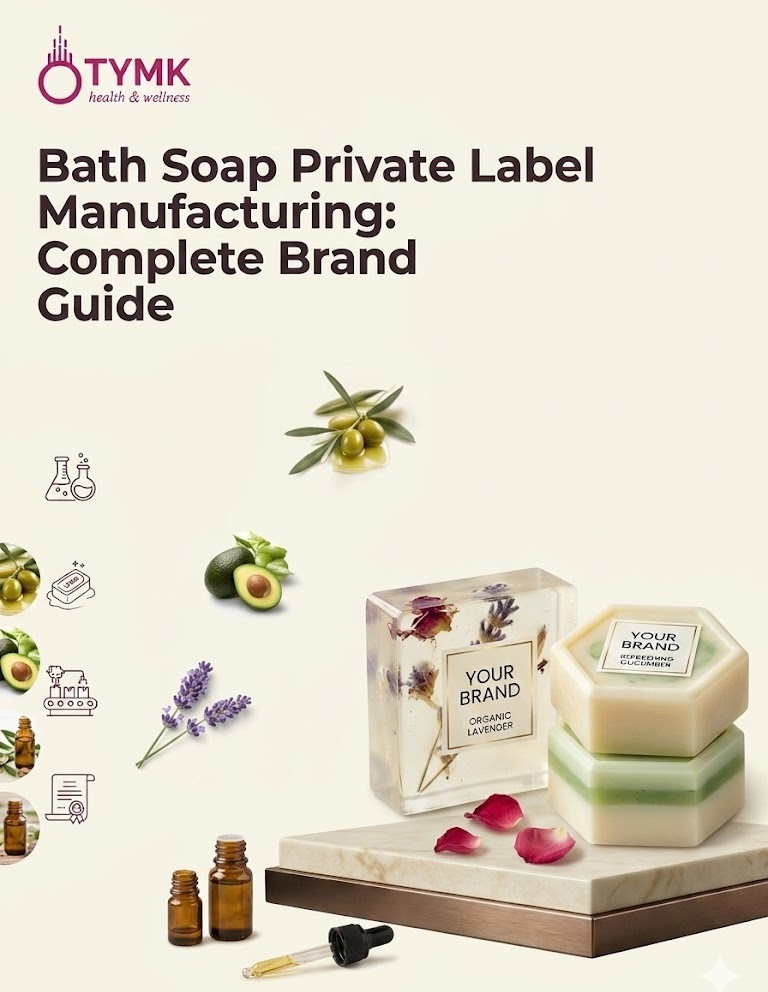
Bath Soap Private Label Manufacturer: Complete Brand Guide
Start your soap brand with a bath soap private label manufacturer. Get ready-made or custom soap solutions, reduce setup cost, and launch faster with scalable manufacturing support for growing personal care businesses.
Bath Soap Private Label Manufacturer: Complete Brand Guide
Start your soap brand with a bath soap private label manufacturer. Learn the process, benefits, cost, and real-world steps to launch faster and smarter.
Table of Contents
- What private label soap manufacturing really means
- Why brands are shifting to this model
- How the process actually works in real business terms
- When it makes sense to use it
- Who benefits the most
- Comparison of available manufacturing models
- Why TYMK World is used by new brands
- FAQs and practical answers
Introduction
Most people think starting a soap brand is about designing packaging and selling online.
In reality, the hardest part is not branding—it is production.
This is where a Bath Soap Private Label Manufacturer quietly becomes the backbone of many new personal care businesses.
Instead of investing in machinery, lab setups, and regulatory approvals, brands simply plug into an existing manufacturing system and focus on selling. That shift alone changes how fast a business can actually launch.
What is Bath Soap Private Label Manufacturing?
At a basic level, it means you sell soap under your own brand name, while another company manufactures it for you.
But in practical business terms, it looks like this:
- The factory has already tested soap formulas
- You choose what fits your brand direction
- Packaging is customized with your identity
- Manufacturing happens at scale in the background
You are not building the product from scratch—you are building the brand around an already stable production system.
Why This Model Has Become So Important
If you look at today’s personal care market, speed matters more than perfection.
Brands using private label manufacturing gain three clear advantages:
They enter the market faster, they reduce financial risk, and they avoid technical manufacturing failures that usually kill early-stage startups.
Most failed FMCG ideas don’t fail because of demand—they fail because production becomes too complex too early.
How the Process Actually Works
In real operations, the workflow is simpler than people expect:
First, the brand discusses what kind of soap they want—herbal, luxury, antibacterial, or something niche.
Then the manufacturer provides ready formulations that already meet safety and stability standards.
Samples are tested, small changes are made if needed, and once the formula feels right, packaging begins.
After that, production moves into bulk manufacturing, followed by quality checks before dispatch.
Most first-time brands are surprised that this entire cycle can be completed in a few weeks, not months.
When Should You Use This Model?
This approach makes sense when:
You want to test a product idea without a heavy investment
You are planning an online brand (Amazon, Shopify, etc.)
You don’t have technical manufacturing knowledge
You want to launch multiple products quickly
In short, it works best when speed matters more than owning infrastructure.
Who Actually Uses It?
This is not limited to small startups.
You’ll find this model used by:
- New D2C skincare brands
- Salon and spa chains launching in-house products
- MLM and direct selling companies
- Export-focused personal care businesses
The common factor is simple: they all need scalable production without building factories.
Comparison: Which Model Works Best?
| Model | Investment | Speed | Flexibility | Risk |
|---|---|---|---|---|
| Private Label | Low | Fast | Medium | Low |
| Contract Manufacturing | Medium | Medium | High | Medium |
| Own Manufacturing Unit | Very High | Slow | Full | High |
For most new brands, private label sits in the safest starting position.
Why Brands Work with TYMK World
TYMK World operates as a manufacturing partner for personal care and cosmetic products, especially for brands that are still in their early growth stage.
What matters most here is not just production, but reducing decision fatigue for new founders.
Instead of managing raw materials, compliance, and production timelines separately, everything is handled within a single manufacturing system.
That is usually what makes early scaling smoother for new businesses.
A bath soap private label manufacturer produces soap products that brands sell under their own name. The manufacturer handles formulation, production, and quality control, while the brand focuses on packaging, marketing, and sales. This allows faster market entry without building a factory.
FAQs
What does a bath soap private label manufacturer do?
They manufacture soap products that other companies sell under their own branding, handling production and formulation.
Is the private label soap business profitable?
It can be, depending on branding, distribution, and market positioning.
How is private label different from contract manufacturing?
Private label offers ready or semi-ready products, while contract manufacturing allows deeper customization.
Can a beginner start a soap brand this way?
Yes, most new personal care brands start using this model due to lower risk and faster setup.
How long does it take to launch?
Typically, a few weeks, depending on packaging and formulation customization.
Conclusion
A bath soap private label manufacturer is less about manufacturing and more about removing barriers for new brands.
It allows founders to focus on growth instead of production complexity.
For brands looking to enter this space with structured support, TYMK World is often used as a starting point for scalable personal care manufacturing.