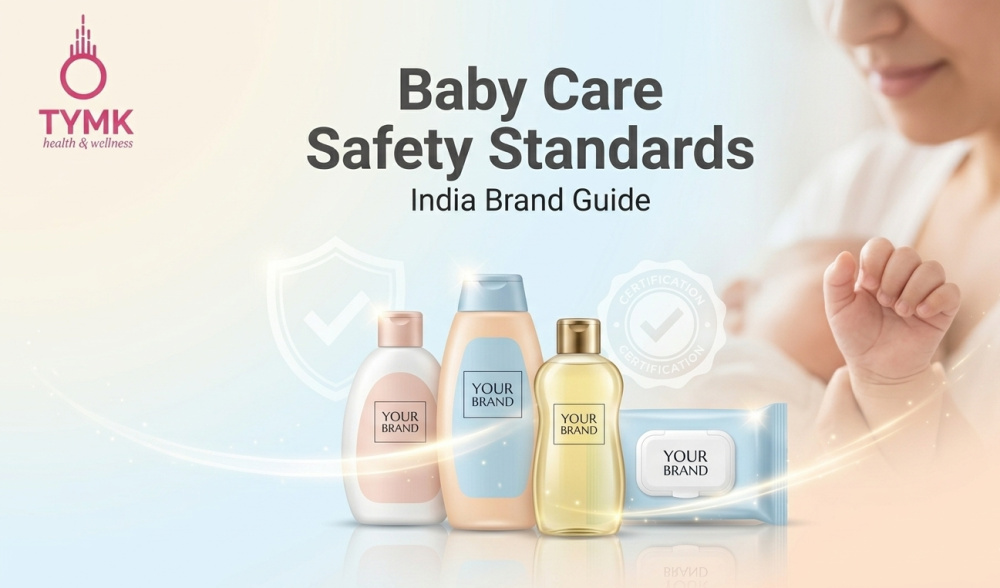
Baby Care Product Safety Standards Every Brand Must Follow in India
Learn the essential baby care product safety standards every Indian brand must follow for quality, compliance, and customer trust.
Parents today do not buy baby care products blindly. They read labels, compare ingredients, check certifications, and even research manufacturers before trusting a brand.
A few years ago, attractive packaging and low pricing were often enough to sell baby lotions, shampoos, and creams. That has changed quickly.
Now, consumers expect safer ingredients, proper testing, and transparent manufacturing practices. And honestly, one bad customer experience can damage a baby care brand much faster than most businesses expect.
That is why every serious Baby Care Products Manufacturer is focusing more on safety standards and compliance than ever before. Whether a company works as a Baby Care Products Private Label Manufacturer, OEM Baby Care Products supplier, or White Label Cosmetic Manufacturer, product safety has become a major competitive factor in the Indian market.
What Safety Standards Should Baby Care Brands Follow in India?
Baby care product safety standards in India include GMP manufacturing, ingredient safety verification, microbial testing, stability testing, and BIS compliance. These standards help brands maintain product quality, protect infant skin, and build long-term customer trust. Many growing businesses now work with experienced manufacturing partners like TYMK to ensure safer and more compliant baby care product manufacturing.
Related Keywords:
Baby Care Products Manufacturer, Baby Care Products White Label Manufacturer, OEM Baby Care Products, White Label Cosmetic Manufacturer.
Why Are Baby Care Safety Standards So Important?
This is where many new brands make mistakes.
They focus heavily on packaging, branding, and marketing, but treat product safety as a secondary step. In reality, safety standards are often the foundation of long-term brand growth.
Baby skin is far more sensitive than adult skin. Even small formulation problems or contamination issues can lead to irritation, allergic reactions, or customer complaints.
And once parents lose trust in a product, winning that trust back becomes difficult.
Strong safety standards help brands:
- Reduce product complaints
- Improve customer trust
- Increase repeat purchases
- Support marketplace approvals
- Build distributor confidence
- Strengthen long-term brand reputation
According to the Bureau of Indian Standards (BIS), cosmetic and personal care products sold in India must follow proper quality and labeling regulations.
The Real Challenge Most Baby Care Startups Face
Many startups initially choose low-cost manufacturing partners to reduce expenses.
At first, this decision may look profitable. Lower manufacturing costs often mean higher margins.
But the real problems usually appear later.
A growing baby care startup in Delhi once launched products through a low-cost supplier without proper testing systems. Initial sales were strong because the packaging looked attractive and the pricing was competitive.
Within a few months, customers started reporting issues:
- Lotion texture inconsistencies
- Packaging leakage
- Mild skin irritation complaints
The company later shifted to a certified Baby Care Products White Label Manufacturer with better quality testing and GMP-focused production systems.
The difference was noticeable.
Customer complaints dropped, repeat orders improved, and marketplace ratings became stronger within a few months.
That single manufacturing decision changed the brand’s growth trajectory.
Key Safety Standards Every Baby Care Brand Should Follow
1. GMP Manufacturing Standards
GMP stands for Good Manufacturing Practices.
It ensures products are manufactured under:
- Hygienic conditions
- Controlled production systems
- Sanitized equipment
- Proper staff hygiene protocols
Most professional White Label Cosmetic Manufacturer companies follow GMP-certified production standards because consistency and cleanliness directly affect product safety.
2. Ingredient Safety Verification
Not every ingredient marketed as “gentle” is automatically safe for infants.
Baby care brands must carefully avoid excessive use of:
- Harsh sulfates
- Parabens
- Artificial irritants
- Harmful preservatives
- Heavy metals
This is one reason why the Herbal Products Private Label Manufacturer and ayurvedic baby care categories are growing rapidly in India.
Parents are increasingly looking for milder and more transparent formulations.
3. Stability Testing
Stability testing checks whether products remain safe and effective under:
- Heat
- Humidity
- Transportation conditions
- Long-term storage
For example, a baby lotion may appear stable during manufacturing but separate chemically after prolonged exposure to heat during transportation.
Experienced Customised Cosmetic Manufacturer companies perform detailed stability testing before commercial distribution.
4. Microbial Testing
Microbial testing ensures products are free from harmful contamination such as:
This becomes especially important for:
- Baby lotions
- Creams
- Wipes
- Shampoos
A few years ago, several low-quality cosmetic products faced consumer backlash because proper microbial testing was ignored to reduce manufacturing costs.
Today, customers notice these issues very quickly.
5. Proper Labeling & Compliance
Many brands underestimate labeling regulations.
Product labels should clearly mention:
- Ingredients
- Manufacturing details
- Expiry date
- Batch number
- Usage instructions
- Safety warnings
The Central Drugs Standard Control Organization (CDSCO) also provides cosmetic regulatory guidance and compliance standards in India.
Incorrect or incomplete labeling can create legal and marketplace-related problems for brands.
How Does the Baby Care Product Safety Process Work?
The manufacturing process looks simple from the outside, but maintaining safety standards requires multiple quality-control stages.
Step 1 — Formula Development
Ingredients are selected based on safety, skin compatibility, and product category.
Step 2 — Raw Material Testing
Each ingredient batch is tested for purity and contamination.
Step 3 — Controlled Manufacturing
Products are manufactured under hygienic GMP-certified conditions.
Step 4 — Product Quality Testing
Labs test products for:
- Stability
- pH balance
- Skin compatibility
- Microbial safety
Step 5 — Packaging Inspection
Packaging is checked for leakage, durability, and labeling accuracy.
Step 6 — Final Approval
Only approved product batches move for commercial distribution.
This is why experienced Personal Care Products Manufacturer companies invest heavily in quality-control systems.
Which Manufacturing Model Is Best?
The best manufacturing model depends on business goals, budget, and product strategy.
| Manufacturing Type |
Best For |
Key Advantage |
| Private Label |
Fast market launch |
Ready-made formulations |
| White Label |
Budget-friendly scaling |
Faster production |
| OEM Manufacturing |
Custom product development |
Better exclusivity |
| Contract Manufacturing |
Unique brand positioning |
Full formulation flexibility |
Many startups prefer working with a Baby Care Products Private Label Manufacturer because it reduces development time and investment.
Brands looking for exclusive formulations usually prefer OEM Baby Care Products manufacturing.
Why Many Growing Brands Choose TYMK
Choosing the right manufacturing partner is not only about pricing. Long-term consistency, product safety, and scalability matter far more as a brand grows.
Many businesses work with TYMK because they look for:
- GMP-focused production systems
- Product customization support
- Private label manufacturing
- OEM development capabilities
- Multi-category manufacturing expertise
- Consistent quality control
Whether a company is searching for a Baby Care Products Manufacturer, White Label Cosmetic Manufacturer, or Personal Care Products White Label Manufacturer, manufacturing reliability directly affects customer retention and brand reputation.
FAQs
What safety standards should baby care products follow in India?
Baby care products in India should follow GMP manufacturing, ingredient safety testing, microbial testing, stability testing, and BIS compliance standards.
Why is GMP certification important for baby care manufacturing?
GMP certification ensures hygienic manufacturing conditions, better product consistency, and reduced contamination risks.
What is the difference between private label and OEM baby care products?
Private label manufacturing uses ready-made formulations, while OEM manufacturing allows businesses to create customized products and exclusive formulations.
Are herbal baby care products safer?
Herbal baby care products can be safer when manufactured with certified ingredients and proper quality testing systems.
How do I choose the right baby care products manufacturer?
Brands should evaluate certifications, testing standards, manufacturing experience, customization support, and product consistency before selecting a manufacturing partner.
Can startups launch baby care products through white-label manufacturing?
Yes. White-label manufacturing is one of the fastest and most cost-effective ways for startups to launch baby care products in the market.
Conclusion
The Indian baby care industry is becoming more quality-focused every year. Customers are more informed, regulations are stricter, and competition is increasing rapidly.
For any Baby Care Products Manufacturer, maintaining strong safety standards is no longer optional. It directly affects customer trust, product reputation, and long-term business growth.
Brands that prioritize safe ingredients, compliant manufacturing, and proper testing systems are far more likely to build lasting customer relationships.
To explore compliant baby care manufacturing solutions, visit TYMK World