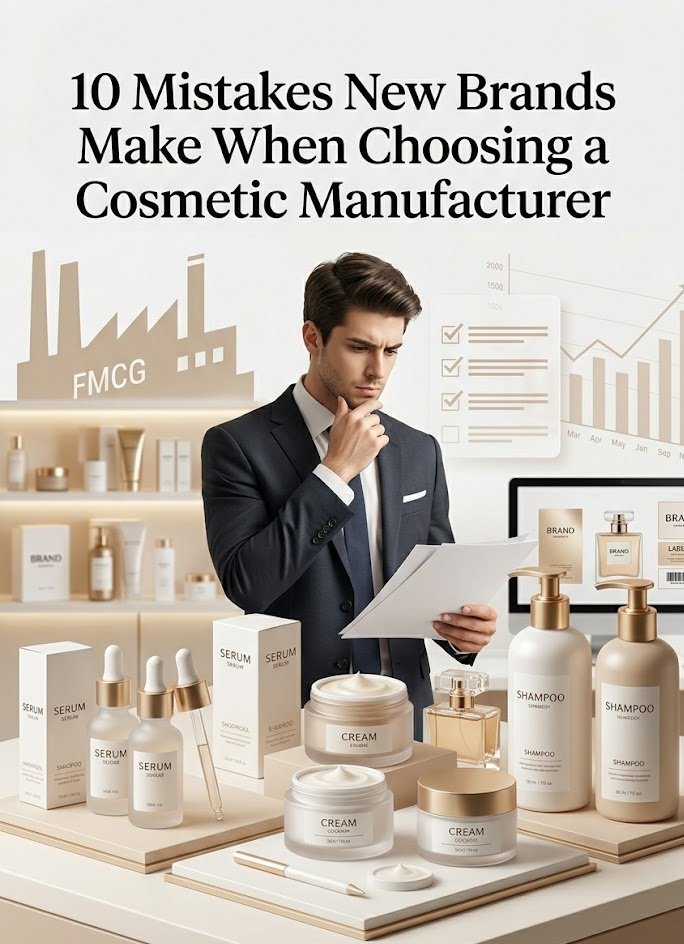
10 Mistakes New Brands Make When Choosing a Cosmetic Manufacturer
Learn the 10 common mistakes new cosmetic brands make when choosing a manufacturer and how to avoid costly production failures.
10 Mistakes New Brands Make When Choosing a Cosmetic Manufacturer
Introduction
Most new cosmetic brands fail quietly before they even scale—not because the idea is bad, but because the manufacturing foundation is weak. In today’s beauty and personal care industry, launching a product is easy, but building a stable supply chain is where most founders struggle.
The cosmetic manufacturing stage decides everything: product quality, shelf life, packaging experience, compliance approval, and long-term scalability. Many beginners think manufacturing is just about finding someone who can “make the product,” but in reality, it is about finding a partner who can support brand growth.
This is where mistakes happen. Small decisions like choosing the cheapest supplier or skipping sampling often turn into major losses later.
Quick Summary
Most new brands make avoidable mistakes such as focusing only on pricing, ignoring compliance, skipping product testing, and selecting manufacturers without scalability. The right choice should balance quality, certifications, flexibility, and long-term production capability.
Market Overview
The Indian cosmetic and personal care manufacturing sector is expanding rapidly due to D2C brands, herbal skincare demand, influencer-led product launches, and private label opportunities. Categories like skincare, haircare, perfumes, baby care, and nutraceuticals are increasingly outsourced to OEM and contract manufacturers instead of being produced in-house.
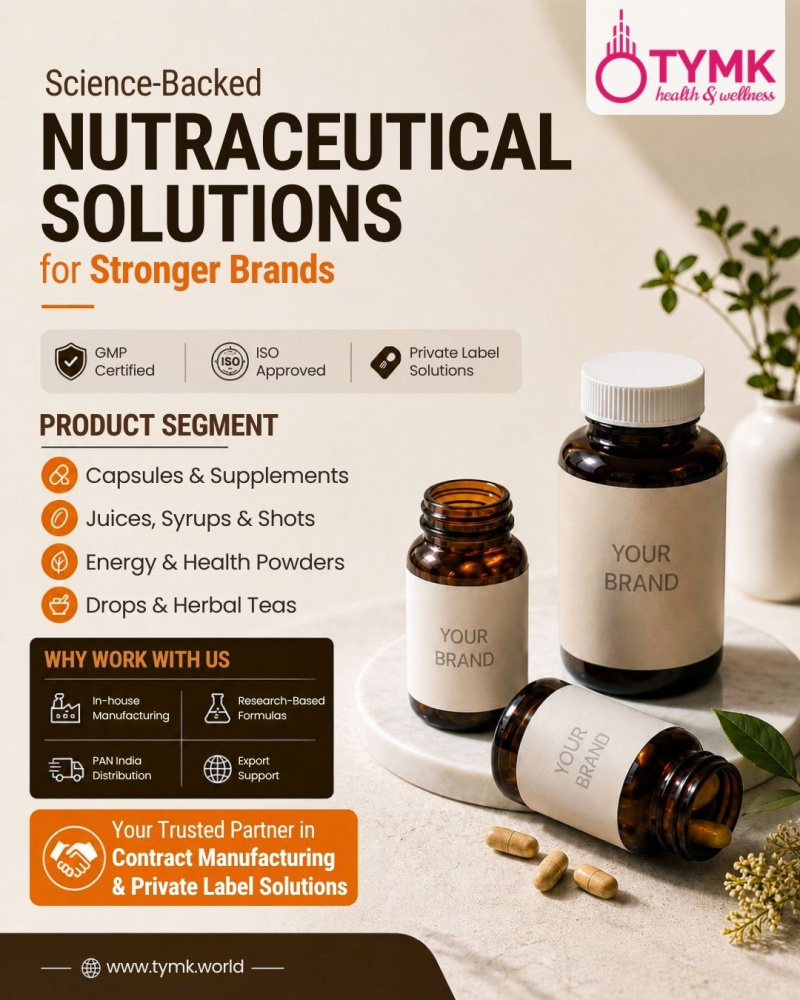
Companies like TYMK World operate in this ecosystem by supporting emerging brands with formulation development, packaging solutions, and scalable production systems. Despite this structured industry growth, many startups still make manufacturing decisions without a proper understanding, which leads to early failures.
Why Choosing the Right Manufacturer Matters
Choosing a manufacturer is not just a sourcing activity—it directly impacts your brand identity. The same product idea can succeed or fail depending on formulation stability, packaging quality, and consistency of batches.
A strong manufacturer ensures your products remain stable across production cycles, meet regulatory requirements, and are suitable for scaling when demand increases. On the other hand, a weak manufacturing partner creates hidden problems like inconsistent quality, delayed deliveries, and customer complaints, which eventually damage brand reputation.
10 Mistakes New Brands Make When Choosing a Cosmetic Manufacturer
The most common mistake new founders make is selecting a manufacturer based only on price. At first glance, lower pricing seems attractive, especially for startups working with limited budgets. However, in cosmetic manufacturing, low cost often reflects compromises in raw materials, formulation quality, or production consistency. What looks like savings initially often turns into losses when products fail quality expectations in the market.
Another major mistake is ignoring sample testing. Many founders rush into bulk production without properly evaluating the texture, fragrance, absorption, or stability of the product. In real manufacturing environments, samples are not just formalities—they are the only way to understand how the final product will behave in real-world conditions. Skipping this step leads to product rejection, returns, or negative customer feedback after launch.
Compliance is another area where new brands struggle. Cosmetic products require proper certification standards, such as GMP and ISO-based manufacturing processes. Without this, brands face issues with marketplaces, exports, or even customer trust. Many beginners assume compliance is optional, but in practice, it determines whether your brand can scale beyond local sales.
MOQ (Minimum Order Quantity) is also misunderstood. Many startups accept MOQs without planning inventory flow or sales velocity. This leads to overstocking or cash flow blockage. On the other side, very low MOQ options sometimes come with higher per-unit costs or limited customization, which affects brand positioning.
Scalability is another overlooked factor. A manufacturer that can handle 500 units may not necessarily handle 50,000 units. Many brands only realize this after sudden demand spikes caused by marketing campaigns or influencer visibility. At that stage, production delays can damage customer trust and slow down momentum.
Packaging decisions are also underestimated. In cosmetics, packaging is not just a container—it is part of the product experience. Poor-quality bottles, weak pumps, or low-grade labeling can reduce perceived value even if the formulation is good. Many brands lose premium positioning due to packaging mistakes rather than product issues.
Communication gaps between the brand and the manufacturer also create major problems. Misunderstandings around fragrance profiles, ingredient expectations, or delivery timelines often result in production mismatches. Cosmetic manufacturing requires detailed clarity at every stage, not assumptions.
Another common issue is confusion between private label, OEM, and contract manufacturing models. Many founders do not fully understand that private label uses ready formulations, OEM allows partial customization, and contract manufacturing enables full formulation development. Choosing the wrong model leads to either a lack of uniqueness or unnecessary cost escalation.
Lead time is another factor that is often ignored. Cosmetic production is not instant. It involves formulation, testing, packaging, sourcing, labeling, and batch production. Many founders underestimate timelines and plan launches too aggressively, leading to delays and missed market opportunities.
Finally, many brands treat manufacturers as short-term vendors instead of long-term partners. This mindset limits growth. A good manufacturer should support future product development, cost optimization, and category expansion.
Comparison Table: Good vs Poor Manufacturing Decision
A poor manufacturing decision is usually based on price sensitivity alone, limited due diligence, and a lack of understanding of production systems. In contrast, a good decision is based on quality evaluation, certification checks, scalability planning, and a long-term collaboration mindset. Brands that choose structured manufacturers usually experience smoother scaling and fewer product failures.
Real Business Example
A skincare startup once launched with an aggressive pricing-focused manufacturer. Initial sales were strong due to marketing, but within a few months, product consistency issues started appearing. Some batches had different textures and fragrance variations, which led to customer complaints and refund requests.
Eventually, the brand had to stop production temporarily and shift to a more structured manufacturing partner. This transition not only increased costs but also delayed growth momentum. The core issue was not the product idea, but the initial manufacturing decision.
When Should You Carefully Evaluate Manufacturers?
Manufacturing decisions should be carefully reviewed before launching your first product line, before scaling production volumes, and when expanding into new categories like skincare to haircare or nutraceuticals. Any stage where production complexity increases requires stronger manufacturer evaluation.
Who Should Pay Attention Most?
This topic is especially important for new D2C founders, MLM or direct selling brands, Ayurvedic product startups, influencer-led beauty brands, and e-commerce sellers entering private label manufacturing. These categories rely heavily on manufacturing quality for brand trust.
Brand Insight: TYMK World
Manufacturing partners like TYMK World play an important role in helping new brands avoid early-stage mistakes. Their approach typically includes formulation support, packaging guidance, OEM and private label production, and structured scalability planning, which reduces operational risks for startups entering the cosmetic industry.
Featured Snippet Answer
FAQs
What is the biggest mistake new cosmetic brands make?
The most common mistake is selecting a manufacturer based only on low cost instead of quality and compliance.
Why is sample testing important in cosmetics?
Sample testing ensures the product is stable, safe, and matches expected texture, fragrance, and performance before bulk production.
What is MOQ in cosmetic manufacturing?
MOQ refers to the minimum number of units a manufacturer requires per production batch.
What is the difference between OEM and private label manufacturing?
Private label uses ready-made formulations, while OEM allows customized product development.
Can a small manufacturer handle large-scale growth?
Not always. Scalability depends on production capacity, supply chain strength, and operational systems.
Conclusion
Choosing a cosmetic manufacturer is one of the most important decisions for any new beauty brand. It directly affects product quality, market reputation, and growth potential. Most early failures in this industry are not due to lack of demand, but due to poor manufacturing choices.
A strong manufacturer becomes a long-term growth partner, not just a production source. Brands that understand this early build more stable and scalable businesses.