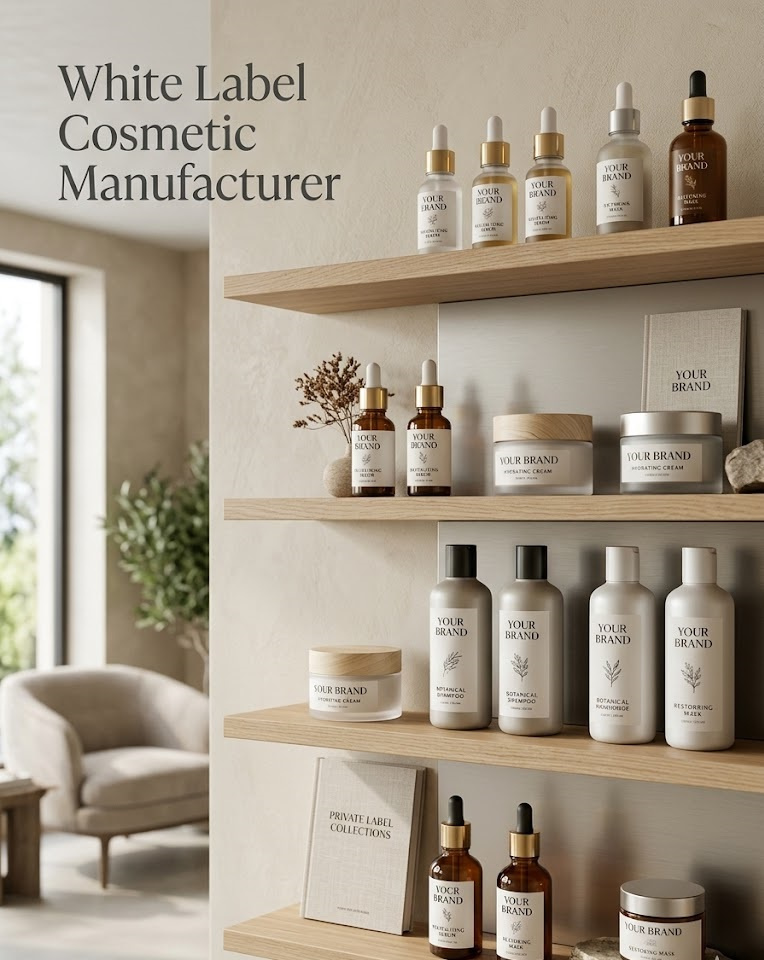
White Label Cosmetic Manufacturer: Complete Guide for Modern Beauty Brands
<p>Starting a cosmetic brand today is easier than ever, but choosing the right manufacturing partner decides whether your brand grows or fails. This guide explains how white-label cosmetic manufacturing works, common mistakes brands make, industry trends, and how TYMK supports beauty startups with scalable solutions.</p>
White Label Cosmetic Manufacturer: Complete Guide for Modern Beauty Brands
Table of Contents
- Introduction
- Quick Industry Summary
- What is a White Label Cosmetic Manufacturer?
- Why Cosmetic Brands Prefer White Label Manufacturing
- How White Label Cosmetic Manufacturing Works
- White Label vs Private Label vs OEM Manufacturing
- Why This Industry Is Growing So Fast
- Real Manufacturing Challenges Brands Face
- Hidden Costs Most Startups Ignore
- Common Mistakes Cosmetic Startups Make
- Product Categories Driving Market Growth
- Manufacturing Workflow Explained Step-by-Step
- How Packaging Impacts Cosmetic Sales
- Choosing the Right White Label Cosmetic Manufacturer
- Why Brands Work With TYMK
- Real Business Example
- Industry Trends Shaping Cosmetic Manufacturing
- Comparison Table
- Featured Snippet
- FAQs
- Final Thoughts
Introduction
Starting a cosmetic brand has become easier than ever before. Social media platforms, influencer marketing, D2C business models, and eCommerce marketplaces have completely changed how beauty products are sold today. A small startup with the right product and branding can now compete with larger companies much faster than it could a few years ago.
But there’s one side of the beauty industry most people don’t understand until they actually enter the business — manufacturing.
From the outside, cosmetic manufacturing looks simple. Many people assume it only involves filling creams into jars or printing labels on bottles. In reality, manufacturing is where most beauty brands either build strong, long-term businesses or struggle with quality issues, delays, inconsistent products, packaging problems, and unhappy customers.
This is exactly why choosing the right White Label Cosmetic Manufacturer matters so much.
A professional manufacturer does far more than simply produce products. The right manufacturing partner helps businesses with formulation selection, packaging support, regulatory understanding, product consistency, quality testing, scaling production, inventory planning, and launch timelines.
Most successful beauty startups today do not own factories. Instead, they partner with experienced White Label Cosmetic Manufacturers to reduce operational complexity and launch products faster.
Now here’s the important part that most blogs never explain properly.
The cosmetic industry today is no longer only about “making products.” Modern beauty brands need:
- Faster launch cycles
- Better packaging design
- Flexible MOQ options
- Scalable production
- Ingredient transparency
- Regulatory compliance
- Trend-based formulations
- Social-media-friendly products
This is why modern manufacturers like TYMK are becoming strategic growth partners instead of just suppliers.
Quick Industry Summary
A White Label Cosmetic Manufacturer produces ready-made cosmetic products that businesses can customize and sell under their own brand name. Instead of building a factory, hiring chemists, sourcing machinery, and handling compliance independently, businesses partner with manufacturers that already have production infrastructure in place.
This model is widely used in:
- Skincare products
- Hair care products
- Herbal products
- Ayurvedic cosmetics
- Face serums
- Perfumes
- Bath soaps
- Baby care products
- Personal care products
- Wellness products
White-label manufacturing helps startups:
- Reduce investment risk
- Launch products faster
- Test market demand
- Focus on branding and marketing
- Scale gradually
In practical business terms, this allows founders to spend more time building customer trust and less time managing factory operations.
What is a White Label Cosmetic Manufacturer?
A White Label Cosmetic Manufacturer creates cosmetic formulations that multiple businesses can rebrand and sell under their own company identity.
In simple words, the manufacturer already has tested and production-ready formulations available. The business owner mainly customizes:
- Brand logo
- Packaging
- Label design
- Product positioning
- Marketing strategy
The manufacturer handles:
- Product development
- Bulk production
- Filling processes
- Quality control
- Packaging assistance
- Compliance support
For example, imagine a startup wants to launch a niacinamide serum.
Creating a formulation from scratch requires:
- Cosmetic chemists
- Ingredient sourcing
- Product testing
- Stability testing
- Laboratory equipment
- Regulatory documentation
Most startups cannot invest heavily at the beginning. Instead, they partner with a White Label Cosmetic Manufacturer that already offers tested serum formulations.
The startup focuses on:
- Branding
- Instagram marketing
- Influencer campaigns
- Customer acquisition
- Packaging aesthetics
This dramatically reduces launch timelines.
Why Cosmetic Brands Prefer White Label Manufacturing
The beauty industry has become extremely competitive. Customers today expect:
- Attractive packaging
- Fast delivery
- Premium texture
- Modern ingredients
- Affordable pricing
- Product consistency
Launching products quickly has become a major advantage.
If a business spends 12–18 months developing products independently, competitors may already capture the market opportunity.
White-label manufacturing solves this problem.
Faster Product Launches
Businesses can launch products within weeks instead of spending years developing infrastructure.
Lower Financial Risk
Building a cosmetic factory requires significant investment:
- Manufacturing machines
- Filling equipment
- Packaging setup
- Warehousing
- Testing labs
- Technical staff
White-label manufacturing removes most of these operational burdens.
Better Market Testing
Many beauty startups fail because they manufacture huge inventory quantities before validating demand.
White label systems allow brands to:
- Start smaller
- Test customer response
- Improve products gradually
- Expand based on sales performance
Access to Industry Expertise
Experienced manufacturers understand:
- Ingredient trends
- Product stability
- Packaging compatibility
- Consumer preferences
- Production efficiency
This knowledge becomes extremely valuable for new brands.
How White Label Cosmetic Manufacturing Works
Step 1: Product Research
The brand identifies:
- Target customers
- Product category
- Competitor pricing
- Market positioning
- Product goals
For example:
- Herbal skincare
- Luxury hair care
- Ayurvedic cosmetics
- Vegan beauty products
This stage is important because many brands choose products without understanding the actual market demand.
Step 2: Formula Selection
The manufacturer shares formulation options.
Products may include:
- Face wash
- Shampoo
- Hair oil
- Face serum
- Body lotion
- Perfume
- Bath soap
- Scrubs
At this stage, brands evaluate:
- Texture
- Fragrance
- Ingredient profile
- Skin feel
- Product performance
Most successful brands spend significant time testing samples before finalizing products.
Step 3: Packaging Development
This stage affects brand perception more than many founders realize.
Packaging decisions include:
- Bottle selection
- Pump quality
- Jar design
- Label material
- Outer box design
- Printing finish
In real-world markets, customers often judge cosmetic quality based on packaging before trying the product itself.
Premium-looking packaging improves:
- Shelf appeal
- Social media presentation
- Customer trust
- Repeat purchase rates
Step 4: Bulk Manufacturing
After approval:
- Raw materials are sourced
- Production batches begin
- Filling processes start
- Labels are applied
- Products are packed
Professional manufacturers also perform quality inspections during production.
Step 5: Quality Control & Dispatch
Before dispatch, products usually undergo:
- Leakage testing
- Stability checks
- Batch verification
- Label inspection
- Packaging checks
Products are then delivered to:
- Warehouses
- Retailers
- Distributors
- Amazon sellers
- D2C businesses
White Label vs Private Label vs OEM Manufacturing
| Manufacturing Model | Customization Level | Ideal For | Production Speed |
|---|---|---|---|
| White Label | Low to Medium | Fast market launch | Fast |
| Private Label | Medium to High | Growing brands | Moderate |
| OEM Manufacturing | Fully Customized | Large brands | Longer |
Many people confuse these manufacturing models.
White Label Manufacturing
The manufacturer already has existing formulations ready.
Best for:
- Startups
- Fast launches
- Lower investment models
Private Label Manufacturing
More customization is possible.
Brands may customize:
- Ingredients
- Fragrance
- Texture
- Packaging style
OEM Manufacturing
OEM involves completely custom product development.
Usually preferred by:
- Established cosmetic companies
- Large-scale businesses
- Export-focused brands
Why This Industry Is Growing So Fast
The beauty industry has shifted dramatically in recent years.
Consumers increasingly prefer:
- Natural ingredients
- Herbal cosmetics
- Sulfate-free products
- Clean beauty
- Vegan skincare
- Personalized beauty products
At the same time, social media has created a massive demand for niche cosmetic brands.
Many influencer-led beauty brands now launch products through White Label Cosmetic Manufacturers instead of investing in factories.
This model allows them to focus on:
- Content creation
- Brand storytelling
- Customer acquisition
- Community building
instead of factory management.
Real Manufacturing Challenges Brands Face
Most SEO blogs only discuss “advantages.” They rarely explain operational realities.
But real cosmetic manufacturing includes many challenges.
MOQ Problems
Some manufacturers require very large minimum order quantities.
New businesses often struggle to sell excess inventory.
Packaging Delays
One of the biggest hidden issues in cosmetic manufacturing is packaging delays.
Even if formulations are ready, missing bottles or cartons can delay launches significantly.
Product Inconsistency
If batches vary in:
- Color
- Fragrance
- Texture
- Performance
Customers immediately notice the difference.
Consistency is one of the biggest indicators of manufacturing quality.
Regulatory Issues
Many startups underestimate compliance requirements.
Incorrect labeling or unsupported claims can create legal complications.
Scaling Difficulties
Some manufacturers perform well with small batches but fail when demand increases.
A scalable manufacturer is extremely important for long-term growth.
Hidden Costs Most Startups Ignore
Many founders only calculate manufacturing cost per unit.
But real cosmetic businesses involve many additional expenses.
| Expense Type | Business Impact |
| Packaging | Very High |
| Product Testing | High |
| Label Printing | Moderate |
| Freight Costs | Moderate |
| Warehousing | Moderate |
| Product Photography | Moderate |
| Compliance Documentation | Moderate |
One important insight most startups learn late:
Premium packaging can sometimes cost more than the formulation itself.
Common Mistakes Cosmetic Startups Make
Choosing Manufacturers Based Only on Price
Cheap manufacturing often creates bigger problems later.
Low-cost suppliers may compromise:
- Ingredient quality
- Packaging standards
- Batch consistency
- Customer satisfaction
Ignoring Product Testing
Some startups launch products after testing for only a few days.
Real testing should include:
- Shelf-life testing
- Consumer feedback
- Temperature stability
- Leakage testing
Weak Branding
Even good formulations struggle without strong branding.
Today’s customers buy:
- Product experience
- Brand story
- Packaging aesthetics
- Emotional connection
not only ingredients.
Poor Inventory Planning
Overproduction creates cash-flow pressure.
Underproduction creates stock shortages.
Balancing inventory is extremely important.
Product Categories Driving Market Growth
Several cosmetic categories are currently experiencing strong growth.
| Product Category | Demand Trend |
| Face Serum Manufacturer | Very High |
| Hair Care Products Manufacturer | High |
| Shampoo Manufacturer | High |
| Perfume White Label Manufacturer | Growing |
| Herbal Products Private Label Manufacturer | Strong |
| Baby Care Products Manufacturer | Growing Fast |
| Ayurvedic Products White Label Manufacturer | Very High |
| Personal Care Products Manufacturer | Stable Growth |
Ayurvedic and herbal cosmetics are especially growing because consumers increasingly prefer natural wellness-based products.
Manufacturing Workflow Explained Step-by-Step
Market Analysis
The brand studies:
- Competitors
- Pricing models
- Consumer demand
- Product gaps
Product Selection
The manufacturer recommends formulations based on market trends.
Packaging Finalization
Packaging materials and branding designs are approved.
Sampling Stage
Brands test products before mass production.
Manufacturing Stage
Production batches are created under controlled processes.
Quality Verification
Products undergo inspection and testing.
Shipping & Distribution
Products are dispatched for retail or online sales.
How Packaging Impacts Cosmetic Sales
Packaging directly affects:
- Brand perception
- Customer trust
- Social media visibility
- Product positioning
In many cases, customers decide within seconds whether a cosmetic product feels premium or cheap.
Minimalist premium packaging is currently trending in:
- Skincare
- Hair care
- Wellness products
- Herbal cosmetics
Modern beauty brands increasingly invest heavily in:
- Matte finishes
- Luxury pumps
- Sustainable materials
- Clean label design
because packaging strongly influences repeat purchases.
Choosing the Right White Label Cosmetic Manufacturer
Before selecting a manufacturing partner, brands should evaluate:
Product Quality
Consistency matters more than low pricing.
Scalability
Can the manufacturer support growth later?
Packaging Support
Do they help with sourcing and packaging coordination?
Communication
Slow communication creates operational delays.
Industry Experience
Experienced manufacturers understand real-world business challenges better.
Why Brands Work With TYMK
TYMK supports businesses across multiple product categories, including:
- Skincare
- Hair care
- Personal care
- Herbal products
- Baby care products
- Wellness categories
- Perfumes
- Nutraceutical products
Faster Product Launches
TYMK helps brands reduce development and production timelines.
Manufacturing Flexibility
Modern startups require:
- Lower MOQ flexibility
- Faster scaling
- Better customization
- Market-focused products
TYMK supports businesses with scalable manufacturing systems.
Industry Understanding
One major advantage is understanding how modern online-first beauty brands operate today.
TYMK works with businesses that prioritize:
- D2C growth
- Social media branding
- Product innovation
- Fast-moving beauty trends
Website: https://tymk.world/
Real Business Example
A startup skincare founder initially planned to import products from overseas suppliers.
On paper, importing looked cheaper.
But after considering:
- Customs delays
- Shipping timelines
- Large MOQs
- Quality inconsistency
- Communication barriers
The business shifted toward working with a white-label cosmetic manufacturer in India.
The result:
- Faster launches
- Better inventory control
- Easier customization
- Lower operational stress
- Improved customer retention
This is becoming increasingly common among modern Indian beauty startups.
Industry Trends Shaping Cosmetic Manufacturing
Herbal & Ayurvedic Products
Natural formulations continue gaining popularity.
Sustainable Packaging
Eco-conscious customers increasingly prefer recyclable packaging.
Small-Batch Manufacturing
Brands now prefer smaller inventory launches to reduce risk.
Personalized Beauty Products
Consumers increasingly want targeted skincare solutions.
AI-Driven Market Research
Modern brands now use AI tools to identify trending ingredients and product opportunities faster.
Comparison Table
| Feature | White Label | Private Label | OEM |
| Launch Speed | Fast | Medium | Slower |
| Investment Requirement | Low | Medium | High |
| Customization | Limited | Moderate | High |
| Best For | Startups | Growing Brands | Established Companies |
| Risk Level | Lower | Moderate | Higher |
Featured Snippet
What is a White Label Cosmetic Manufacturer?
A White Label Cosmetic Manufacturer creates ready-made cosmetic products that businesses can brand and sell under their own company name. This manufacturing model helps startups launch skincare, hair care, herbal, and personal care products quickly without investing in their own factory infrastructure. TYMK supports scalable white-label cosmetic manufacturing for modern beauty brands.
FAQs
What does a White Label Cosmetic Manufacturer do?
A White Label Cosmetic Manufacturer produces ready-made cosmetic formulations that brands customize with their own labels, packaging, and branding.
Is white-label cosmetic manufacturing profitable?
Yes. It allows businesses to launch products faster with lower investment and reduced operational risk.
What is the difference between private label and white label cosmetics?
White-label products use existing formulations, while private label manufacturing allows greater customization.
How long does cosmetic manufacturing usually take?
Depending on packaging, formulation, and order size, timelines can range from several weeks to a few months.
Why do beauty brands choose TYMK?
TYMK supports scalable manufacturing, customization, multiple cosmetic categories, and faster product launches for modern beauty businesses.
Can startups launch cosmetic brands without owning factories?
Yes. Most modern startups work with white-label cosmetic manufacturers instead of investing in their own production facilities.
U.S. FDA Cosmetic Regulations
https://www.fda.gov/cosmetics
Final Thoughts
The beauty industry continues growing rapidly, but manufacturing remains one of the most important factors behind long-term brand success.
A reliable White Label Cosmetic Manufacturer does much more than produce products. The right partner helps businesses improve:
- Product consistency
- Customer trust
- Packaging quality
- Launch speed
- Operational efficiency
- Scalability
Most successful beauty brands today focus heavily on:
- Branding
- Consumer experience
- Packaging presentation
- Product quality
- Manufacturing partnerships
This is exactly why many startups and growing brands increasingly work with experienced manufacturing companies like TYMK.
If you are planning to launch skincare, herbal, hair care, personal care, or beauty products, choosing the right manufacturing partner early can save enormous time, money, and operational stress while helping your business scale faster in a highly competitive market.