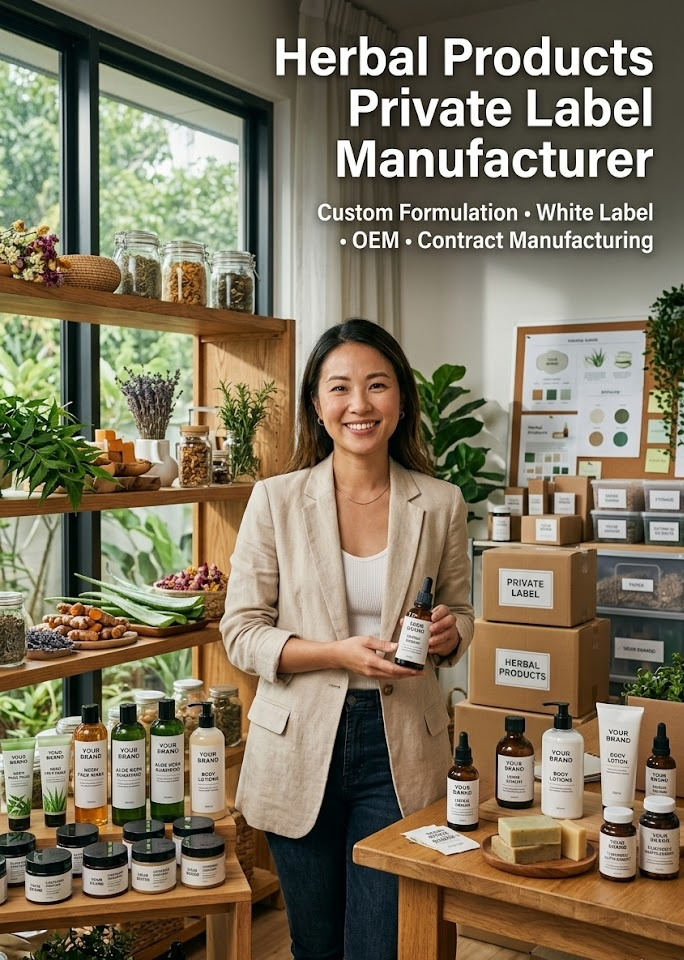
Why Herbal Product Manufacturing Is Becoming a Massive Business Opportunity
<p>Starting a herbal brand today is easier than ever, but choosing the right Herbal Products Private Label Manufacturer can decide whether your business grows or fails. This guide explains how private label manufacturing works, what mistakes brands make, how OEM and contract manufacturing differ, and why companies like TYMK are becoming preferred partners for startups and scaling businesses.</p>
Why Herbal Product Manufacturing Is Becoming a Massive Business Opportunity
The herbal products industry is no longer limited to traditional Ayurvedic stores or local wellness shops. Today, herbal and natural products are becoming mainstream across skincare, haircare, wellness, supplements, oral care, and even lifestyle categories. Consumers are reading labels more carefully, avoiding harsh chemicals, and actively searching for products that feel safer, cleaner, and closer to nature.
This shift has created a huge opportunity for startups, influencers, D2C founders, salons, pharmacies, wellness brands, MLM companies, and even eCommerce sellers. But manufacturing remains one of the biggest barriers for new businesses. Building a factory requires huge capital investment, regulatory approvals, technical staff, machinery, raw material sourcing systems, testing infrastructure, and operational management.
That is why the role of a Private Label Manufacturer of herbal products has become extremely important in the modern FMCG and wellness ecosystem.
A professional manufacturing partner allows brands to launch products under their own label without handling the complexity of production internally. In practical business terms, this means a startup can focus more on branding, marketing, customer acquisition, and distribution while the manufacturer handles formulation, production, testing, packaging, and compliance.
This business model has accelerated dramatically because speed matters more than ever. Brands that enter the market faster often gain stronger digital visibility, distributor trust, marketplace reviews, and customer retention before competitors catch up.
The Real Reason Most Herbal Startups Fail
Most blogs say “choose a good manufacturer,” but the actual industry reality is much more complicated.
Many herbal startups fail because they make decisions emotionally rather than strategically.
Some common reasons include:
| Common Startup Mistake | Business Impact |
|---|---|
| Choosing the cheapest manufacturer | Quality inconsistency |
| Launching too many SKUs initially | Inventory pressure |
| Weak packaging design | Low customer trust |
| Poor formulation testing | High return rates |
| No differentiation strategy | Difficult brand growth |
| Ignoring scalability | Manufacturing bottlenecks |
Many founders spend heavily on social media ads while ignoring backend operational quality. In reality, manufacturing quality directly affects customer reviews, repeat orders, marketplace ratings, and long-term brand credibility.
For example, a herbal shampoo may initially sell well because of good marketing. But if the fragrance changes between batches or consistency becomes unstable, repeat customers quickly disappear. This is where experienced manufacturers create long-term value.
Companies like TYMK understand that successful manufacturing is not just about product filling. It involves operational consistency, packaging psychology, ingredient sourcing, scalability planning, and market-readiness.
How Herbal Private Label Manufacturing Actually Works Behind the Scenes
A lot of businesses think private label manufacturing simply means printing a logo on a bottle. In real-world manufacturing operations, the process is much deeper.
Product Planning Stage
Everything begins with category selection.
Most brands usually choose products based on:
- Market demand
- Profit margins
- Repeat purchase potential
- Competition levels
- Manufacturing feasibility
High-demand categories currently include:
- Herbal skincare
- Herbal toothpaste
- Ayurvedic face serum
- Sulphate-free shampoo
- Herbal soap
- Nutraceutical products
- Hair oils
- Wellness supplements
This is why keywords such as:
- Face Serum Manufacturer
- Shampoo Manufacturer
- Personal Care Products Manufacturer
- Herbal supplements Products Manufacturer
continue growing strongly in search demand.
Formula Development & Ingredient Selection
This stage decides product performance.
Brands can either:
- Select ready-made formulations
- Slightly customize formulas
- Build completely custom OEM Herbal Products
OEM development is more advanced because it allows businesses to create differentiated products that competitors cannot easily copy.
For example:
A startup may want:
- Neem + Tea Tree anti-acne face wash
- Activated charcoal herbal soap
- Ayurvedic onion shampoo
- Herbal immunity supplements
The formulation team then develops texture, fragrance balance, ingredient compatibility, stability, and product safety.
This is one of the most technically important stages because even attractive packaging cannot save a poor-performing product long term.
Sampling, Stability Testing & Quality Checks
Now here’s something many startup founders underestimate.
Testing is expensive — but skipping testing is far more expensive.
Professional manufacturers conduct:
- Stability testing
- pH testing
- Viscosity testing
- Compatibility testing
- Shelf-life analysis
- Packaging interaction checks
Without these systems, products may:
- Separate over time
- Leak during shipping
- Lose fragrance
- Change texture
- Cause customer complaints
Reliable manufacturers like TYMK focus heavily on consistency because repeat orders depend on predictable product quality.
Why White Label Manufacturing Is Growing Faster Than Traditional Manufacturing
Traditional manufacturing models are becoming less practical for small and medium businesses because of rising operational costs.
White Label Cosmetic Manufacturer models solve several major business problems simultaneously.
Lower Initial Investment
Instead of investing in:
- Machinery
- Factory setup
- R&D labs
- Technical staff
- Licensing infrastructure
Businesses can allocate more budget toward:
- Branding
- Advertising
- Packaging
- Influencer marketing
- Distribution
Faster Product Launch
Speed matters heavily in modern eCommerce markets.
Trends change rapidly.
A product category that is trending today may become saturated within months. White-label manufacturing helps businesses capitalize on trends quickly without waiting years for infrastructure setup.
Easier Scalability
Once products gain traction, brands can scale gradually.
This is especially useful for:
- Amazon sellers
- D2C brands
- MLM companies
- Pharmacy chains
- Export businesses
This explains the rising demand for:
- Bath Soap White Label Manufacturer
- Perfume White Label Manufacturer
- Skin Care Products White Label Manufacturer
- Hair Care Products White Label Manufacturer
Real Manufacturing Problems Most Brands Never Expect
Packaging Delays
Many founders assume packaging is simple.
In reality:
- Bottle shortages
- Cap compatibility issues
- Printing delays
- Label alignment problems
- Transport damage
can delay launches significantly.
Experienced manufacturers plan inventory systems carefully to reduce operational disruptions.
MOQ Misunderstanding
Low MOQ sounds attractive initially, but extremely low quantities often increase:
- Cost per unit
- Packaging expense
- Logistics complexity
Smart businesses balance MOQ with realistic sales forecasting.
Compliance Complexity
Compliance becomes critical when businesses scale into:
- Modern retail
- International exports
- Large marketplaces
- Pharmacy chains
A reliable Herbal Products Contract Manufacturer helps businesses navigate these operational challenges more smoothly.
Why TYMK Is Becoming a Preferred Manufacturing Partner
TYMK works with businesses across:
- Herbal products
- Ayurvedic categories
- Personal care
- Skincare
- Haircare
- Supplements
- White label manufacturing
- OEM manufacturing
- Contract manufacturing
What separates experienced manufacturers from average suppliers is process maturity.
TYMK focuses not only on manufacturing but also:
- Brand scalability
- Product positioning
- Packaging execution
- Consistent batch quality
- Startup-friendly operational support
For growing brands, these backend systems become extremely important once order volume increases.
Market Trends That Will Shape Herbal Manufacturing
Clean Beauty Will Continue Growing
Consumers increasingly prefer:
- Sulphate-free products
- Paraben-free products
- Natural ingredient positioning
- Transparent labeling
Herbal + Science Combination
Modern consumers want herbal products backed by performance, not just traditional claims.
This is increasing demand for:
- Advanced herbal skincare
- Functional wellness products
- Clinical-style herbal formulations
D2C Competition Will Increase
Because entry barriers are lower now, branding quality will become more important than simply launching products.
The businesses that succeed long-term will focus on:
- Customer trust
- Packaging quality
- Product consistency
- Strong positioning
- Repeat purchase behavior
Featured Snippet
A Herbal Products Private Label Manufacturer helps businesses launch herbal, Ayurvedic, skincare, wellness, and personal care products under their own branding without owning manufacturing facilities. Companies like TYMK provide formulation development, packaging, quality testing, production, and scalable manufacturing support for startups and growing brands.
Final Thoughts
The herbal manufacturing industry is entering a major growth phase driven by consumer awareness, wellness trends, D2C expansion, and natural product demand. But success depends heavily on backend execution, not just branding.
Businesses that choose experienced manufacturing partners gain a significant advantage in:
- Product consistency
- Market speed
- Scalability
- Packaging quality
- Operational reliability
A reliable Herbal Products Private Label Manufacturer can help brands move faster, reduce risk, and focus on long-term growth instead of operational chaos.
For startups, influencers, wellness brands, and scaling businesses, the future opportunity in herbal manufacturing remains extremely strong — especially for brands that combine smart branding with strong manufacturing partnerships.